
Far from opposing natural resource development, the majority of Indigenous communities across Canada choose to engage directly in the natural resource sectors, using partnerships, ownership stakes, jobs, and project revenue to strengthen community prosperity and self-determination.
Today, hundreds of First Nations have benefit agreements, mutual partnerships, and ownership stakes in the development and operation of oil, natural gas, mining, forestry, aquaculture and other resource projects on their lands. In fact, the latest polling has shown that a majority - or nearly two-thirds (65%) - of First Nations support resource development [8]. When asked about different sectors including oil and gas, forestry, mining, and commercial fisheries, majorities of Indigenous peoples supported all four sectors [8].
Strong support stems from the fact that the natural resources sector is Canada’s predominant industry for creating opportunities for Indigenous communities to generate own-source revenues, Indigenous entrepreneurs to grow their businesses, Indigenous workers to make a good living, and Indigenous families to stay in their communities over the long-term.
See more on Indigenous-led groups that advocate for a strong resource sector, and as a result, strong Indigenous communities across Canada.
Indigenous Resources
- Indigenous Resource Network – Platform for Indigenous voices that are supportive of Indigenous participation in resource development
- First Nations Natural Gas Alliance - Formerly known as the First Nations LNG Alliance, the FNNGA supports the development of natural gas in Canada
- Indian Resource Council – Advocacy organization of First Nations working for greater control and management of their natural resources
- National Coalition of Chiefs – Community of pro-development First Nation Chiefs and Metis leaders that advocate for the development of oil and gas resources in their communities
- Indigenous Blogs on Canada Action – View all Indigenous-related blogs on our website, and learn more about how Indigenous Peoples are leading the way in resource development
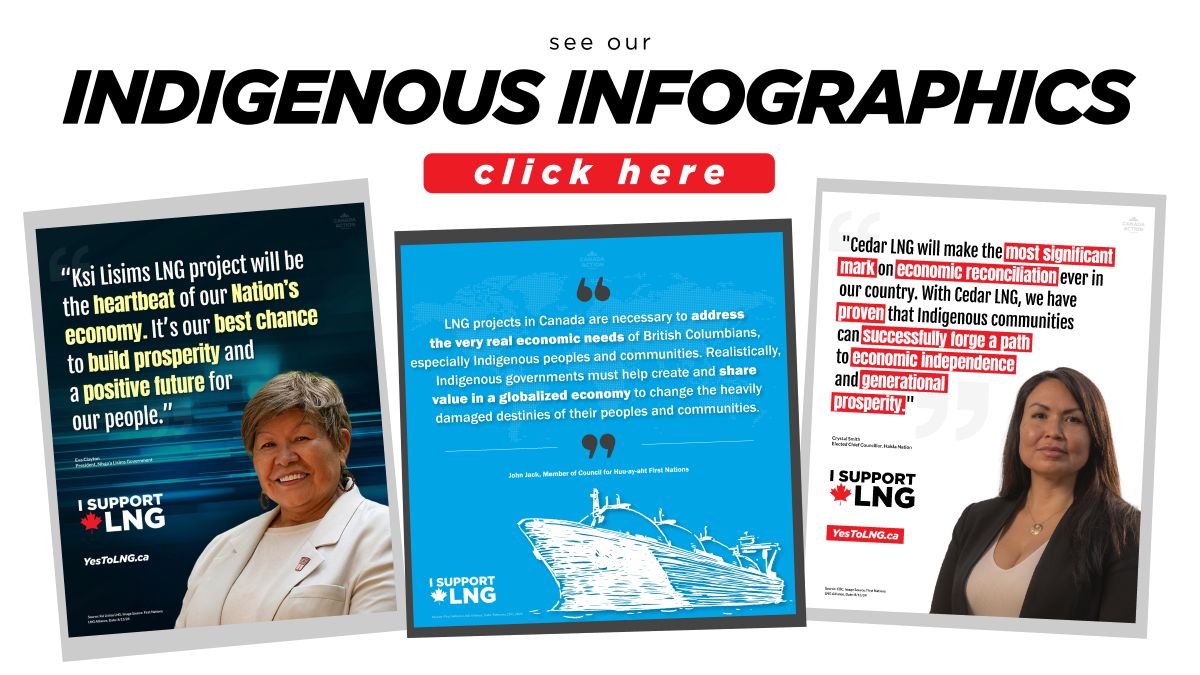
Indigenous Peoples & Economic Development in Canada
Indigenous Peoples in Canada are sometimes portrayed as operating outside of the economy and as opposed to any resource development. In reality, First Nations, Métis and Inuit Peoples have been involved in sophisticated economies and far-reaching trade systems that rely on natural resources for millennia.
The fur trade spurred growth in trade and commerce between European and Indigenous Peoples, which was instrumental in Canada’s establishment as a nation, until the forced settlement in the 19th and 20th centuries largely eliminated many economic opportunities.
Over the past few decades, First Nations, Métis and Inuit Peoples have resumed their place in the national and global economies as title holders, employees, partners and increasingly as owners of small and large business ventures. For Indigenous Peoples, there can be no political self-determination without economic self-determination.
Indigenous Rights Include Economic Rights
Indigenous rights are human rights. Among the most critical human rights are economic rights – the right to an adequate standard of living, including food, water, and shelter, and the ability to live with dignity and participate fully in society, including through work. These have been enshrined in documents including the Universal Declaration of Human Rights and the International Covenant on Economic, Social and Human Rights.
While Indigenous Peoples in Canada have consistently asserted their economic rights, over the past decade, much of the political and intellectual discussion on Aboriginal rights has focused narrowly on their ability to say ‘no’ to economic development. Ensuring equitable participation in and benefits from the modern economy – being able to say ‘yes’ to development – is just as crucial to the well-being of Indigenous Peoples across the country.
Slowly, but surely, this is changing – particularly in the natural resources sector – where Indigenous communities are now forming partnerships and becoming equity owners in projects.
Today, many Indigenous leaders have publicly expressed the absolute need for control over local resource development as a means of battling the scourge of systemic, inter-generational poverty. Our perspective is that Indigenous leaders have shown, time and again, they’re more than capable of making strong and impactful economic arguments.
Canada Action hopes that we’re all able to listen to such arguments, which is why we are dedicated to sharing the facts about Indigenous involvement in natural resource development and the benefits this brings to communities in need.
What Does UNDRIP Say?

Although government deliberations of the United Nations Declaration on the Rights of Indigenous Peoples (UNDRIP) tend to focus only on the meaning of “free, prior and informed consent”, the declaration covers economic aspects of Indigenous rights in depth, mentioning the concept 14 times.
UNDRIP's assertions include that:
a. Indigenous Peoples have the right to self-determination. By virtue of that right, they freely determine their political status and freely pursue their economic, social and cultural development (Article 3)
b. Indigenous Peoples have the right to maintain and strengthen their distinct political, legal, economic, social and cultural institutions, while retaining their right to participate fully, if they so choose, in the political, economic, social and cultural life of the State (Article 5)
c. Indigenous Peoples have the right to maintain and develop their political, economic and social systems or institutions, to be secure in the enjoyment of their own means of subsistence and development, and to engage freely in all their traditional and other economic activities (Article 20.1)
d. Indigenous Peoples have the right, without discrimination, to the improvement of their economic and social conditions, including, inter alia, in the areas of education, employment, vocational training and retraining, housing, sanitation, health and social security (Article 21.1)
Indigenous leaders agree that economic, business, and community development are all needed to improve the prosperity and well-being of First Nations, Métis and Inuit Peoples, while supporting their self-determination. In other words, natural resources projects – often situated in remote locations near Indigenous communities, which are sometimes the only opportunity around – are key to their success.
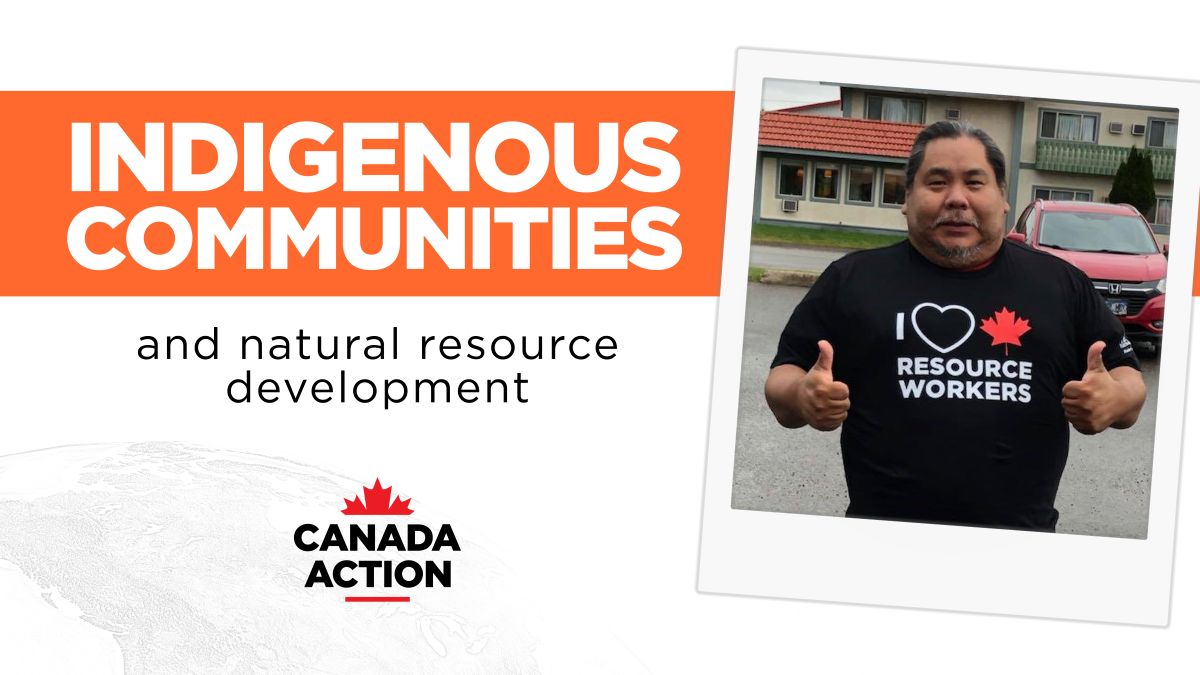
Indigenous Communities & Natural Resource Development in Canada: 15 Facts & Statistics
- Many Indigenous communities are located in rural and remote areas of Canada where few other economic drivers exist; in many instances, they are situated on or near the location of forestry, mining, and energy development
- Indigenous communities have rights to the enjoyment and use of their territories and resources as they see fit
- Almost 70% of Indigenous peoples live near forested lands in Canada [9]
- Indigenous communities play a foundational role in stewardship of natural resources worldwide and manage or hold tenure over roughly a quarter to a third of Earth’s terrestrial land; research shows lands under Indigenous stewardship maintain healthier ecosystems than many state-managed areas [16]
- Indigenous territories harbour an estimated 80% of the planet’s remaining biodiversity [10]
- Many resource projects require consultation, and in some cases, consent, making Indigenous communities and entrepreneurs’ natural partners in resource development across Canada
- Indigenous cultures and cultural practices can improve ecosystem management and promote biological diversity
- As of 2024, approximately 54,373 people who identify as Indigenous work within Canada’s total natural resource and downstream sectors [11]
- Canada's natural resource industry has the highest average level of Indigenous employment of any sector, including more than 17,300 Indigenous Peoples in the minerals and metals sector alone [1]
- Indigenous workers account for 11% of Canada’s upstream mining industry’s labour force, more than double the all-industry average representation of 4% [1]
- There are currently more than 500 active agreements between mining companies and Indigenous communities in Canada [5]
- More than 11,000 Indigenous workers are employed by Canada’s forestry sector – approximately 6% of the industry’s workforce [2]
- More than 300 communities in Canada are reliant on the forestry sector for economic opportunities, many of which are Indigenous [2]
- The Trans Mountain Expansion (TMX) pipeline had 120 of 129 Indigenous communities along its route either support or did not oppose the project [3]
- Indigenous People in Canada make nearly three times more working in the oil and gas extraction sector than the average Indigenous worker, earning $140,400 vs $51,120, almost twice as much in mining at $93,600, and a higher-than-average income in forestry at $56,100 [4]
Indigenous Ownership in Resource Projects

Below are a handful of examples of Indigenous ownership in developing natural resources in Canada, and in some cases, where First Nations are project owners leading the way:
- Coastal GasLink – 16 First Nations communities along the route of the pipeline signed up to take on a 10% equity stake in the project [6]
- Westcoast Pipeline – 38 First Nations acquired ownership in the Westcoast natural gas pipeline system, with a 12.5% ownership interest and supported by a $400 million loan guarantee from the federal government's Indigenous Loan Guarantee program [7]
- Cedar LNG – The world’s first Indigenous majority-owned LNG project, where the Haisla Nation holds a 50.1% ownership stake [13]
- Ksi Lisims LNG – A floating LNG facility underway with the Nisga’a Nation as a joint-venture proponent with two other stakeholders
- Pipelines in Canada – Indigenous communities across Canada have acquired ownership interests in more than 5,000 kilometres (km) of operating pipelines since 2021 [14]
- Trans Mountain Pipeline – Despite recent polling suggesting that Canadians want the federal government to maintain ownership of Trans Mountain, in the past, Indigenous groups have sought to acquire a 30% equity share in the project [15]
- East Tank Farm – Fort McKay First Nation and Mikisew Cree First Nation joined together to acquire a 49% interest stake in the East Tank Farm part of the oil sands Base Plant for just over $500 million [6]
- Loan Guarantee Programs – Indigenous ownership, in many instances, begins with government loan guarantees that support equity participation in major natural resource projects, improving access to capital for Indigenous ownership stakes and helping advance socio-economic well-being for First Nations [14]
Take Action Today!

Economic, business, and community development are all needed to improve the prosperity and well-being of First Nations, Métis, and Inuit Peoples while supporting their self-determination. Natural resource development is a natural choice for Indigenous communities seeking to improve their quality of life through economic opportunities that might otherwise be unavailable.
By supporting Indigenous participation and ownership in natural resource projects, we’re supporting not only a stronger, more prosperous future for their communities but also for all Canadians, with respect for Indigenous culture and spiritual connection to land and nature.
Let’s work together! Manitoba Premier Wab Kinew says he is willing to consider backing the west-to-east pipeline proposal announced by fellow premiers Alberta’s Danielle Smith and Ontario’s Doug Ford in early July that would travel through his province. https://t.co/6ByWdMqho3
— Canada Action (@CanadaAction) August 6, 2026
SOURCES
1 - https://natural-resources.canada.ca/minerals-mining/mining-data-statistics-analysis/minerals-economy#indigenous
2 – https://natural-resources.canada.ca/forest-forestry/state-canada-forests/forests-benefit-canadians
3 - https://decisions.fca-caf.gc.ca/fca-caf/decisions/en/item/460815/index.do
4 - https://boereport.com/2023/02/27/resource-sector-provides-highest-paying-jobs-for-indigenous-workers-in-canada/
5 - https://mining.ca/towards-sustainable-mining/protocols-guides/indigenous-and-community-relationships/
6 – https://www.capp.ca/en/our-priorities/indigenous-partnerships/partnerships/
7 - https://www.dentons.com/en/about-dentons/news-events-and-awards/news/2025/july/dentons-canada-advises-on-structuring-of-historic
8 - https://macdonaldlaurier.ca/majority-of-indigenous-peoples-support-resource-development/
9 - https://natural-resources.canada.ca/minerals-mining/natural-resources-indigenous-peoples/biodiversity-conservation-indigenous-people-well-being
10 - https://www.canada.ca/en/environment-climate-change/services/biodiversity/canada-2030-nature-strategy.html
11 - https://www150.statcan.gc.ca/t1/tbl1/en/tv.action?pid=3610065301
12 - https://natural-resources.canada.ca/minerals-mining/mining-data-statistics-analysis/minerals-economy
13 - https://www.cedarlng.com/project/
14 - https://www.cer-rec.gc.ca/en/data-analysis/energy-markets/market-snapshots/2026/market-snapshot-growing-indigenous-ownership-in-canadian-pipelines-and-lng-facilities.html
15 - https://resourceworks.com/indigenous_await_tmx_share/