3 BIG Reasons Why Forestry Makes Canada Stronger

3 BIG Reasons Why Forestry Makes Canada Stronger

3 Reasons Why Forestry Makes Canada Stronger cover

Canada is one of the most resource-rich nations on Earth, and our forests are among the greatest examples of that natural wealth. Covering nearly 347 million hectares – about 9% of the world's total forested land – Canada's forests are a backdrop to our national identity, while the forestry industry is an irreplaceable economic engine that hundreds of communities rely on nationwide.

Yet for an industry this vital, forestry rarely gets the credit it deserves. From the mill towns of British Columbia to the woodlots of New Brunswick, it's time Canadians knew just how much this sector does for our country.

Below, we explore three critical reasons why forestry makes Canada stronger and the current challenges the sector faces. Also see:
#1 - Forestry is a Significant Economic Contributor

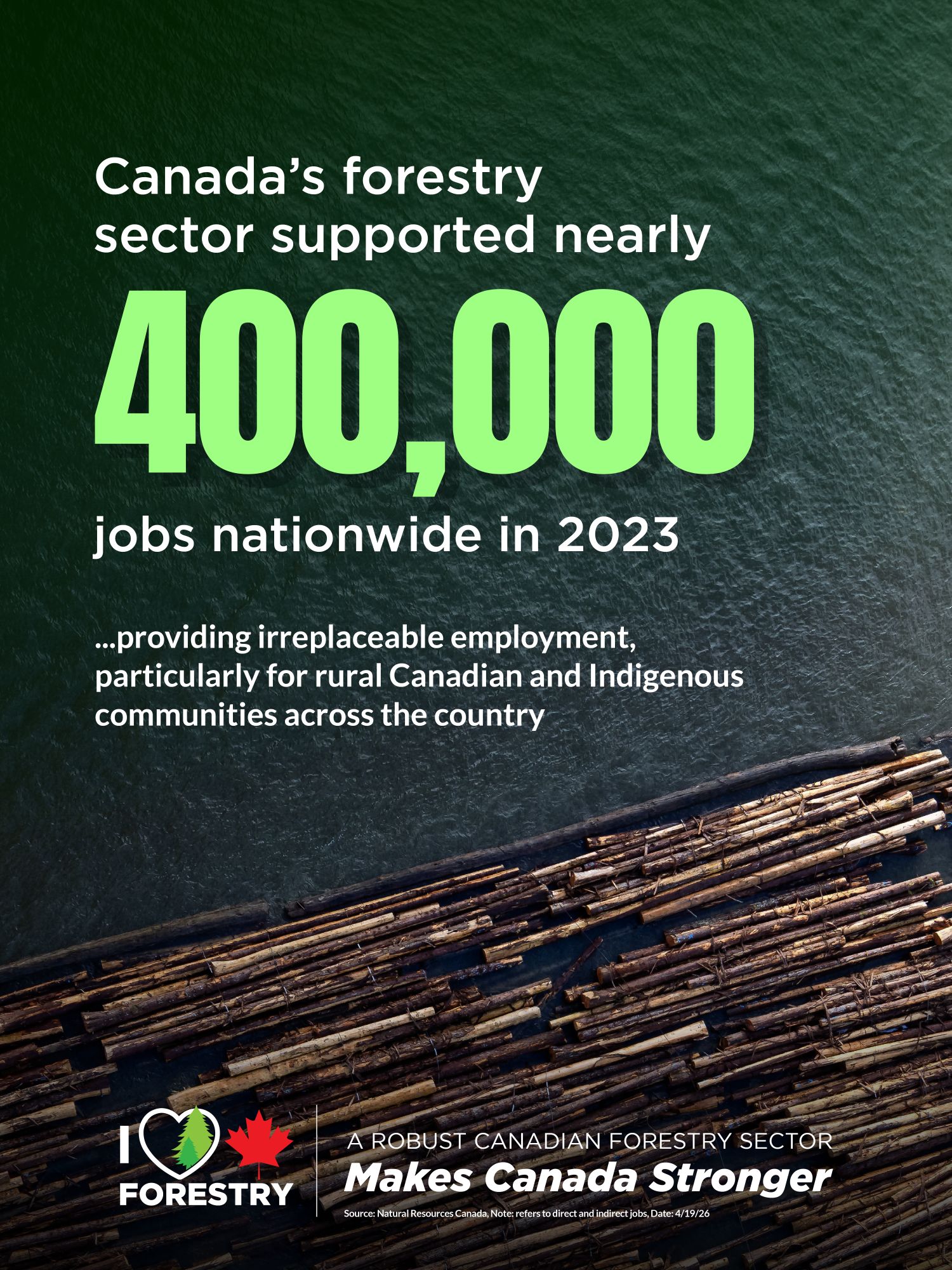
Canada's forestry sector supports 400,000 direct and indirect jobs across Canada

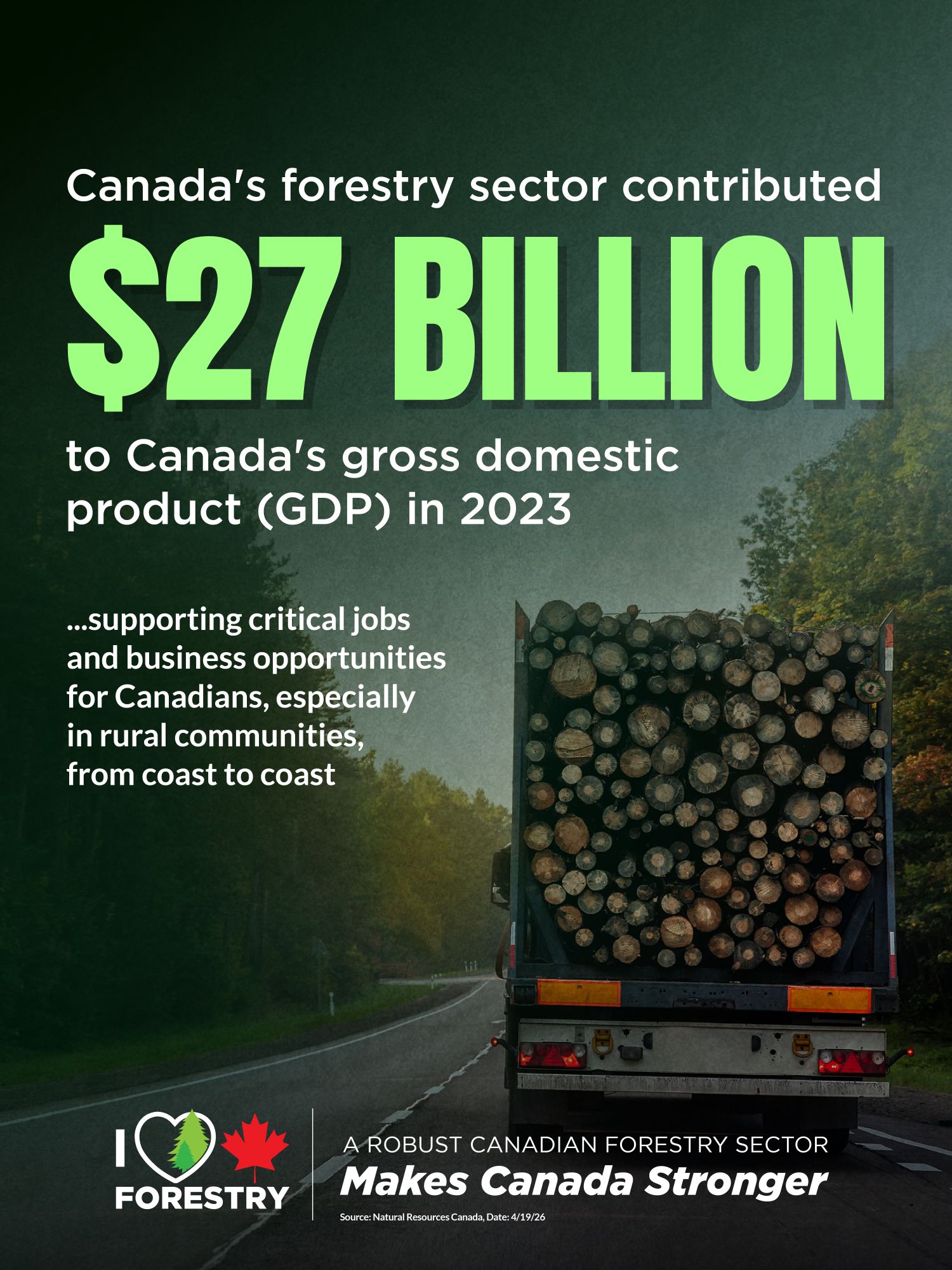
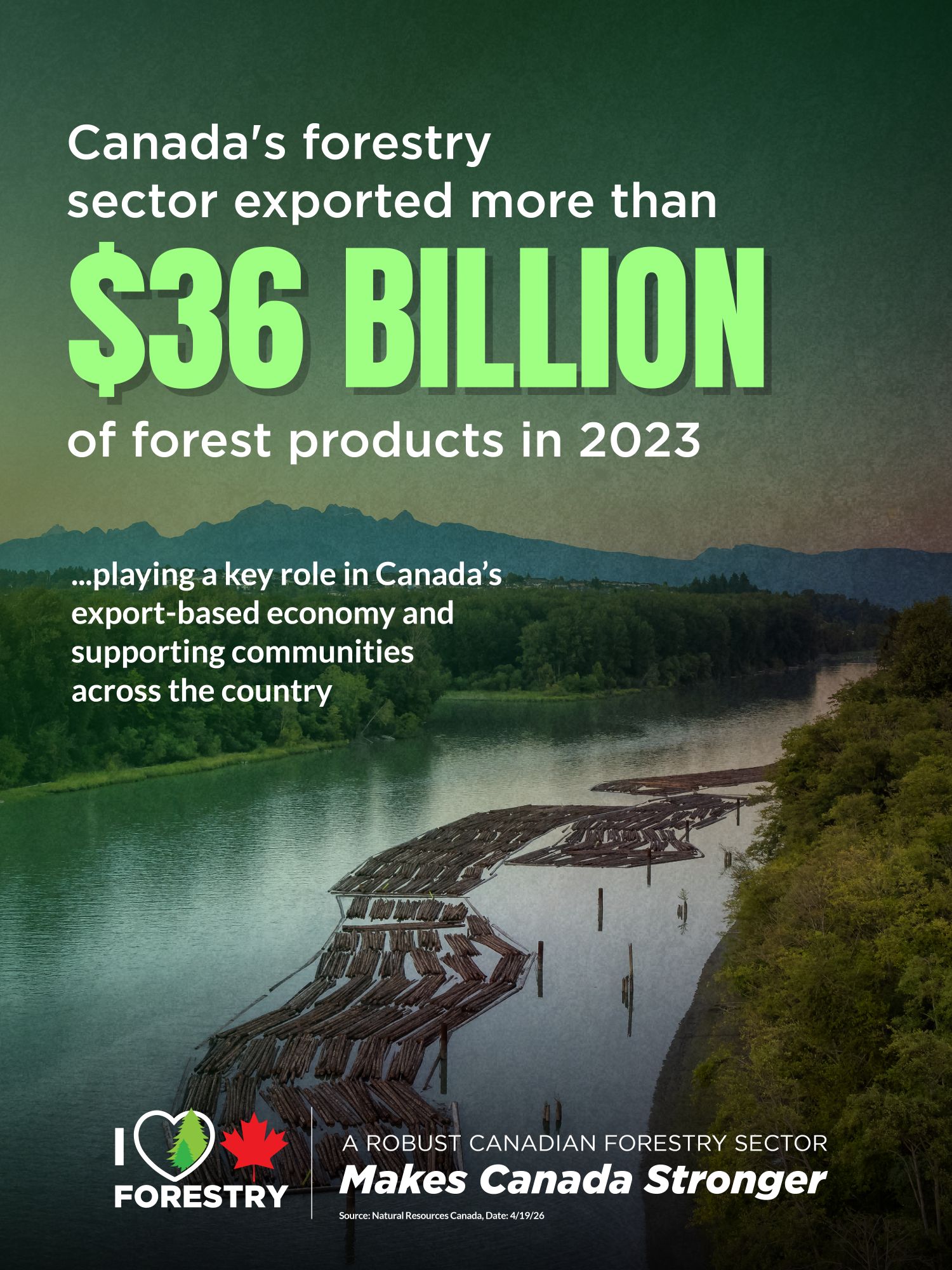
Canada's forestry sector is an important economic contributor nationwide, with the latest industry numbers available making that undeniably clear. Canadian forest industries generate $87 billion in economic activity annually and represent Canada’s fourth-largest export sector [1] with approximately $36.2 billion of wood product exports in 2023 [2].

The sector employs approximately 400,000 workers, with 200,000 direct jobs and another 200,000 indirect positions across transportation, manufacturing, and maintenance [2]. Those figures include 11,000 Indigenous workers directly employed by the industry, which has a higher rate of Indigenous employment (6%) than the national average (4%) [5]. Forestry also generates more than $2 billion in government revenues every year through stumpage charges, taxes, and other associated fees, which help fund critical social programs such as healthcare and education [6].

Think of small northern towns and villages, many hours away from major cities. In many instances, these are the Canadian and Indigenous municipalities that rely heavily on forestry for jobs and business opportunities that allow residents to stay in their communities over the long term – and more importantly, put food on the table for their families. Today, about 300 communities are reliant on the industry [4]. The success of the forestry sector is an economic story we can all get behind, because a stronger forestry industry means a stronger Canada at large.

#2 - Forestry Makes Life More Affordable for Canadians

Canada's forest sector exported more than 36 billion of forest products in 2023, making it the 4th largest export for Canadians

At a time when the cost of living is top of mind for Canadian families, forestry plays a quiet but important role in keeping everyday goods accessible and affordable. By producing essential wood-related products right here at home, the forestry supply chain reduces Canada's dependence on foreign suppliers for a wide range of materials Canadians use every single day – lumber for homebuilding, pulp and paper for packaging and school supplies, oriented strand board (OSB) panels for construction, tissue and cardboard, MDF cabinetry, and furniture are just a few examples.

Today, domestic markets consume about one-third of Canada’s softwood lumber production, a quarter of pulp production, one-fifth of OSB production, and a small amount of newsprint production [5]. The rest is exported abroad, with most of it going to the U.S.

A robust domestic forestry industry – despite experiencing significant challenges on multiple fronts – ensures ample supply for local contractors, businesses, and manufacturers, reducing the retail price pressure that comes from relying entirely on international supply chains. Simply put, a strong forestry sector helps more Canadians afford the homes they build, the products they buy, and the goods they use every single day.

#3 - Forestry Supports Rural Economies

Canada's forestry sector generated more than 87 billion in economic activity in Canada - FPAC

For hundreds of small and mid-sized communities across Canada, forestry isn't just an industry – it's the economic heartbeat of the entire town. Many rural communities in British Columbia, Ontario, and Quebec depend heavily on forestry operations for long-term, well-paying employment that supports local families, businesses, and municipal revenues.

In B.C., for example, the forestry sector contributed $12.8 billion to the province’s gross domestic product (GDP), generated $9 billion in labour income for workers, and supported more than 95,000 jobs in 2024 [7]. In the province’s remote areas, forestry’s economic importance cannot be understated [7]:

  • Vancouver Island & Coast – $2.4 billion GDP, 15,400 jobs
  • Cariboo – $2.5 billion GDP, 18,400 jobs
  • Thompson Okanagan – $2.2 billion GDP, 17,800 jobs
  • Kootenays – $1 billion GDP, 7,100 jobs
  • Nechako – $871 million GDP, 7,000 jobs
  • Northeast – $354 million GDP, 2,800 jobs

B.C’s most populated economic region, the Lower Mainland Southwest, also saw $3.2 billion in GDP and 24,600 jobs in 2024 from the forestry industry and supply chain [7] – showing the significant and positive impact the sector has on both rural and urban communities.

In many rural towns, the local sawmill or papermill is not just the biggest employer – it's the reason the municipality exists at all, supporting the tax base that funds schools, hospitals, and roads.

Without forestry, many of Canada's rural communities would face depopulation, economic stagnation, and the gradual erosion of the local services that families depend on. Ensuring Canada has a strong forestry sector is, in many ways, investing in the long-term viability of rural Canada itself.

Challenges Faced by Canada’s Forestry Sector

I love Canadian forestry banner 1

With all the immense benefits that the forestry industry brings to Canadian and Indigenous communities across the country, not all is going well for the sector. Some of the most critical challenges that the industry faces include (but are not limited to):

Self-Imposed Regulatory Barriers:

Using B.C. as an example, the province holds an annual allowable cut of 60 million cubic metres on paper – yet the actual harvest has been roughly 32 million cubic metres for each of the past two years, barely half of what is legally available [8].

Permitting delays, old-growth logging moratoriums, and ecosystem-based land management policies have sharply increased the time and cost required to access fibre, leaving mills without the raw material they need to operate [8].

So many B.C. sawmills have been forced to close that surviving pulp mills have had to import wood chips from the United States just to keep operating [8].

U.S. Tariffs & Trade Disputes:

The U.S. has imposed a combined anti-dumping and countervailing duty rate of approximately 35.2% on Canadian softwood lumber, plus an additional 10% tariff on lumber and 25% tariff on derivative wood products such as furniture [9]. The impact has been severe: Canadian softwood lumber production declined by roughly 26% between 2017 and 2024, with British Columbia's output falling to nearly half of its 2017 levels [9].

This is somewhat counterproductive, given that the U.S. relies on Canada for approximately 71% of its imported softwood lumber, meaning American tariffs drive up construction costs for American homebuilders and buyers as well [9].

However, it is Canadian and Indigenous workers – particularly in remote forest-reliant communities – that feel the brunt of continued trade disputes with our largest customer. Diversification of Canada's wood export markets is no longer optional, but a must.

Mill Closures:

The combined pressure of U.S. tariffs, low lumber prices, and restricted timber access has triggered a devastating wave of mill closures. In B.C. alone, there have been 21 permanent or indefinite closures since 2023, with 10 mills permanently shuttered on the coast since 2018 [8].

Since 2022, B.C.'s forest sector has shed 15,000 jobs, and employment in sawmills and wood preservation has fallen 20% nationally since 2017 [9].

These closures don't just affect workers – they cascade through entire local economies, stripping rural communities of the tax base that funds their schools, hospitals, and local services.

Canada Needs a Strong Forestry Sector

I love Canadian forestry banner 2

The facts are clear: forestry is an essential pillar of our present and future economy. From the mill towns of British Columbia to the woodlots of New Brunswick, hundreds of thousands of Canadians go to work every day because this industry exists.

The challenges facing the sector are real, but so is the opportunity to fix them – by cutting red tape, diversifying markets, and defending Canadian workers in trade negotiations with the United States.

Canada's forests have always been there for us; it's time our policies were there for them.

SOURCES:

1 - https://www.fpac.ca/posts/canadas-200-000-forest-sector-workers-cant-be-sidelined-in-canada-u-s-negotiations

2 - https://natural-resources.canada.ca/forests-forestry/state-canada-forests/forest-industry-contribute

3 - https://www.fpac.ca/reports/we-grow-to-build-canada-a-forest-sector-action-plan

4 - https://natural-resources.canada.ca/forests-forestry/state-canada-forests/forests-benefit-canadians

5 – State of Canada’s Forests. Annual reports 2022-2024. City of Prince George - https://pub-princegeorge.escribemeetings.com/filestream.ashx?DocumentId=36526

6 - https://natural-resources.canada.ca/forests-forestry/state-canada-forests/forest-industry-contribute

7 - https://cofi.org/wp-content/uploads/COFI-2026-Economic-Impact-Study-Technical-Report.pdf

8 - https://www.biv.com/news/resources-agriculture/bc-forest-sector-faces-another-tough-year-in-2026-11793817

9 - https://www.rbc.com/en/economics/canadian-analysis/featured-analysis/insights/decades-of-trade-disputes-reshape-canadas-softwood-lumber-sector/