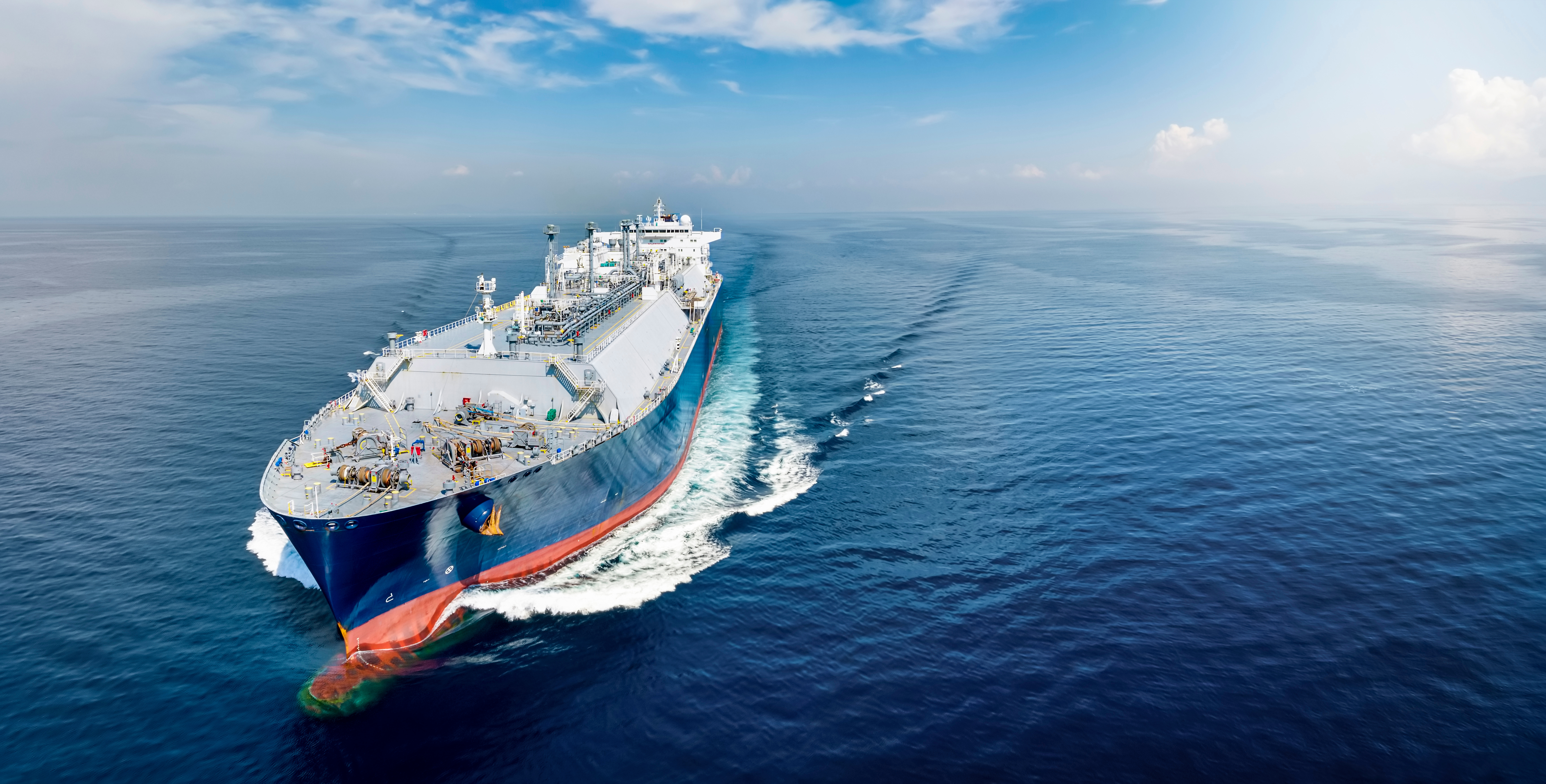
Canada is a vast country with immense natural resource wealth, including natural gas. As the world’s fifth-largest natural gas producer, sixth-largest exporter, and ninth-largest reserve holder [1], we have more than enough of this resource to meet our domestic needs and also share it with the world. This is where LNG in Canada (liquefied natural gas) can play an instrumental role in getting more of this critical energy source to global markets by exporting it from our western and eastern coasts.
With global LNG demand expected to double by 2050 [2], Canada should step up and supply the natural gas the world needs. As a reliable and democratic supplier, Canadian LNG has long been sought by many of our trade partners, including Germany, Poland, Latvia, Japan, Ukraine, South Korea, and the European Union. Doing so would benefit Canadians by creating long-term jobs and business opportunities, while generating immense government revenues through taxes and royalties to fund critical social programs such as healthcare and education.
Canada’s massive opportunity to become a top global LNG supplier would support prosperity for generations of Canadians. With one plant (LNG Canada) operational and a handful of others underway, the question remains: will we take our place as a trusted natural gas supplier to Asia, Europe, and other regions abroad, or will we let this chance wither away – as we have in the past?
Top Canadian LNG Articles
Why Even the Middle East Wants Canadian LNG The Truth About BC LNG and First Nations The World Needs More LNG – That’s Why Canada is Fast-Tracking Projects LNG Projects the Most Economically “Impactful” Canada Can Do, Says Hodgson What are the Economic Benefits of Ksi Lisims LNG in B.C.? LNG Development is Key to Canada’s Economic Future Top 5 Ksi Lisims Myths: Debunked 8 Reasons Why LNG Makes Canada Stronger Premier Eby: LNG Canada to Increase National GDP by 0.4%, Create Billions in Benefits Liquefied Natural Gas in Canada: 16 Facts & Statistics See all of Canada Action’s LNG blogs today!
What is Liquefied Natural Gas Anyway?
LNG’s name is somewhat self-explanatory; LNG is natural gas that has been cooled to a liquid form for easier storage and transport. The process, known as liquefaction, involves cooling natural gas feedstock to -162° Celsius (-260° Fahrenheit) [3]. The volume of the natural gas is reduced by about 600 times, and in liquid form, the gas becomes less prone to ignition, making it much safer for long-distance transport.
Once Canada’s LNG exports reach their destination via specialized ocean-faring tankers, it is unloaded and returned to a gaseous state in a process called regasification. The natural gas is then fed into local pipeline systems to be delivered to homes, businesses, and industry for heating, power generation, and a variety of manufacturing processes.
Canada’s LNG Projects
| Project | Location | Export Capacity | Stage |
|---|---|---|---|
| LNG Canada Phase 1 | Kitimat, BC. | 14 million tonnes per annum (mtpa), 40 years. | Complete in 2025; now operating. |
| LNG Canada Phase 2 | Kitimat, BC; Phase 1 expansion. | 14 mtpa, 40 years. | Under partner review; FID expected end of 2027. |
| Woodfibre LNG | Near Squamish, BC, at a former pulp mill site. | 2.1 mtpa, 40 years. | Under construction; targeted start in 2027. |
| Cedar LNG | Floating facility in Kitimat, BC, in Haisla territory. | 3 mtpa, 25 years. | Under construction, startup expected in late 2028. |
| Ksi Lisims LNG | Proposed floating facility on Pearse Island, BC, near Gingolx. | 12 mtpa, 40 years. | Awaiting FID. |
| Tilbury LNG Phase 2 | Tilbury Island, Delta, BC. | 2.5 mtpa, 25 years. | Awaiting FID. |
| Summit Lake PG LNG | Near Summit Lake, about 30 km north of Prince George, BC. | 7 mtpa. | In environmental review; plans rail transport to Prince Rupert. |
| Quebec LNG Project | Baie-Comeau region, Quebec, on the St. Lawrence north shore. | Not specified. | Proponents say the export case to Europe is strong. |
| Newfoundland & Labrador LNG Project | Newfoundland and Labrador. | Not specified. | Potential project proposed by private proponent. |
Cancelled LNG Projects in Canada
While the federal government has recently shifted its tone on LNG in Canada, support for the emerging industry hasn’t always been the case. Over the past several years, many proposed Canadian LNG projects were cancelled due to regulatory purgatory and high initial costs, representing hundreds of billions of dollars in lost investment. Those projects include, but are not limited to:
- Aurora LNG
- Bear Head LNG
- Discovery LNG
- Douglas Channel LNG
- Goldboro LNG
- Grassy Point LNG
- Jordan Cove LNG
- Kitsault LNG
- Kitimat LNG
- Kwispaa LNG
- Orca LNG
- Pacific Northwest LNG
- Prince Rupert LNG
- Steelhead LNG
- Saguenay LNG
- Triton LNG
- WCC LNG
In the early 2010s, 18 LNG projects were proposed in British Columbia alone [4]. Today, just one of these projects has made it to the finish line: LNG Canada Phase 1, which began operations in late June of 2025.
Canadian LNG is Indigenous LNG
Canadian LNG is more than just an opportunity for Canadians; it has also played an irreplaceable role in economic reconciliation with First Nations. Cedar LNG, for example, one of Canada’s current projects underway, is the largest majority Indigenous-owned infrastructure project in the country. In fact, Canadian LNG is Indigenous LNG, say Indigenous proponents.
Crystal Smith, who at the time of the quote below was the elected chief councillor of the Haisla Nation (the main proponent of Cedar LNG), is a fierce advocate for LNG development.
“If left to climate activists, Indigenous people would be the last to benefit, the last to participate, and the last to be connected to new infrastructure,” Smith said in 2023, referring to non-governmental organizations’ opposition to LNG projects in B.C. [7]
“But not this time. First Nations will be full participants in the future. Not the cold, dark future that eco-colonialism offers, but a fair and prosperous future that Indigenous people helped plan, design and build,” Smith continued.
LNG in Canada, particularly development in British Columbia, is providing once-in-a-generation opportunities for First Nations to generate own-source revenues and uplift the socio-economic status of their communities. The Coastal GasLink is just one of many examples, a project in which 17 of 20 First Nations along the pipeline’s route now have a 10 per cent equity stake. LNG Canada, the largest private sector investment in Canadian history, has also spent billions of dollars on local and Indigenous businesses.
“LNG provides us with an opportunity where we can own our future,” says Karen Ogen, CEO of the First Nations LNG Alliance [8].
“There is a global need for Canadian LNG. And there is no Canadian LNG unless it’s Indigenous LNG. Indigenous people will be at the heart of it.”
Global LNG Demand Growth
The world needs more Canadian energy. pic.twitter.com/1Ta1Wtg4aM
— Canada Action (@CanadaAction) August 18, 2026
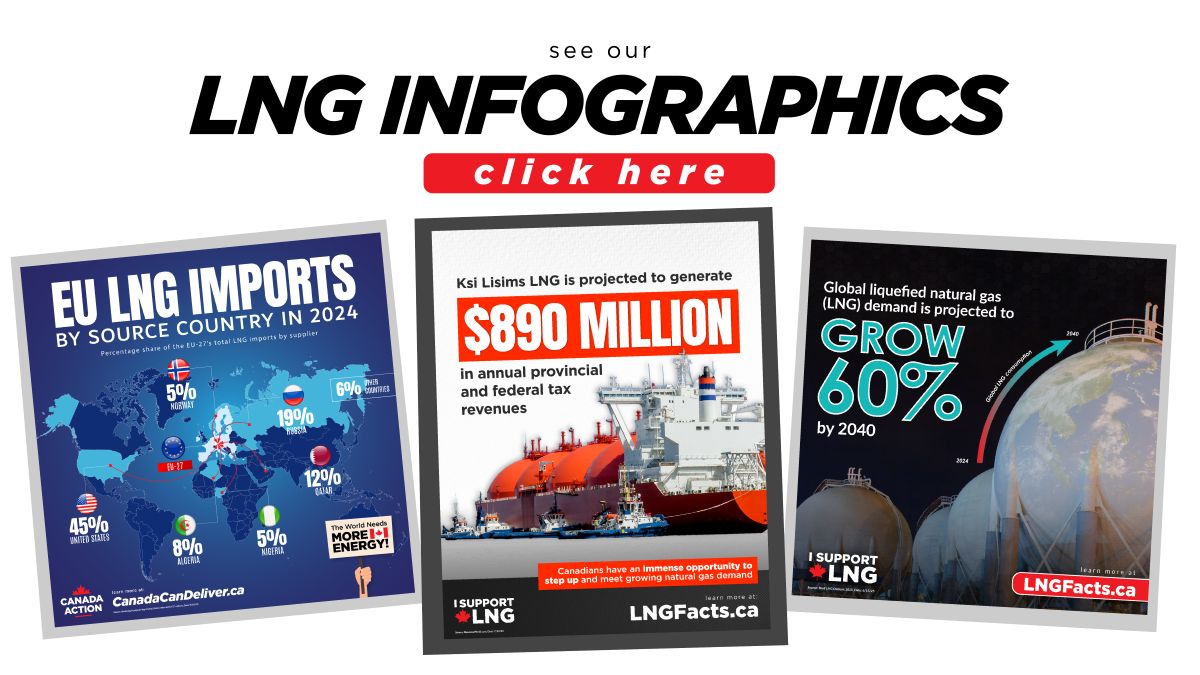
Global demand for liquefied natural gas is surging, with projections indicating it could increase by over 60% by 2040, and double by 2050 as nations seek to diversify their energy sources [2]. Much of this growth is driven by developing economies in Asia, which are expected to account for most of the world's rising energy demand through 2050.
Nations like Japan and South Korea are actively seeking long-term, stable energy supplies and have expressed strong interest in Canadian LNG. Similarly, following geopolitical instability, European countries such as Germany and Poland are urgently seeking to diversify their gas supplies away from unreliable sources.
The world’s rapidly shifting energy systems have created an immense window of opportunity for Canadian LNG to play an instrumental role in providing a secure supply, offering a reliable source of natural gas to meet the growing needs of our trade partners.
Canada’s LNG Opportunity
Canada has a generational opportunity to become a global LNG powerhouse, leveraging our vast natural gas reserves to create lasting prosperity for our families. The economic benefits are immense; a robust LNG sector in British Columbia alone has been projected to generate over $90 billion in government revenues and create more than 71,000 jobs through to 2064.
Major projects like LNG Canada are already expected to contribute significantly to our economy, with BC Premier Eby stating that the project would boost national GDP by 0.4% while creating billions of dollars more in added benefits.
As a stable, democratic nation, Canada is the reliable energy partner the world needs. By stepping up to meet global demand, we can secure our economic future while providing Europe and Asia with a secure energy supply and displacing less reliable producers abroad.
Canadian LNG will also allow us to diversify our export markets, reduce our reliance on the U.S., strengthen our economic independence, support economic reconciliation with First Nations, and maximize the value of our resources – all at once.
LNG in Canada is a win across the board. Join us today to learn more!
Energy is no longer a side issue in the Canada-Japan relationship; it has become a central pillar of bilateral trade. https://t.co/YoKJIHbP2b
— Canada Action (@CanadaAction) August 23, 2026
Canadian LNG: Frequently Asked Questions
Canada currently has seven LNG projects that are operating, under construction, or proposed, all of them located in British Columbia.
More recently, two additional eastern LNG proposals have also been reported on — one in Newfoundland and Labrador and another in Quebec — although it remains unclear whether they will secure financing and move through permitting.
Canada is now exporting liquefied natural gas.
As of June 30, 2025, Canada began exporting LNG through the LNG Canada Phase 1 project located in Kitimat, British Columbia.
LNG Canada is currently the country’s only operational LNG export facility, with an annual capacity of 14 million tonnes per annum (mtpa).
By 2030, Woodfibre LNG, Cedar LNG, and Ksi Lisims LNG — all also located in British Columbia — could be operational if development proceeds as planned.
British Columbia is currently the only province with an operational LNG export facility.
Although several east coast LNG projects have been proposed over the years in places such as Quebec, Nova Scotia, and other provinces, none of those facilities are operating today.
Alberta holds Canada’s largest natural gas reserves, with British Columbia ranking second.
Other regions, including Quebec and offshore Nova Scotia, also have significant natural gas potential, but those resources have not been widely developed for a range of policy, economic, and regulatory reasons.
SOURCES:
1 - https://financialpost.com/commodities/energy/oil-gas/alberta-major-revision-oil-gas-reserve-estimates
2 – https://corporate.exxonmobil.com/sustainability-and-reports/global-outlook
3 - https://www.eia.gov/energyexplained/natural-gas/liquefied-natural-gas.php
4 - https://www.biv.com/news/resources-agriculture/whatever-happened-bcs-100-billion-lng-industry-8267791
5 - https://www.cbc.ca/news/canada/montreal/norwegian-lng-quebec-1.7577588
6 - https://www.cbc.ca/news/canada/newfoundland-labrador/fermeuse-energy-lng-1.7625062
7 - https://www.indigenousresourcenetwork.ca/climate_activists_don_t_speak_for_all_indigenous_people
8 - https://indigenouslng.ca/