
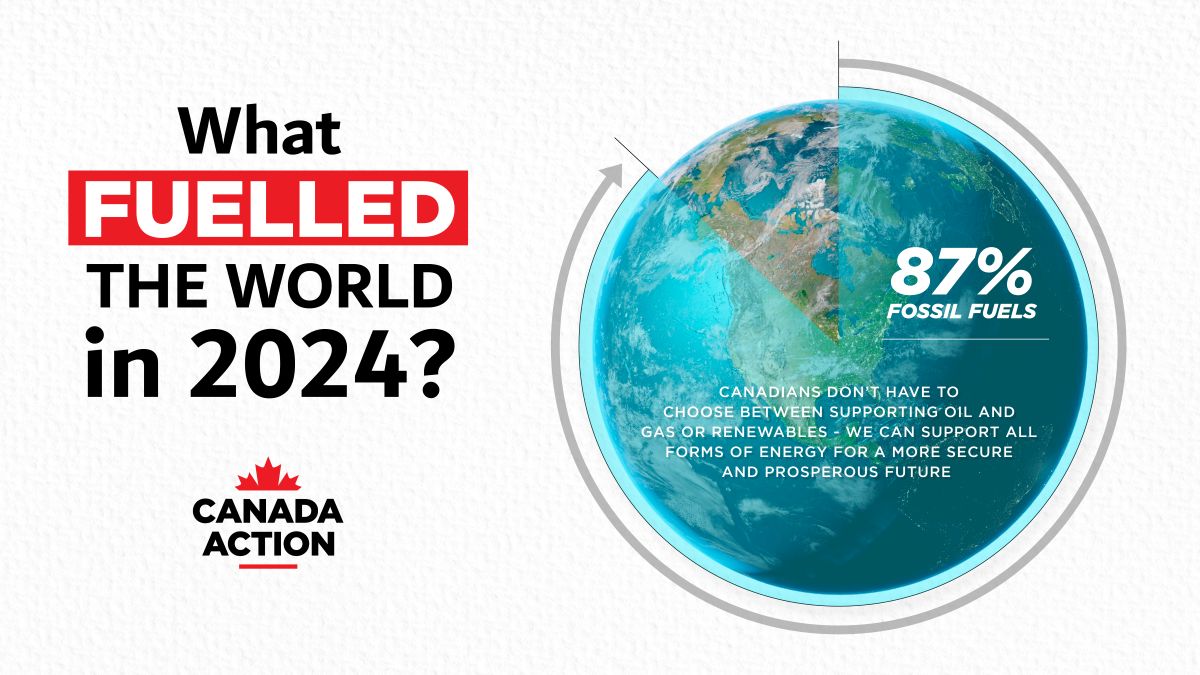
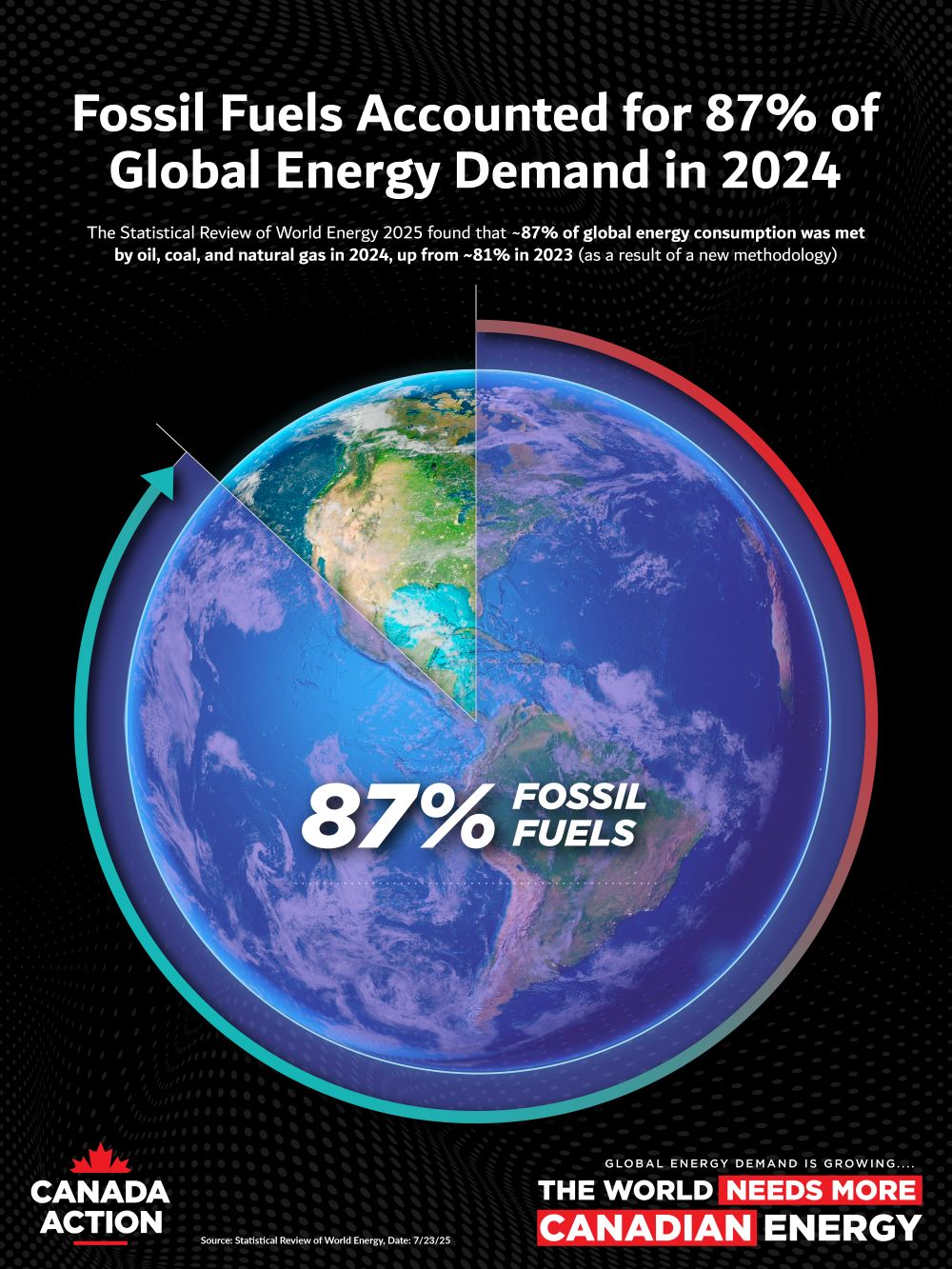
The 74th edition of the Statistical Review of World Energy, released last month, found that fossil fuels accounted for a large majority of the world’s energy in 2024 – nearly 87%. Compared to 2023, this figure is up from ~81% as a result of an updated methodology used by the Energy Institute and its co-authors Kearney and KPMG.
- Canada Action
Fossil Fuels Reign Supreme, Again
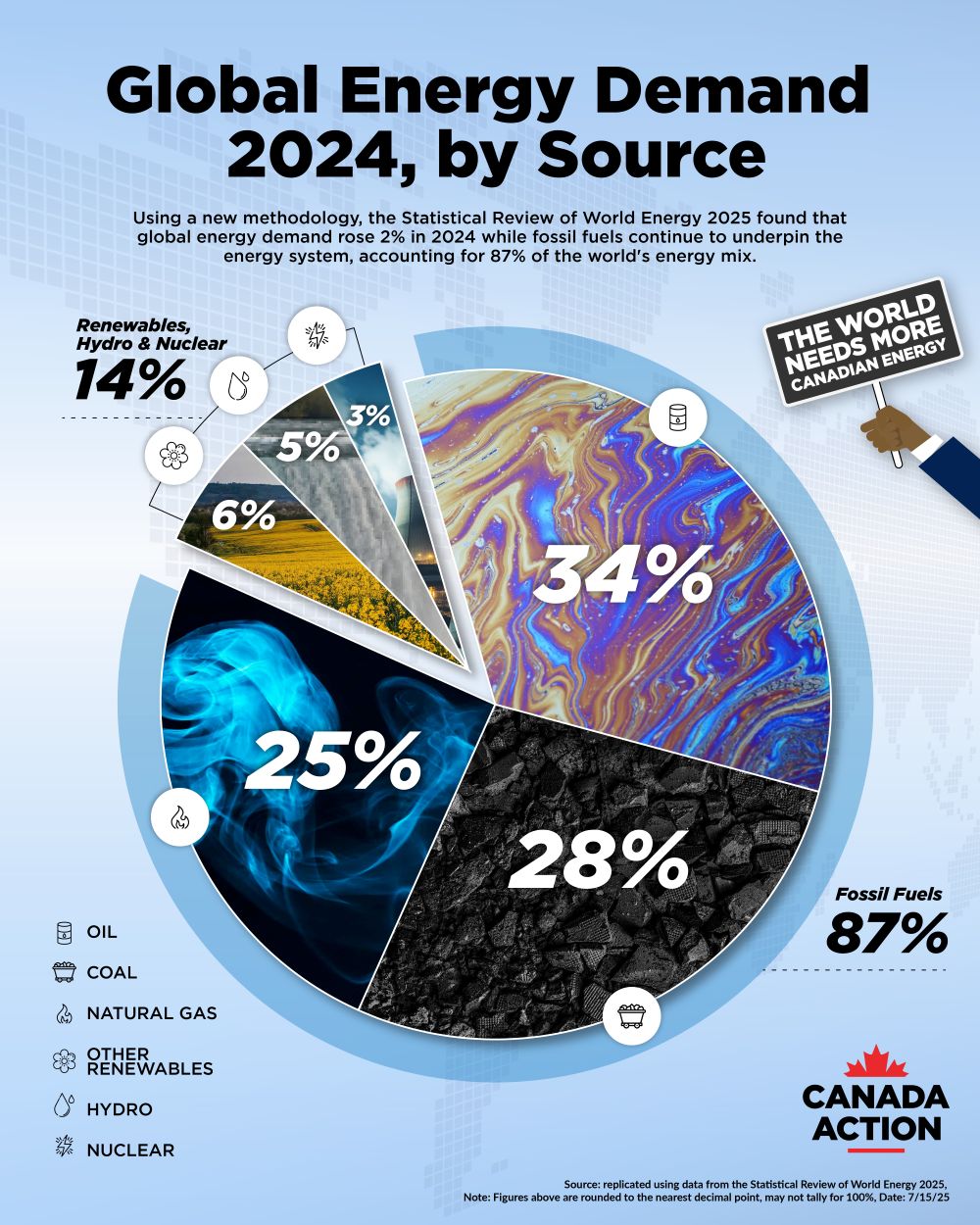
Last year, the world consumed a total of 592 exajoules of energy, with the following sources accounting for their respective shares:
- Oil – 199 EJ – 33.6%
- Coal – 165 EJ – 27.9%
- Natural Gas – 149 EJ – 25.2%
- Nuclear Energy – 31 EJ – 5.2%
- Other Renewables – 33 EJ – 5.6%
- Hydropower – 16 EJ – 2.7%
In total, oil, coal and natural gas accounted for 86.7% of the world’s energy mix, with renewables combining for a respective 13.5% (note, rounding errors present).
Report Highlights
- Record Energy Consumption: Global primary energy consumption reached a new all-time high of 620 Exajoules in 2024, showing a 2% increase from the previous year.
- Record High for Coal: Global demand for coal reached a new record at 165 exajoules, with the Asia Pacific region accounting for 83% of this consumption.
- Oil Remains the Leader: Oil was the largest single source of energy, meeting 34% of the world's total energy demand.
- Natural Gas Demand Rebounded: Global demand for natural gas grew by 2.5% in 2024, with the Asia Pacific region leading this increase.
- Electricity Growth Outpaces Overall Energy: Electricity demand grew at 4%, which is double the growth rate of total energy demand, indicating a global trend toward electrification.
- S. Leads in Oil Production: The United States was the world's largest oil producer, with its output nearly matching the combined production of Saudi Arabia and Russia.
- China's Dual Role: China's demand for coal was greater than the rest of the world combined.
- Record Biofuel Demand: Global demand for biofuels increased by 3% in 2024, reaching a record high, with the Asia Pacific and North American regions seeing the most significant growth.
- Nuclear Power on the Rise: Nuclear energy generation increased by 3% in 2024, meeting just over 5% of the world's total energy demand.
- Shifting Trade Dynamics: LNG exports to Europe decreased, with a significant portion being redirected to the Asia Pacific region.
Rising Electricity Demand
According to the Statistical Review of World Energy, electricity demand continued its strong upward trend in 2024, growing at a rate of 4%—outpacing total energy demand growth and signalling a clear and ongoing global shift toward electrification. Over the past decade, electricity generation has consistently grown at a rate of about 2.6% annually, underscoring the increasing importance of electricity in the global energy mix.
It should be noted that the surge in electricity demand is not uniform worldwide. The Asia Pacific region is the primary driver of growth, with its demand increasing by 5% in 2024 to account for 52% of the world's total electricity production. Canada's western coastline offers prime access to Asian markets, with short shipping times of just 8-12 days.
To meet this growing power demand, the report notes that generation from nearly all energy sources increased. Renewables, particularly wind and solar, satisfied 53% of new global electricity supply.
Fossil fuels also expanded electricity output, with natural gas power generation growing by 2.5% and coal generation increasing by 1.2%. Today, coal remains the single largest source of electricity generation worldwide.
The World Needs More Canadian Energy

The Statistical Review of World Energy 2025 is another poignant reminder that as the world continues to experience population growth over the next several years, energy from all sources will be required to meet our needs.
Canada can play a key role in providing the world with the energy it needs. From oil to natural gas to hydrogen to electricity, we Canadians have an immense opportunity to take advantage of our resource wealth, support economic growth, and take control of our national destiny.
The time to say “yes” to energy development across Canada – from the oil sands to LNG facilities to pipelines to transmission lines to wind and solar farms – is now. Let’s put one foot in front of the other and expedite new energy projects for the benefit of Canadian families.
We must urgently build new critical infrastructure projects like pipelines, powerlines, ports, railways and roads to diversify trade and secure our economic future. pic.twitter.com/p6gnOmuqmG
— Canada Action (@CanadaAction) August 23, 2025