Canada Needs to Focus on Building Energy Self-Reliance, Before It’s Too Late

Canada Needs to Focus on Building Energy Self-Reliance, Before It’s Too Late

Canada Needs to Focus on Building Energy Self-Reliance, Before it’s Too Late

For decades, the relationship between Canada and the United States has been an ideal model of international cooperation. Like the truest of friends, we've built deeply integrated trading and energy systems, an arrangement born from economic pragmatism and mutual trust that has long served both our nations.

But today, Canadians are faced with a glaring problem: too much of what keeps our country running – oil and gas – crosses the U.S. border on its way to eastern provinces.

This isn’t just an economic liability, but a risk to our energy security at large.

In 2023, Canada imported an average of 490,000 barrels of crude oil every day, amounting to $19.5 billion sent abroad in just one year. It should be noted that these are revenues that Canadians are fully capable of keeping within our country; despite having the world’s third-largest proven oil reserves, Eastern Canada relies heavily on imported energy from countries like the United States, Nigeria, and Saudi Arabia.

It’s an alarming energy security paradox that should give every Canadian pause.

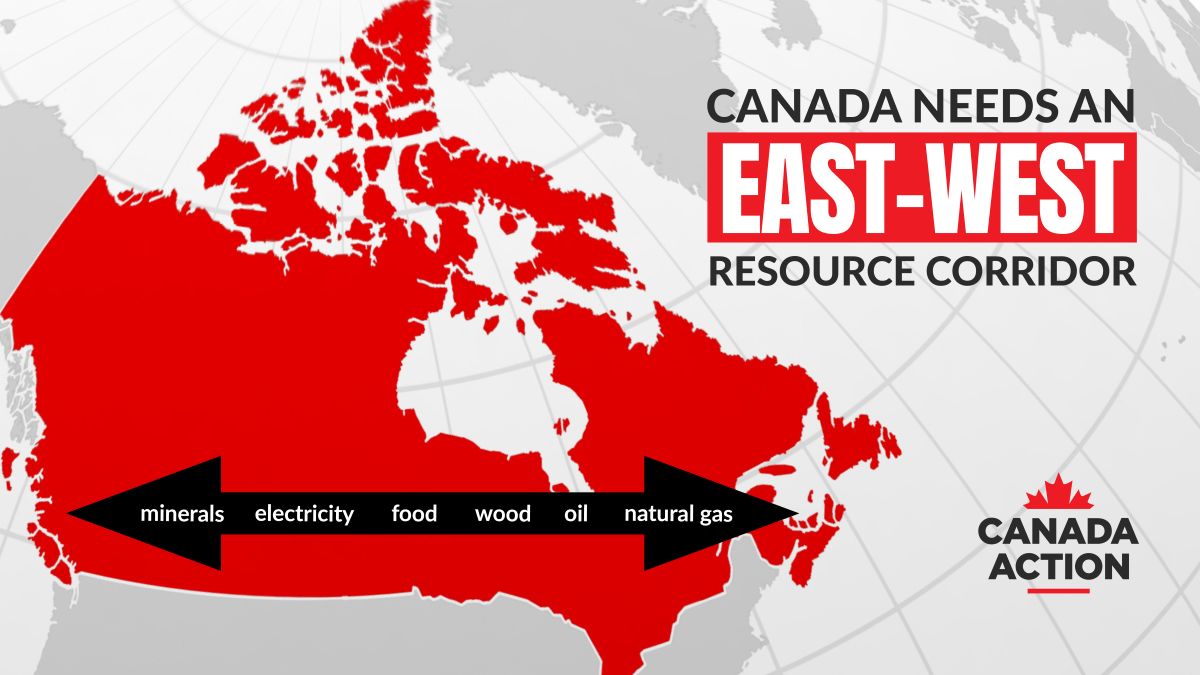
Thankfully, a solution seems to be within reach. Ontario, Saskatchewan, and Alberta are actively joining forces in a push to create a true Canadian energy corridor, one that will keep our oil, natural gas, and power transmission inside our borders. This is a good first step towards securing our energy and economic future for generations to come.

As Premier Doug Ford put it, “The last few months have shown that Canada can no longer rely on energy infrastructure that lies outside of our borders and can be shut down at a moment’s notice by another country. It’s time for us to build cross-Canada infrastructure within our borders so we can protect our energy security, find new markets for Canadian energy and resources and create new jobs and opportunities for Canadian workers. Together, we’re building a more competitive, resilient and self-reliant economy.”

The Premier’s words could not come at a more critical time.

Not too long ago, the reversal of Line 9 in Ontario helped send more western Canadian oil east from Sarnia to Montreal, easing our reliance on overseas imports. But this patchwork approach didn’t address the root vulnerability that so much of our west-to-east energy flows still cross into and out of the U.S.

The energy security risk posed to Canadians by relying on critical energy infrastructure routed through the U.S. becomes painfully clear when trade disputes emerge, like tariffs, and when American states like Michigan threaten to close Line 5, a vital pipeline that feeds western-made supply through to Ontario and Quebec.

One political decision south of the border, at either the state or federal level, and families and businesses in Canada could be left short.

It all begs simple questions: why should Canada’s access to its own resources be at the mercy of another country’s whim? Additionally, as one of the world’s largest oil and gas producers and exporters, why do we still spend billions of dollars every year on foreign imports?

This is why an energy corridor running west to east—through Alberta, Saskatchewan, Manitoba, and Ontario, all within Canadian territory—is not just sensible policy, but an urgent necessity. The goal should be obvious: keep Canadian oil, gas, minerals, and electricity flowing freely to every province, while opening up new economic and trade opportunities that will help secure our country’s future and independence.

Alberta Premier Danielle Smith calls it “a defining moment” for Canada, noting, “By advancing a Canadian energy corridor from Alberta to Ontario, we are securing long-term energy access for families and businesses, creating thousands of jobs, and opening new doors for trade and investment while strengthening our position as a global energy leader.”

Saskatchewan Premier Scott Moe agrees with both Ford and Smith, stating, “Saskatchewan exports 70 per cent of all we produce, and so having access to international markets is essential to the health of our economy along with contributing to global food and energy security. By advancing important projects such as pipelines, rail connections and critical-mineral processing capacity, we are safeguarding thousands of jobs, strengthening our energy security and fostering sustainable growth.”

We couldn’t agree more with all three Premiers.

Building and modernizing critical trade infrastructure within our borders – not relying on the U.S. for transport of precious oil and gas supply – is an excellent way to strengthen Canada. Doing so would help employ Canadians with career-building jobs, support our families, and ensure that the next generation inherits a country with the tools and capabilities to thrive.

Any time we invest in pipelines, rail, and transmission lines that run from coast to coast, we are investing in our shared prosperity – evident by the immense benefits already being created for Canadians by the recently completed Trans Mountain Expansion.

Too often, debates about building new major infrastructure in Canada get bogged down by politics, but there is nothing partisan about wanting to keep Canada economically secure, independent, and prosperous. There has never been a better time for our provinces – and all Canadians – to rally behind projects such as pipelines, powerlines, ports, railways, and roads, that, if built, will ensure a brighter future for all Canadians.

It’s time to act with purpose and unity. Let’s seize this moment, build the energy corridors we need, and ensure that Canada’s future is in our own hands – before it’s too late.