Ksi Lisims LNG: Top 5 Myths Debunked

Ksi Lisims LNG: Top 5 Myths Debunked

Ksi Lisims LNG - Top 5 Myths Debunked cover

It’s another day, and to no surprise, another coordinated effort by anti-development activists is underway to derail a critical economy-boosting project in northern British Columbia. If you haven’t heard about Ksi Lisims LNG, it’s the next large-scale gas liquefaction facility proposed on our western coastline. It has an export capacity of 12 million tonnes per annum (mtpa), slightly less than LNG Canada Phase 1, and is scheduled for completion sometime between 2028 and 2029.

While most Canadians are united behind nation-building projects such as Ksi Lisims LNG to help diversify our export markets, maximize the value of our resources, and secure our economic future, the obstructionist “no-to-everything” crowd just can’t help themselves, yet again.

Below, we debunk several of the Ksi Lisims LNG myths disseminated by opponents. Also see:
MYTH #1 - B.C. LNG is late to the export game and has high costs, making it uncompetitive

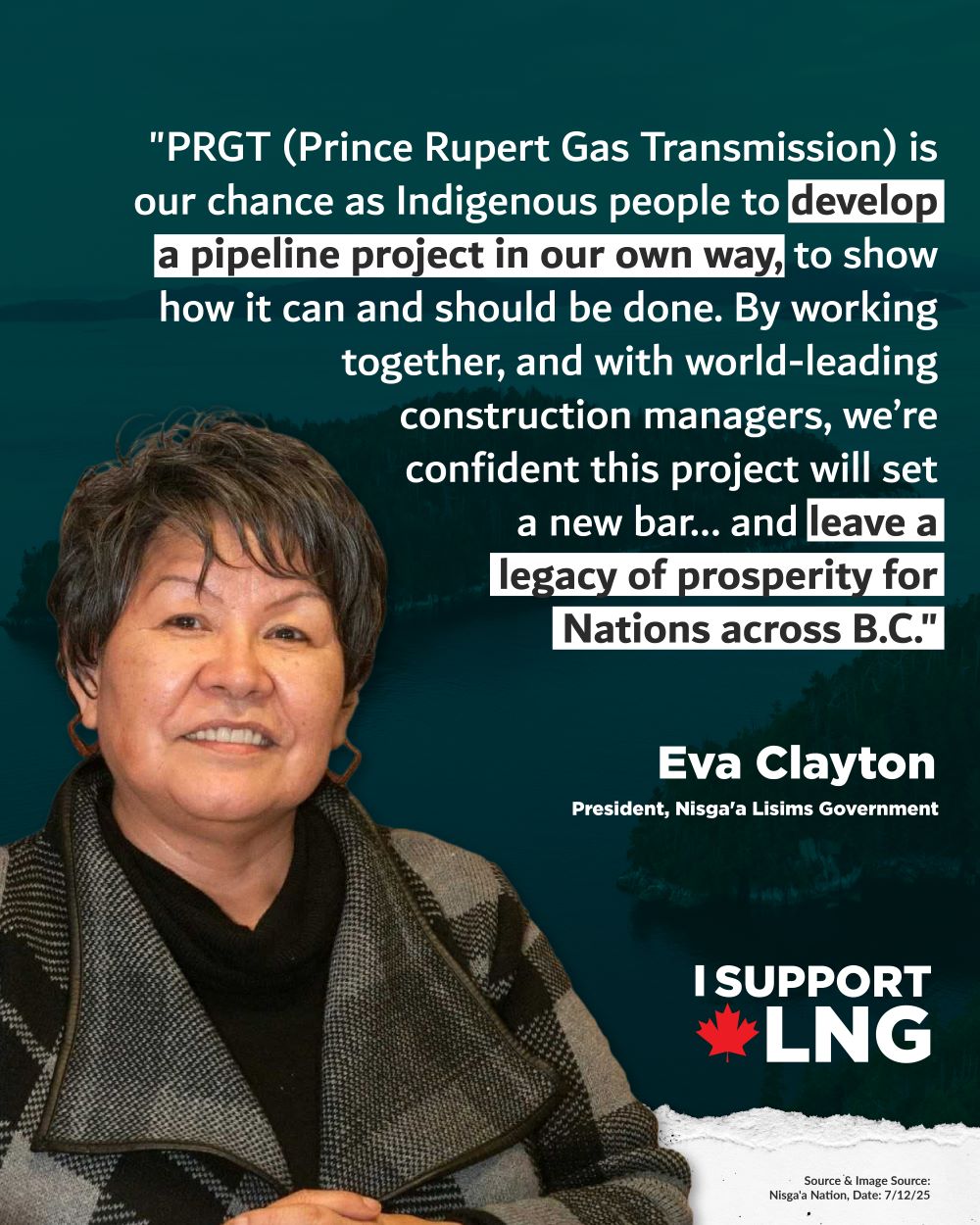
Ksi Lisims LNG - Eva Clayton says the project and its pipeline will create immense opportunities for Nisga'a Nation

FACT: B.C. LNG projects possess unique advantages that make them extremely competitive in the global market, as evidenced by the launch of LNG Canada, which has secured cargo offtakes from South Korean, Japanese, and Malaysian companies thus far.

#1 – Geographical Location

B.C.'s proximity to Asia provides a significant advantage over competitors like the U.S. Gulf Coast and Qatar. Shorter shipping distances translate to lower transportation costs [1], making B.C. LNG is an attractive option for major Asian buyers.

For instance, a shipment from B.C. to Asia takes approximately 8 to 10 days, compared to 20 days from the U.S. Gulf Coast [1].

#2 – Low-Cost and Competitive

While the initial capital costs of B.C. LNG projects can be high, they are not the sole determinant of competitiveness. A comprehensive analysis of the entire value chain, from wellhead to market, reveals that B.C. LNG can be cost-competitive with other sources.

In fact, some reports indicate that Canadian LNG projects are among the lowest-cost in North America [2]. Canada is significantly colder than other areas of the world, requiring less energy input to liquefy natural gas, thereby reducing energy-associated costs [3].

#3 – Demand is Growing

Global demand for LNG is projected to continue growing, particularly in Asia, as countries seek to transition away from coal and diversify energy supply sources.

With demand expected to increase by up to 60% through 2040, there are numerous opportunities for Canadian export facilities to compete globally.

MYTH #2 - In an oversupplied global market, investing in B.C. LNG is risky business

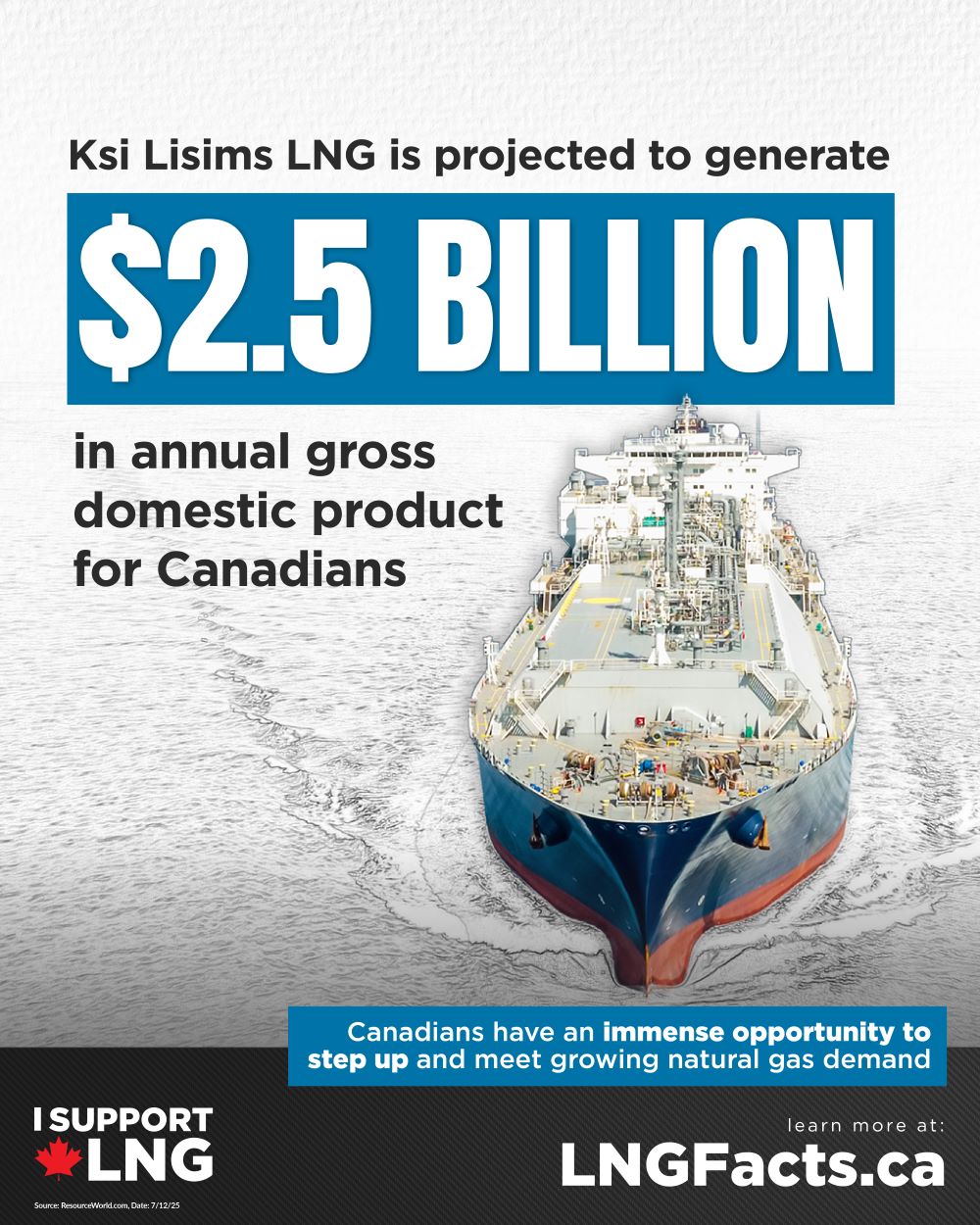
Ksi Lisims LNG to generate 2.5 billion dollars in economic activity per year

FACT: Although there may be oversupply in the near term, significant global LNG demand growth over the next several years through 2040 and beyond will ensure continued opportunities for B.C. LNG exporters.

#1 – Future LNG Outlook

Authoritative projections from the IEA, Wood Mackenzie, and Shell’s 2024 industry outlook all see global LNG consumption rising 45 to 60 % by 2040 as coal-to-gas switching, industrial use, and population growth in Asia outpace efficiency gains.

More than 70% of that incremental LNG demand growth is expected in South and Southeast Asia [4], the very markets B.C. cargoes can reach in 8-10 shipping days, halving the voyage from the U.S. Gulf Coast or Qatar.

#2 – Supply Shortfall

A wave of new LNG export facilities through 2025-2030 are expected to come online, including projects like Canada’s Woodfibre LNG and Ksi Lisims LNG [5].

These facilities are expected to bring much-needed balance to the global market, also putting downward pressure on prices that will help accommodate more demand growth [5]. Shell’s latest industry outlook predicts that supply shortages may emerge beginning around 2030 [4][6].

#3 – Long-Term Contracts

Up to 80% of global LNG is sold under long-term contracts [7][8]. Buyers in Japan, South Korea, and India are actively seeking new long-term deals to secure supply before capacity tightens, and B.C.’s proponents are already in advanced talks or have made supply deal agreements [9][10].

These contracts provide predictable cash flow to project owners and shield buyers from volatile spot prices, turning “risk” into profitable certainty [11].

#4 – Energy Security

Both Europe’s and Asia’s scramble to replace Russian natural gas and prevent power shortages underscore that a reliable LNG supply source, such as Canada, is a strategic asset.

Customers, lenders, and governments view politically stable, rule-of-law Canada as a lower-risk LNG supply source than many of their current suppliers.

MYTH #3 - Ksi Lisims will delay British Columbia’s transition away from fossil fuels

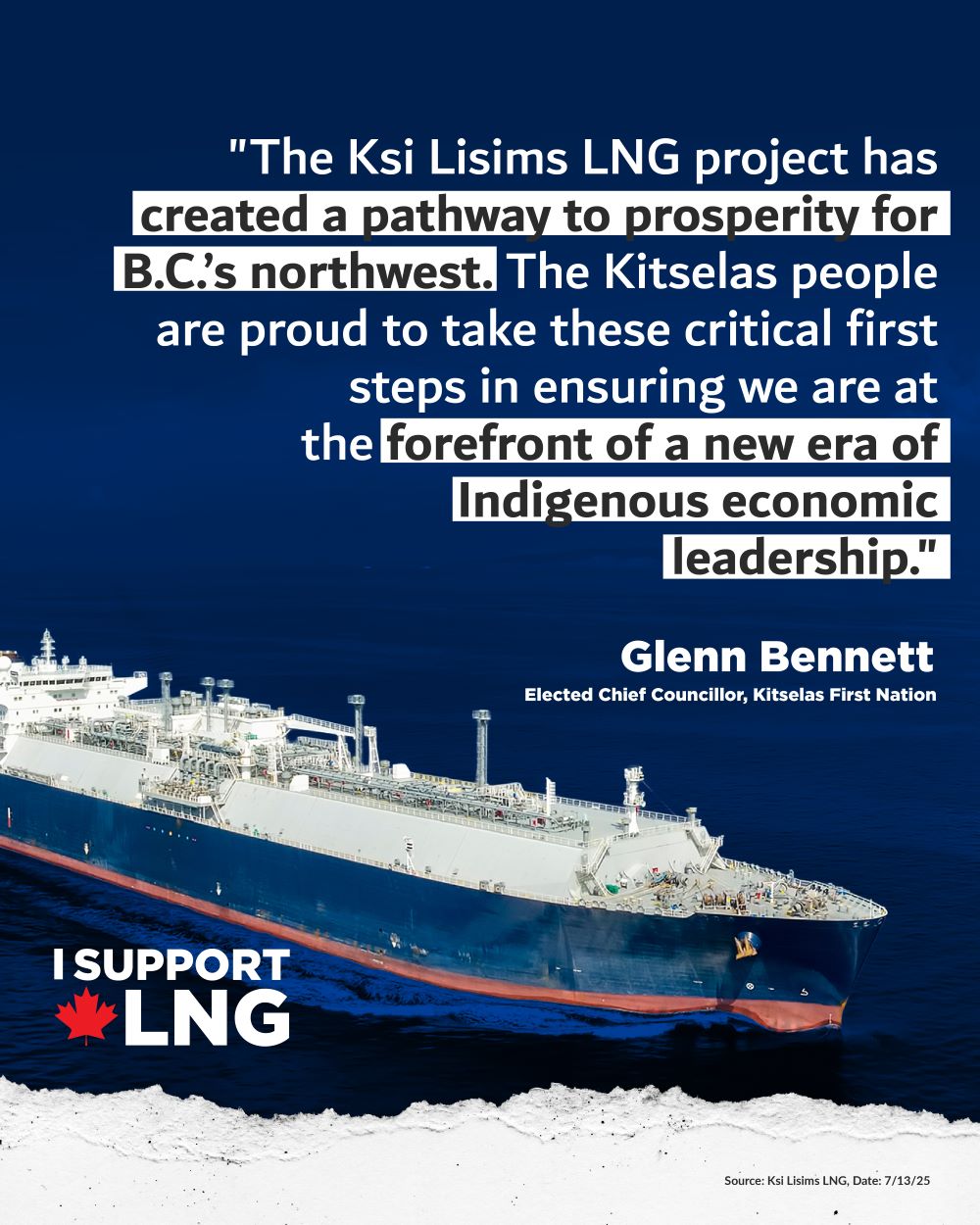
Ksi Lisims LNG - Glen Bennet of Kitselas First Nation says project will be at forefront of Indigenous economic leadership

FACT: While B.C. gets almost 100% of its electricity from renewable sources like hydro, the province still relies heavily on petroleum for around two-thirds of its end-use fuel demand [12].

It will take many years and decades before the technologies are available for B.C. and the rest of the world to truly transition away from fossil fuels [13].

#1 – Funding Government

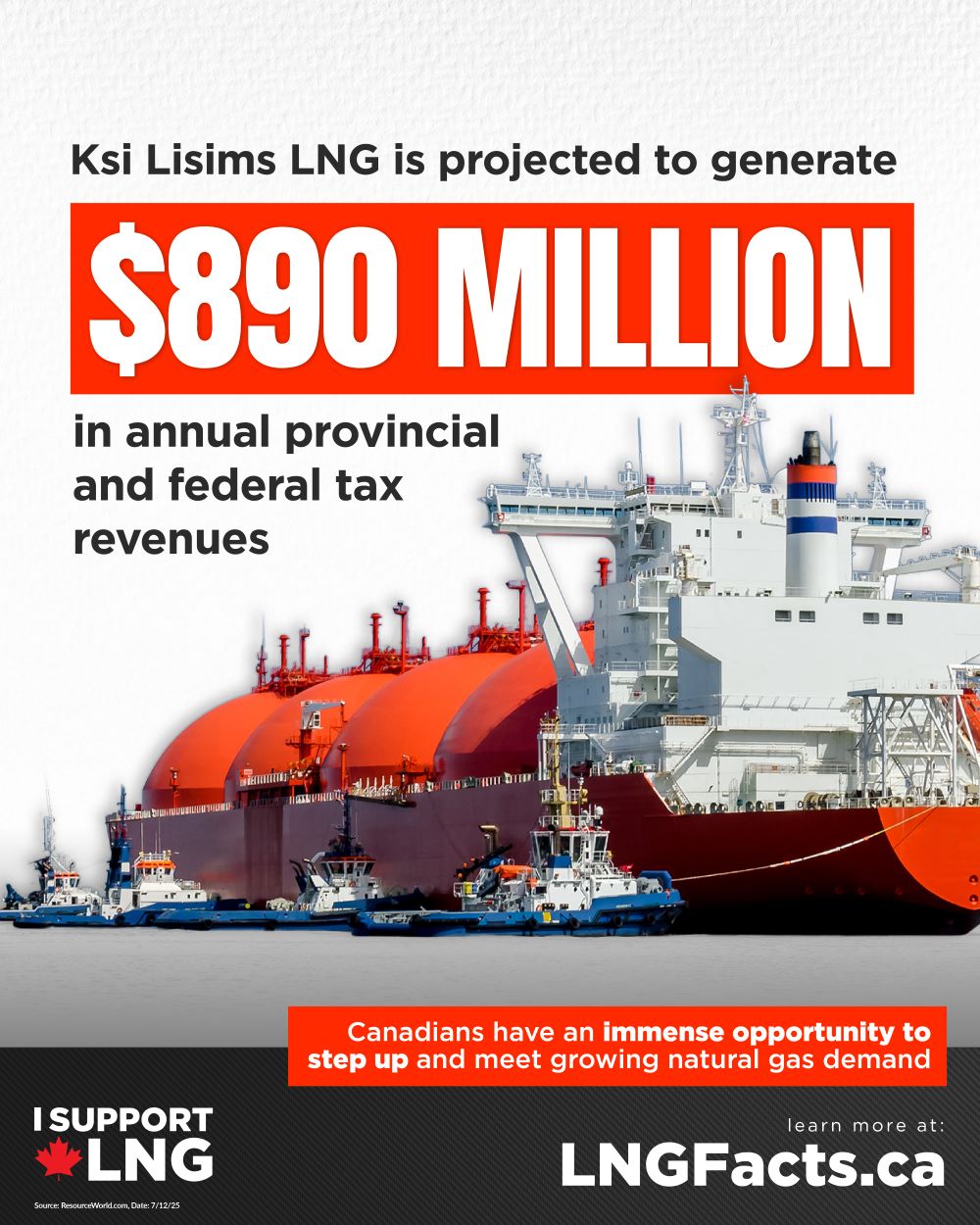
Ksi Lisims LNG is projected to generate billions of dollars in new, long-term revenue for Canadian governments through taxes and royalties, approximately $890 million annually over the project’s lifetime of 40+ years [14].

This massive influx of public capital can be directly invested in large-scale infrastructure projects, technological innovation, and other strategic priorities set by the government, including the build-out of renewables. The project will be an important economic engine, providing the financial horsepower for B.C. to build its desired future.

#2 - Export Only

The natural gas processed at the Ksi Lisims facility is contractually dedicated to international buyers. It does not enter the domestic market or increase the local supply of fossil fuels for use by British Columbians.

The project creates an entirely new export product for the province; therefore, it does not alter or "lock in" the energy sources used to power B.C.'s homes, vehicles, or local industries. B.C.’s internal energy consumption patterns can and will continue to evolve independently of this export-focused venture.

MYTH #4 - Dogwood respects the right of the Nisga’a people to develop their land and resources

Ksi Lisims LNG to create nearly 900 million dollars in government revenues annually

FACT: Dogwood's campaigns and public statements appear to demonstrate direct opposition to the Ksi Lisims LNG project and its supply pipeline, the Prince Rupert Gas Transmission Line (PRGT), both of which are led and co-owned by the Nisga'a Nation [15].

While claiming to support Indigenous rights, their actions contradict the Nisga'a Nation's right to self-determination and economic development on their own lands. The Nisga'a Lisims Government has been clear that Ksi Lisims LNG is a "transformational opportunity" for their people to build a strong and enduring economy in line with their values.

Dogwood's opposition, in this context, appears to disregard the Nisga'a's agency and their chosen path for economic reconciliation and prosperity, through the development of Ksi Lisims LNG on their land.

MYTH #5 - Now is not the time to build more oil and gas projects

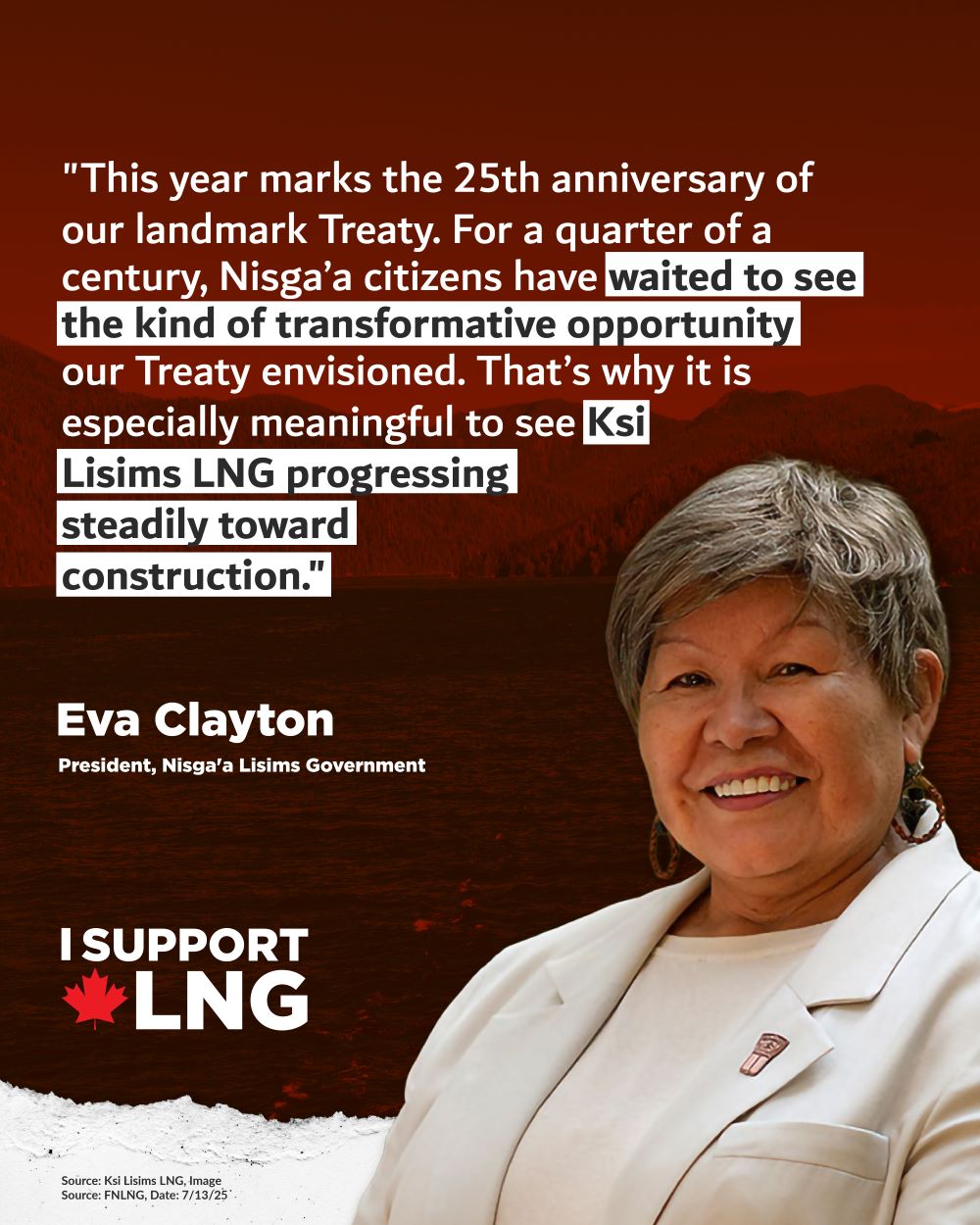
Ksi Lisims LNG - Eva Clayton says Nisga'a have been waiting for a long time for LNG economic development and reconciliation

FACT: On the contrary, now is precisely the time for projects like Ksi Lisims LNG. Global oil and gas demand is reaching new highs, while natural gas is a crucial fuel that can replace coal-fired power generation, particularly in the emerging economies of Asia. For many developing nations, gas is the most affordable and reliable means of lifting people out of poverty and electrifying the economy.

Furthermore, in a world of increasing geopolitical instability, Canadian LNG provides a secure and reliable source of energy for our allies. To date, several nations, including Germany, Japan, Poland, and South Korea, have approached Canada to request our democratically produced energy, while others, such as Latvia, Ukraine, and Greece, have expressed their full support for our LNG export sector.

Projects like Ksi Lisims LNG represent a significant opportunity for economic reconciliation with Indigenous peoples, creating thousands of jobs and generating billions of dollars in revenue for Canadians and First Nations. To turn our backs on these significant, once-in-a-lifetime developmental opportunities would be to abandon our global responsibilities and turn a blind eye to future economic prosperity.

The World Needs More Canadian LNG

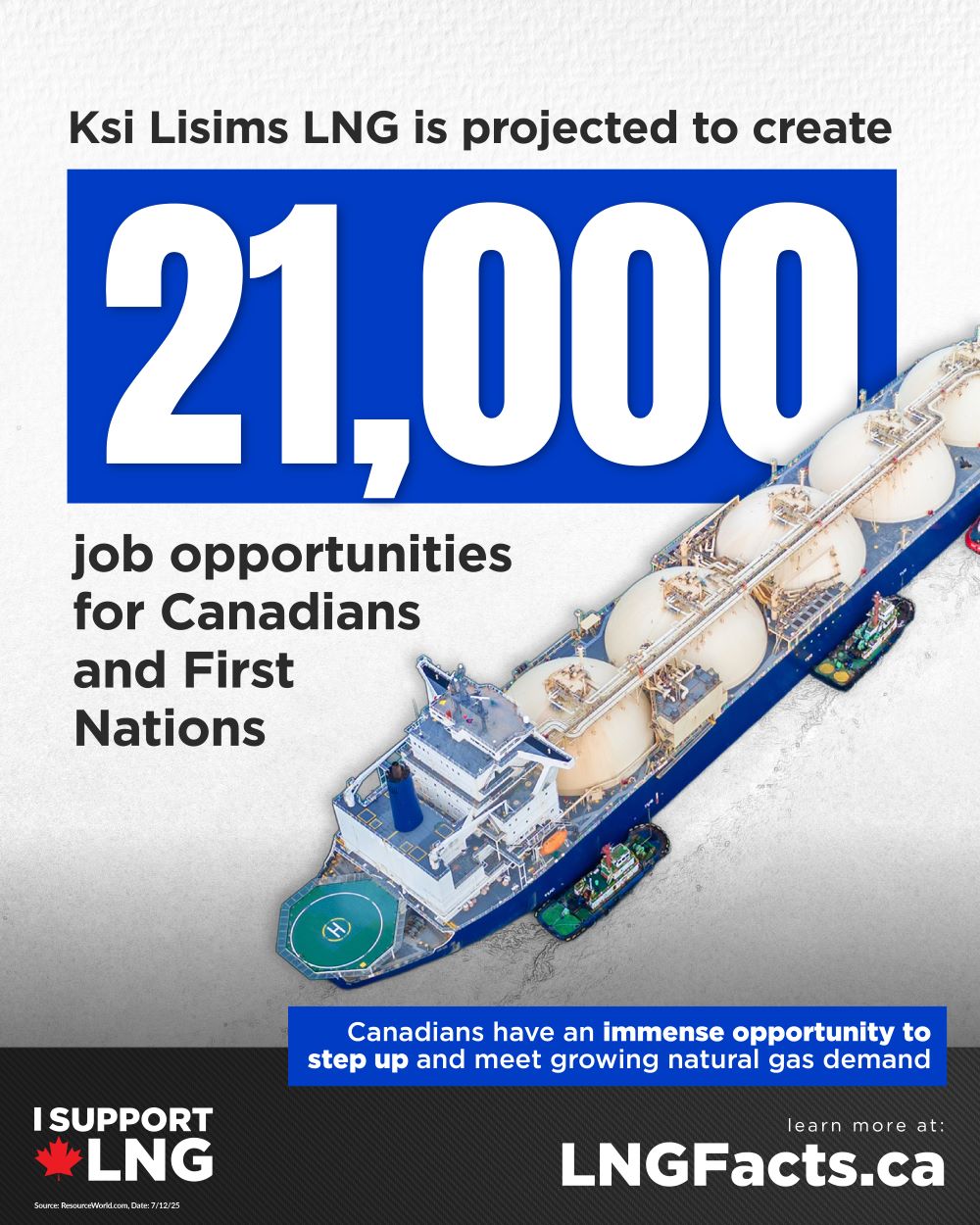
Ksi Lisims LNG to create 21,000 jobs

Let’s build a future where facts prevail over myths. A very stark reality for Canadians right now is that our economy is performing terribly when compared to our international peers.

Canada cannot afford to pass on opportunities like Ksi Lisims LNG to drive long-term growth, economic prosperity, and energy security, creating a stronger future for Canada.

Join us today to learn more about the benefits of LNG development and other natural resources in Canada!

SOURCES:

1 - https://natural-resources.canada.ca/energy-sources/fossil-fuels/canada-creating-competitive-environment-liquefied-natural-gas

2 - https://www.canadianenergycentre.ca/north-america-lng-project-cost-competitiveness/

3 - https://www.cer-rec.gc.ca/en/data-analysis/energy-markets/market-snapshots/2017/market-snapshot-lng-projects-have-energy-efficiency-advantage-compared-other-lng-producers-in-warmer-locations.html

4 - https://www.shell.com/what-we-do/oil-and-natural-gas/liquefied-natural-gas-lng/lng-outlook-2025.html

5 – https://www.woodmac.com/news/opinion/gas-lng-the-future-of-energy-investment-momentum-builds-in-a-volatile-market/

6 - https://dieselnet.com/news/2025/02shell-lng.php

7 - https://rbnenergy.com/breaking-up-is-hard-to-do-move-away-from-long-term-deals-carries-risk-for-lng-buyers-producers

8 - https://www.spglobal.com/commodity-insights/en/news-research/latest-news/lng/022725-interview-japan-hopes-for-80-long-term-lng-share-post-2030-sees-no-issue-with-contracts-beyond-2050

9 - https://www.northernsentinel.com/local-news/pembina-shortlists-more-customers-for-cedar-lng-as-demand-builds-for-expansion-8029773

10 - https://www.theprogress.com/news/proposed-northwest-bc-lng-project-secures-another-major-global-customer-8022813

11 - https://energycouncil.com/articles/the-balancing-act-long-term-stability-and-market-flexibility-in-lng-contracting/

12 - https://www.cer-rec.gc.ca/en/data-analysis/energy-markets/provincial-territorial-energy-profiles/provincial-territorial-energy-profiles-british-columbia.html

13 - https://www.energyinst.org/statistical-review

14 - https://projects.eao.gov.bc.ca/api/public/document/652f67330173fe0022671206/download/03_KsiLisimsLNG_1_Project_Overview.pdf

15 - https://www.dogwoodbc.ca/petitions/public-comment-period-ksi-lisims-lng/