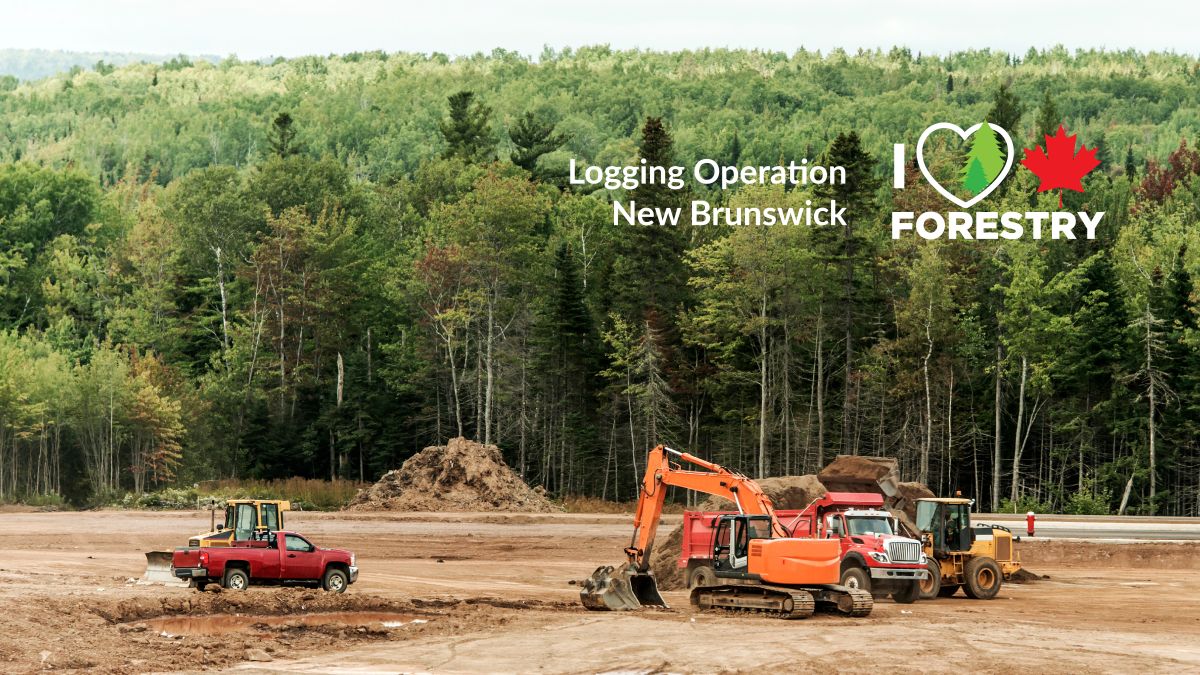
Forestry in New Brunswick: 20 Facts

Forestry in New Brunswick: 20 Facts

Forestry in New Brunswick - Facts and Stats cover-01

Many Canadians don’t know that forestry is a significant part of New Brunswick’s economy and way of life; the sheer scale of the industry is quite impressive. As the province’s largest industry, it accounts for 5% of the total provincial economy, 24,000 jobs, and generates $2.8 billion in exports every year.

Forests also cover large swaths of New Brunswick, making it the most forest-dense province in Canada. The sector's prevalence is built upon more than six million hectares of diverse forested lands, managed with a focus on long-term prosperity and usability. These forests are not just a resource; they are the foundation for tens of thousands of families and hundreds of businesses, providing a means of living and way of life for communities across N.B.

Below we dive into the key New Brunswick forestry facts that make it an industry leader, from its innovative use of technology to its commitment to the generations of Canadians to come. Also see:
20 New Brunswick Forestry Facts

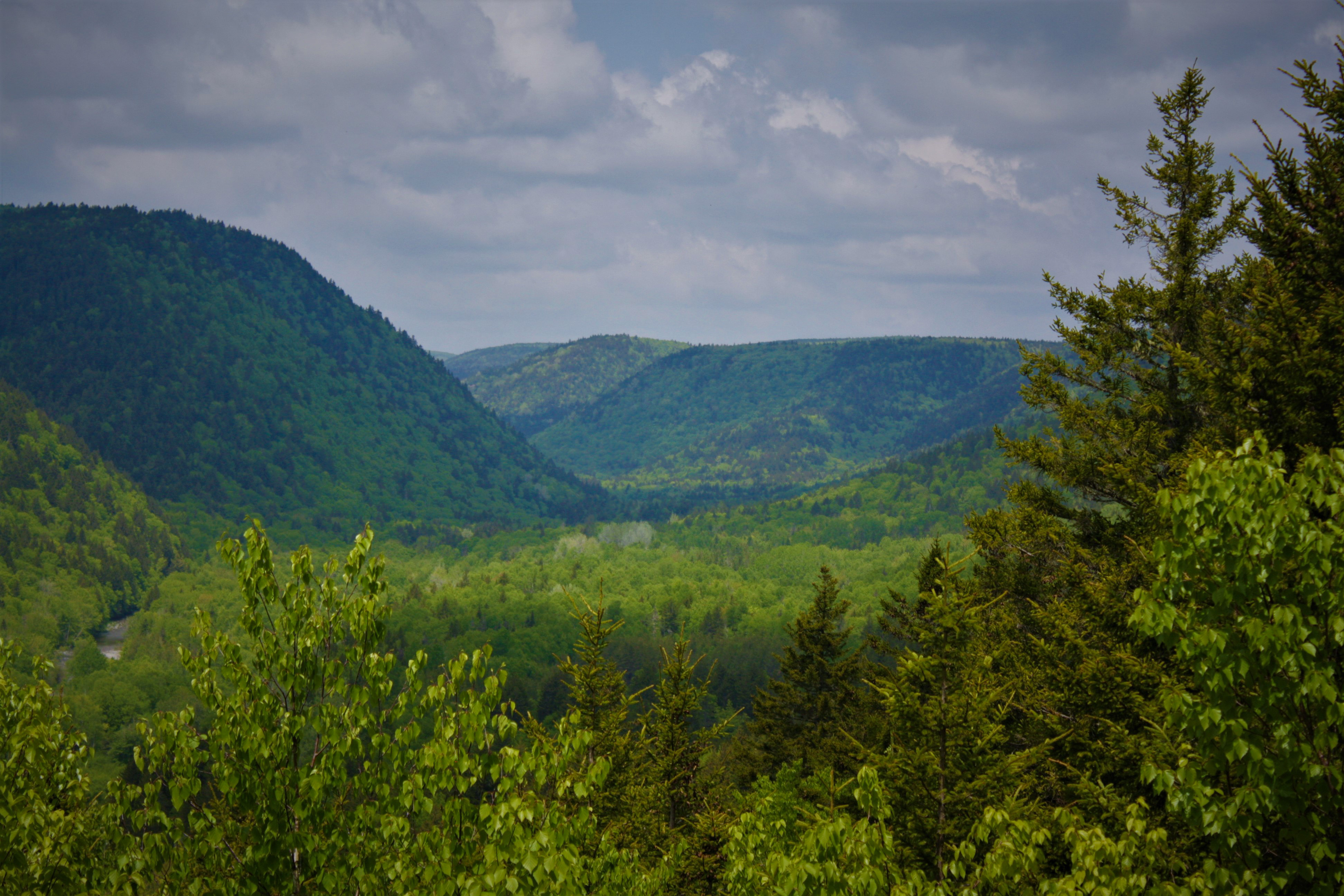
Caledonia Gorge, New Brunswick

Caledonia Gorge, New Brunswick

#1 - New Brunswick’s forestry sector is a significant economic contributor to the provincial economy, adding approximately $1.5 billion to GDP annually [1]

#2 - Forestry is New Brunswick’s largest industry, accounting for 5% of the total provincial economy [3]

#3 - Approximately 23,800 jobs – 9,700 direct and another 14,100 indirect and induced – are supported by New Brunswick’s forestry industry [1]

#4 – 900 companies directly operate in N.B.’s forestry sector [4]

#5 - Hundreds of small to large-sized businesses across New Brunswick support the forestry sector with various goods and services [3]

#6 – N.B.’s forestry industry exports $2.8 billion in forestry products every year [4]

#7 – N.B. is number one in Canada for forest products GDP per capita – 50% more than in B.C. [4]

#8 - New Brunswick is home to 45 sawmills and papermills, providing an economic foundation and opportunities for Canadians across the province, especially in rural areas [3]

#9 - New Brunswick exports approximately 80% of its forest products to the United States [1]

#10 - New Brunswick also exports forestry products to India, China, Thailand, the United Kingdom, and several other markets [1]

#11 - New Brunswick is home to 6.12 million hectares of forests, more than 4.24 million of which are third-party certified for proper forest management [2]

#12 - More than 900,000 hectares of government-owned forest land across New Brunswick is conserved and protected today and for future generations, a land size equivalent to more than 1.5 million football fields [3]

#13 - More than 1 billion trees have been planted on crown land across New Brunswick over the past 40 years [2]

#14 - New Brunswick is the most heavily forested Canadian province relative to percentage of land area covered by forests [3]

#15 - 49% of forested lands in New Brunswick are managed by the provincial government, while 30% are privately owned, and 18% are managed as industrial freehold lands [2]

#16 - New Brunswick’s forests contain more than 20 tree species, a remarkable diversity among Canadian forests given the relatively small since of the province [3]

#17 - Approximately 68% of trees in N.B. are softwood trees (conifers), while the remaining are hardwood (deciduous) [3]

#18 – Up to 80% of harvested forests across N.B. are left to regenerate naturally [4]

#19 – New Brunswick’s forests have allowed the province to become the third-largest maple syrup producer in the world [4]

#20 – More than 215,000 residents in N.B. have a card for hunting and angling, much of which occurs throughout the province’s forested lands [4]

Future of Forestry in New Brunswick

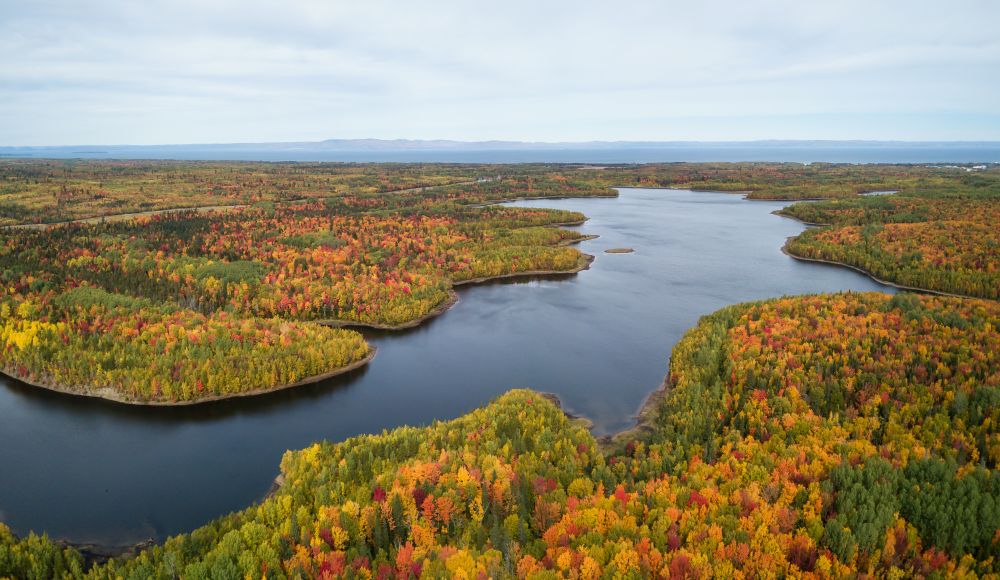
Belledune, New Brunswick

New Brunswick's forestry sector, a cornerstone of the provincial economy which accounts for $2.8 billion in exports in 2022, utilizes advanced LiDAR technology for precise forest mapping and resource management. This newfound technological approach is fundamental to the province's seven-pillar management system, a comprehensive framework designed to ensure the sector's longevity and profitability for generations to come.

The province's strategy confidently forecasts an increase in softwood harvest levels, which is the direct result of planting over a billion trees in past decades and continued investment in targeted silviculture, defined as the art and science of controlling the establishment, growth, composition, health, and quality of forests to meet long-term goals. This meticulous planning is critical for providing a stable, long-term resource for the mills and communities that depend on forestry-related employment.

To further strengthen the economy, the strategy also supports the diversification into non-timber industries like maple syrup production and biomass energy, creating new revenue streams. The management process is deeply collaborative, integrating partnerships with First Nations and stakeholder advisory tables to ensure shared economic benefits. All in all, New Brunswick’s forestry sector has a bright future ahead!

Join Us Today!

Canada Action - Forestry Infographics banner

Forests contribute immensely and are an inherent part of our Canadian identity. They not only provide jobs, but also serve as a vital part of our heritage and daily lives.

Learn more about Canadian natural resources and why our country should be a go-to supplier of choice for forestry, energy, agricultural, aquacultural and mining products the world needs by joining us online at:

SOURCES:

1 - https://www2.gnb.ca/content/gnb/en/departments/erd/forestry-conservation/content/forest-products/forest-industry.html

2 - https://www.forestnb.com/economy/

3 - https://www2.gnb.ca/content/dam/gnb/Departments/nr-rn/pdf/en/Publications/state-of-the-forest-2023.pdf

4 - https://www2.gnb.ca/content/dam/gnb/Departments/nr-rn/pdf/en/ForestsCrownLands/forest-management-strategy-report.pdf