Offshore Oil & Gas an Irreplaceable Part of Newfoundland & Labrador’s Economy (2018-2024): REPORT

Offshore Oil & Gas an Irreplaceable Part of Newfoundland & Labrador’s Economy (2018-2024): REPORT

Offshore oil and gas irreplaceable part of provincial economy - 2018-2024 - report

Just how essential is oil and gas to Newfoundland and Labrador’s (NL) economy? A new report shows the immense importance of offshore energy for Canadians living in the Atlantic province, and the sector's broad impact on jobs, household income, and public revenues.

According to Socio‑economic Benefits from Oil and Gas Industry Activity in Newfoundland and Labrador, 2018–2024, offshore activity added an average of about $8.9 billion a year in nominal gross domestic product (GDP) over 2018 to 2024, representing 23.3% - or nearly one quarter – of the province’s total GDP over that time frame.

Furthermore, offshore oil and gas supported about 19,000 jobs per year on average between 2018 and 2024, roughly 8.2% of all provincial employment – with 20,500 jobs (8.4%) in 2024 as construction ramped up on the upcoming West White Rose project. On the fiscal side, offshore oil generated approximately $7.2 billion in provincial royalties between 2018 and 2024, including $1.6 billion in 2024 alone, on top of substantial income and consumption tax revenues.

The case is clear: offshore oil and gas is an irreplaceable part of Newfoundland and Labrador’s economic foundation today, and—if further developed—can continue to underpin prosperity and innovation for decades to come.
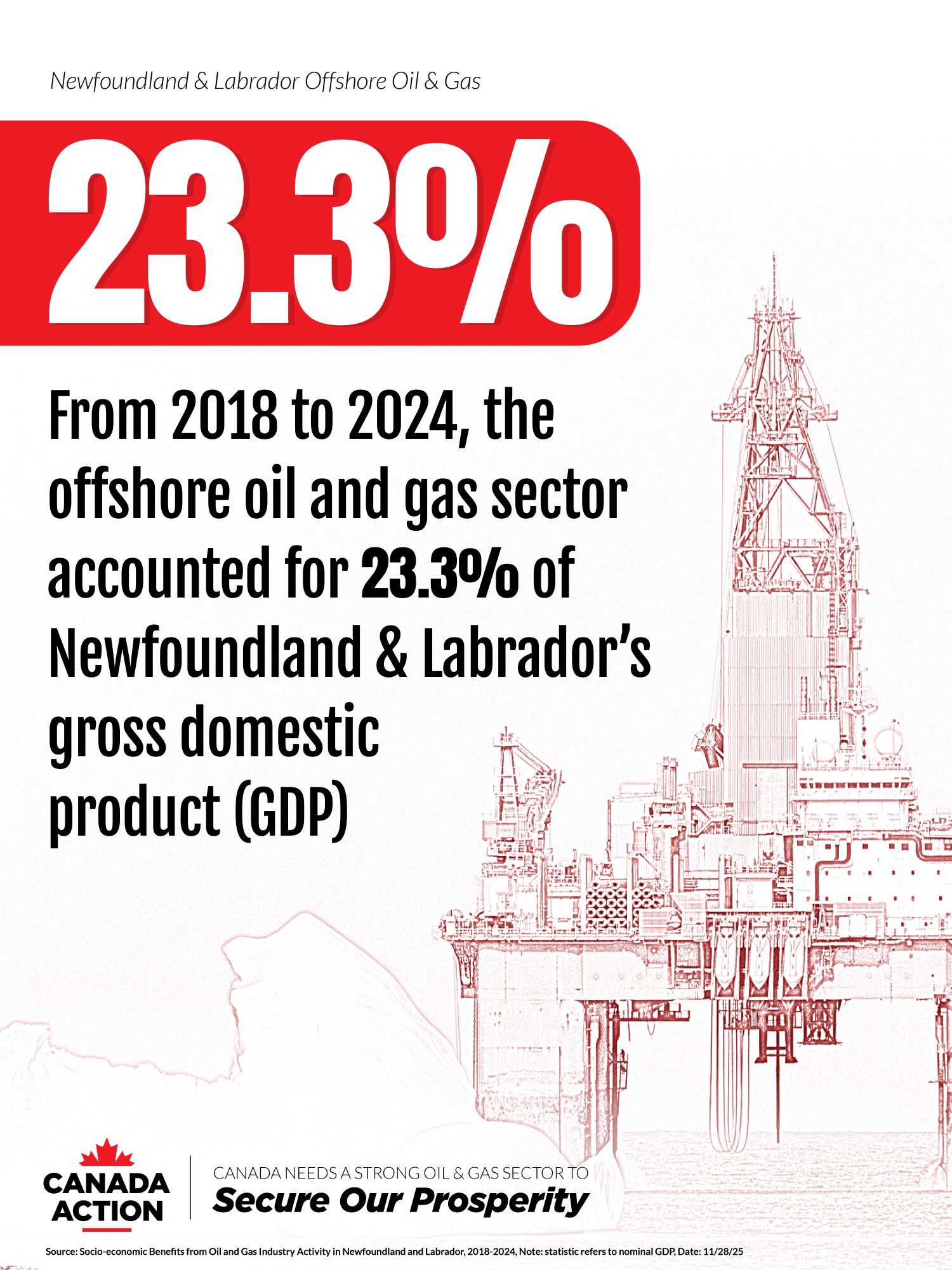
Offshore oil and gas accounted for 23.3 per cent of Newfoundland and Labrador's economy from 2018-2024

Report Highlights (NL, 2018-2024)

• Offshore oil activity added an average of $8.85–$8.9 billion per year in nominal GDP.

• The industry accounted for an average of 23.3% of provincial nominal GDP, peaking at 27.5% in 2022 and still 22.5% in 2024.

• Offshore activity represented about 21.8% of real GDP on average (chained real dollars, 2017).

• Offshore-related employment averaged about 19,000 jobs per year, or 8.2% of all employment in NL.

• In 2024, offshore-supported employment reached 20,500 jobs (8.4% of total), driven by construction on the West White Rose offshore project.

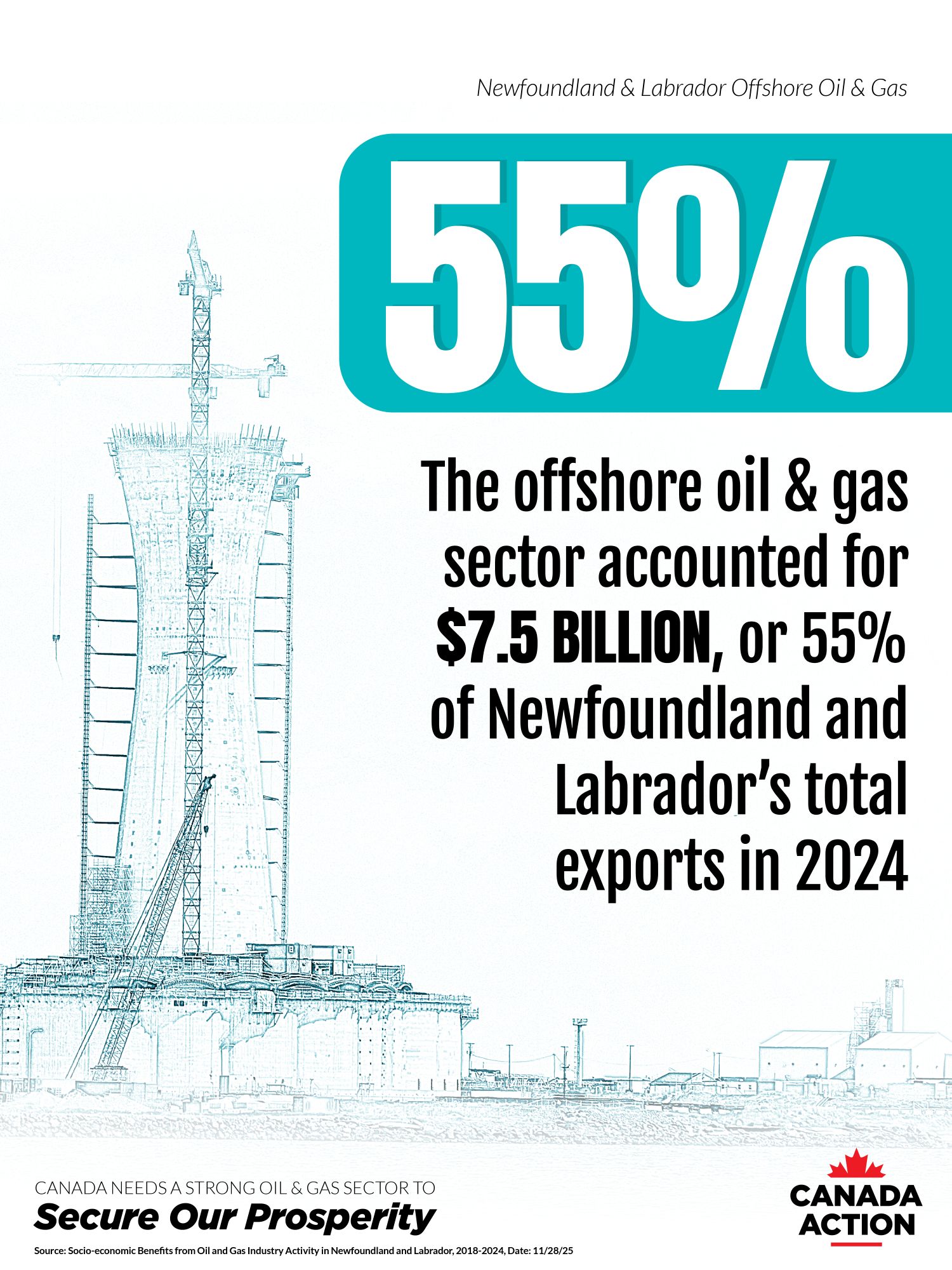
• The offshore oil and gas sector exported $7.5 billion in oil in 2024, accounting for 55% of NL’s total exports that year.

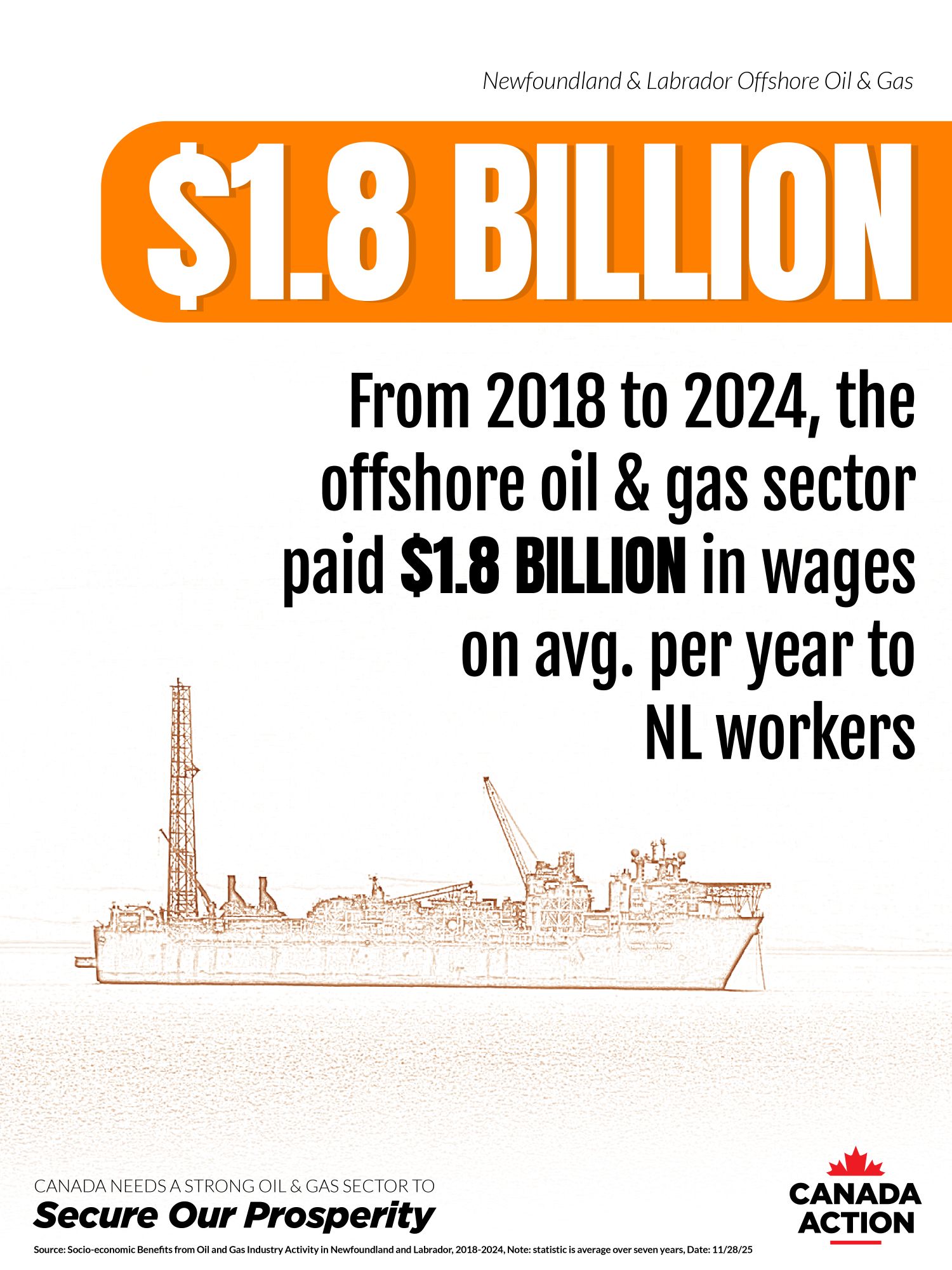
• Labour compensation was about $1.76–$1.8 billion higher per year, accounting for 10.8% of all labour income in the province.

• Household income was boosted by about $2.28–$2.3 billion annually, representing 7.9% of all household income.

• Disposable household income (after tax and deductions) rose by approximately $1.49–$1.5 billion a year, or 7.7% of total disposable income.

• Retail sales were about $670 million a year higher, about 6.4% of total retail activity, reflecting the spending power created by offshore.

• Offshore activity is estimated to have supported population levels about 6.3% higher on average, reaching a 6.6% share of the total population in 2024.

• The labour force impact averaged 20,700 people (7.9% of NL’s total) over 2018–2024.

• The sector generated about $7.2 billion in total provincial royalties between 2018 and 2024, including an estimated $1.6 billion in 2024–25.

• Additional revenue flowed through personal income tax, HST and other consumption taxes, and corporate income tax, although detailed company-level tax data are confidential.

Canada’s Offshore Oil & Gas Potential

Offshore oil and gas accounted for 55 per cent of Newfoundland and Labrador's exports in 2024

Canada possesses world-class offshore oil and gas resources, yet much of this potential remains untapped. Newfoundland and Labrador’s offshore fields – from the Jeanne d’Arc Basin to the Flemish Pass – have already produced several billion barrels of oil, with significant remaining reserves in projects like Hibernia, Hebron, Terra Nova, White Rose and its satellite fields [1]. In fact, offshore NL and NS oil reserves are pegged at more than 145 billion barrels.

Upcoming projects underscore the extent of untapped wealth for Canadians that remains in the ground. Bay du Nord in the Flemish Pass, for example, has an estimated hundreds of millions of barrels of recoverable oil, backed by an agreement that includes significant research, development, and career opportunities which position NL as a central base for deepwater development. If advanced, Bay du Nord would generate billions of dollars in economic activity, tens of thousands of person-years of employment, and substantial tax revenues for Canadians over its lifespan.

Beyond NL, other Atlantic regions hold promising reserves that could play a major role in building a stronger Canada. Nova Scotia has historically produced offshore natural gas, and ample untapped gas resources remain, especially on the Scotian Shelf and Scotian Slope [2]. In a world concerned with both energy security and affordability, the Atlantic’s offshore gas could be a strategic asset for domestic and international markets, particularly in Western Europe.

If Canada chooses to advance its offshore potential – in Newfoundland and Labrador, Nova Scotia, and potentially other frontiers – the macro-level effects would be profound for Canadian families:

  1. Higher national GDP and exports from oil and gas production and associated services.
  2. Tens of thousands of direct, indirect, and induced jobs in engineering, trades, marine operations, technology and services.
  3. Creating much-needed long-term career opportunities for Canadian families, often in rural and remote communities
  4. Significant royalty and tax revenues to help fund healthcare, education, infrastructure, paying for our social programs and public servants
  5. A stronger Canadian balance of trade, with more energy exports and less reliance on imported energy.

Offshore Makes Canada Stronger

Offshore oil and gas paid on average 1.8 bilion to workers in Newfoundland and Labrador's economy from 2018-2024

Offshore oil and gas makes Canada stronger by generating billions in GDP, thousands of well‑paid jobs, and critical government revenues that fund our healthcare, education, and infrastructure.

In Newfoundland and Labrador alone, offshore activity has consistently accounted for roughly a quarter of the province’s economy and supported nearly one in ten jobs, underscoring the significant role of the province's offshore energy resources in regional and national prosperity.

Global oil and gas demand is growing. By developing Canada’s offshore energy resources, we can help build a stronger, more prosperous future for Canadian families.

Join Us Today! Oil Infographics - Canada Action

Learn more about Canada’s offshore oil and gas industry by joining us on social media today! See why the world needs more Canadian-made natural resources, and how these sectors form the foundation of Canada’s past, current, and future economic success

SOURCES:

1 - https://energyresearchinnovation.ca/2025/11/report-socio-economic-benefits-from-oil-and-gas-industry-activity-in-newfoundland-and-labrador-2018-2024/

2 - https://news.novascotia.ca/en/2025/07/07/call-bids-issued-offshore-natural-gas