Canada’s Trade Opportunities in Asia Start with a Shared Vision at Home

Canada’s Trade Opportunities in Asia Start with a Shared Vision at Home

Canada's Trade Opportunity in Asia starts with a Shared Vision at Home-01

Prime Minister Mark Carney is in Asia, pitching Canada as a reliable source of natural resources the world needs. It’s great to hear the PM share that Canada is open for business, as he spoke at the 11-country Association of Southeast Asian Nations (ASEAN).

“We’re an energy superpower, an unabashed energy superpower,” Carney said via reporting by The Globe and Mail.

“We have the third largest reserves of oil. We have the fourth largest reserves of LNG,” he continued, referring to liquefied natural gas (LNG).

“We’ve just started our first LNG shipments.”
Carney also spoke of our global leadership in nuclear reactor technology, pointing to the SMR now under construction at the Darlington site in Ontario. It will be the first small modular nuclear reactor to be built by a G7 country, something that all Canadians can be proud of.

The PM also told Asian business and investment leaders that Canada has one of the world’s largest critical mineral reserves, and is the “largest centre of mining finance in the world.”

Carney is right. Canada has it all—from oil and gas to wood and food, high-grade uranium and nuclear technology expertise—we’re a resource powerhouse that can help meet growing global demand for all of the above. And it makes perfect sense for Canada to forge new relationships with various developing market economies across Asia. The region, for example, is projected to account for the largest share of global energy demand through 2050, primarily driven by population growth, economic development, and urbanization.

“Southeast Asia is a rapidly growing, $5 trillion economy,” said the PM, when discussing a potentially new Canada-ASEAN Free Trade Agreement.

The economic opportunity presented to Canadians by meeting rising Asian demand not just for oil and natural gas, but also critical minerals, food, and other resources is immense. Doing so could help Canada forge a new economic path, creating much-needed jobs and careers, helping our nation prosper.

But if we’re being brutally honest with ourselves, Canada has a lot to sort out here at home before we can step up for our trade partners—in Asia and elsewhere—in a big way.

Despite our immense potential, Canada faces significant self-imposed problems we need to address to unlock the full potential of our job-creating, prosperity-generating resource sector. Complex regulatory frameworks and lengthy approval timelines have all too often acted as barriers to economic growth and the development of new projects. These challenges have contributed to a flight of capital investment to other countries, places where the process is more predictable and opportunities for growth are easier to seize.

Goldy Hyder, President & CEO of the Business Council of Canada, shared a similar sentiment in an interview with the CBC.

“[We’re making the] case that Canada has what the world needs,” said Hyder, discussing Carney’s trip to Asia.

“But in all candour, what the Asian side has been telling us here is, can you get it to us? Can you demonstrate to us that without having to nationalize a pipeline, or keeping your emissions cap in place, or your tanker ban. How are you going to get us the energy that we need, the food that we need, the critical minerals that we need, the uranium that we need. We want what Canada has, and so, we have to be able to deliver on those goods,” Hyder explained.

For private project proponents, investing in Canada can feel like navigating an obstacle course—uncertainties in permitting timelines, unclear regulations, and changing policy signals make it difficult to plan for the future.

Just recently, one of the world’s largest pipeline operators said that no new project will be built to the West Coast for exporting Canadian oil to Asia unless significant changes are made to the current regulatory regime.

If Canada truly wants to be the reliable resource supplier to Asia that many nations like Japan and South Korea have asked us to be, significant steps can be taken to bring that goal to fruition.

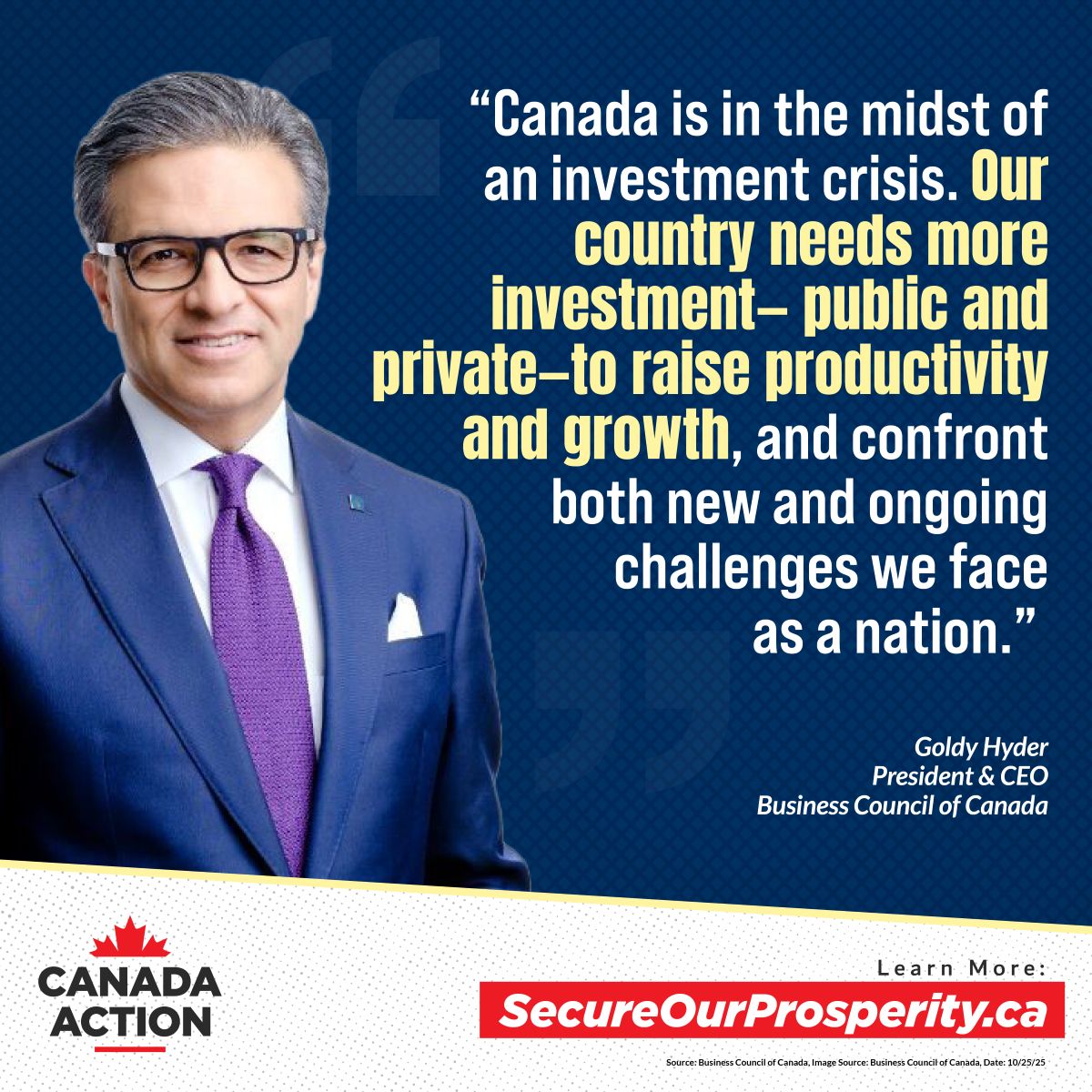
Canada is in the midst of an investment crisis says Goldy Hyder

We need to ensure that Canada competes—not just on global resource markets, but also on project timelines, investor certainty, and a welcoming investment climate. That is how we keep Canadian projects, jobs, and innovation here at home.

But there’s another challenge that runs deeper: the need for national unity and shared purpose. Whether it’s forestry in British Columbia, oil in Alberta, uranium in Saskatchewan, mining in Manitoba, nuclear electricity in Ontario, hydro power in Quebec, or offshore oil and gas development in Atlantic Canada, every region has unique strengths that contribute to our shared prosperity. When we allow regional rivalries or local opposition to derail critical projects, we hold ourselves back as a nation.

Canada is strongest when we support each other—east, west, north, and south—no matter the project, no matter the province. It’s not just about growing the economy; it’s about building a country where every Canadian recognizes the immense benefits from our mutual success and can take pride in seeing our resources power homes, build technologies, and underpin industries domestically and abroad.

After all, whether you live in BC, Alberta, Quebec, or Newfoundland, we are all Canadians. By working together to champion natural resource and trade infrastructure development in every corner of our country, we can take control of our economic destiny and create a strong and prosperous future for our families.

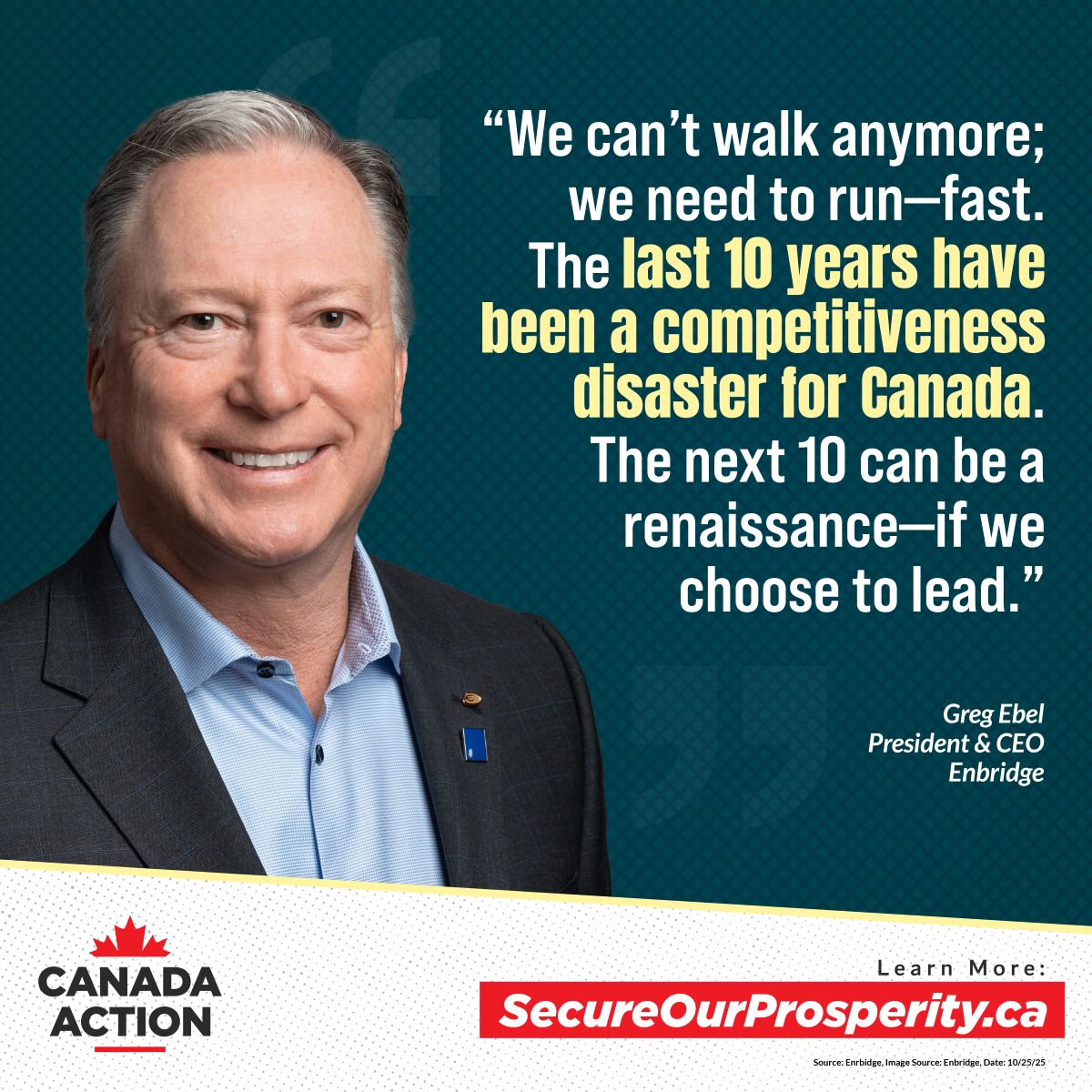
Enbridge says last 10 years have been a disaster for Canada's economy, and we need to get moving forward fast

“It’s time to build new trade and energy corridors working in partnership with the provinces, territories, and Indigenous peoples,” said the Prime Minister earlier in the year.

“It’s time to build hundreds of thousands of not just good jobs, but good careers in the skilled trades. It’s time to build Canada into an energy superpower in both clean and conventional energy.”

If Canada is truly to become the reliable trade supplier of energy, minerals, and resources that Asia and the world needs, it won’t happen through words alone—but through unified ambition, action, and support across our great country.

The world is ready. We have the resources. Now, it’s up to all of us, including Prime Minister Mark Carney, to get it done—because together, there’s no limit to how far Canada can go.

Canada Action - blog banner supporter banner