Small Modular Nuclear Reactors (SMRs) in Canada: 15 Facts, Benefits & More!

Small Modular Nuclear Reactors (SMRs) in Canada: 15 Facts, Benefits & More!

SMRs in Canada Facts Benefits

Did you know that Canada is the first in North America to build a commercial, grid-scale Small Modular Nuclear Reactor (SMR), at the Darlington Nuclear site in Ontario? For those familiar with Canada’s global leadership in nuclear electricity, it shouldn’t be a surprise that our country is leading the way on SMRs for power generation.

A relatively new technology based on established methods, Small Modular Nuclear Reactors have the potential to play an increasingly significant role in meeting the future electricity needs of Canadian families, businesses, industries, and governments. Typically about one-third the size of a traditional nuclear reactor in terms of power-generating capacity, their modular construction makes them both functional and flexible. From artificial intelligence to data centres to residential heating/cooling to industrial manufacturing, the reliable baseload power offered by SMRs is too appealing to look past for governments and companies around the world.

Below, we explore several facts about SMRs in Canada and their potential impact on our country's future. But first, let’s define what a Small Modular Nuclear Reactor is, and discuss the general benefits of this electricity-generating technology.
What are SMRs?

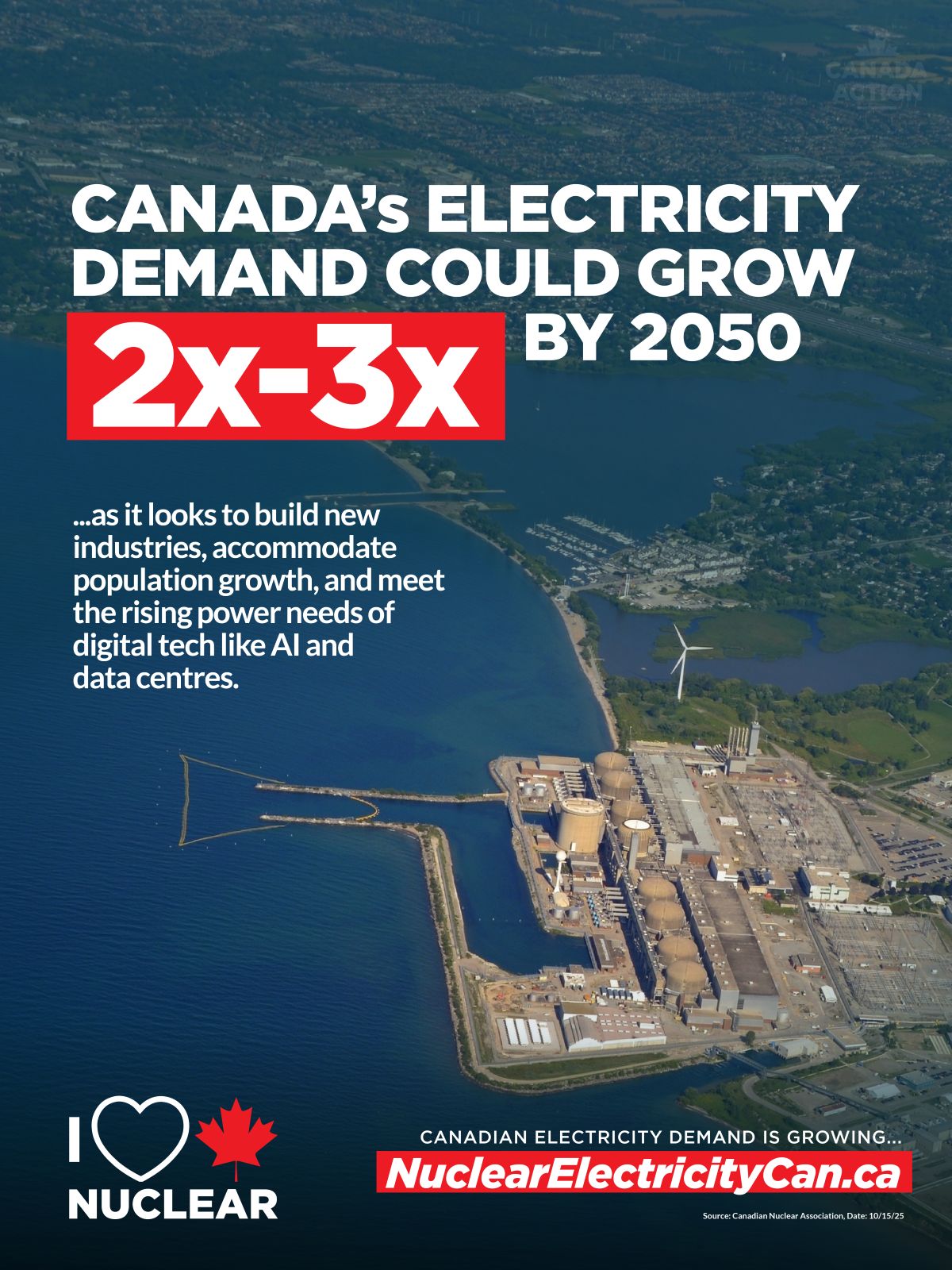
Canada's electricity demand could grow up to 3x by 2050 - nuclear plants can help

An SMR is a relatively new generation of nuclear reactor that is smaller, with a lower (but still significant) power output—typically less than 300 megawatts (MW) per unit—and is designed to be built in factories via modular construction rather than on-site. As a result, these reactors are much quicker to build than their larger traditional counterparts, as the components are factory-built, standardized, and then transported to the site for assembly.

SMRs are intended to be more affordable, flexible, and safer compared to large nuclear reactors, with enhanced passive safety features and simplified designs. Their reduced size allows use in various scenarios: from grid-scale power generation to help phase out coal, to large-scale resource extraction in remote areas, to providing reliable electricity for military purposes—the sky is the limit for SMR use in Canada and abroad.

Canadian Small Modular Nuclear Reactors: 15 Facts

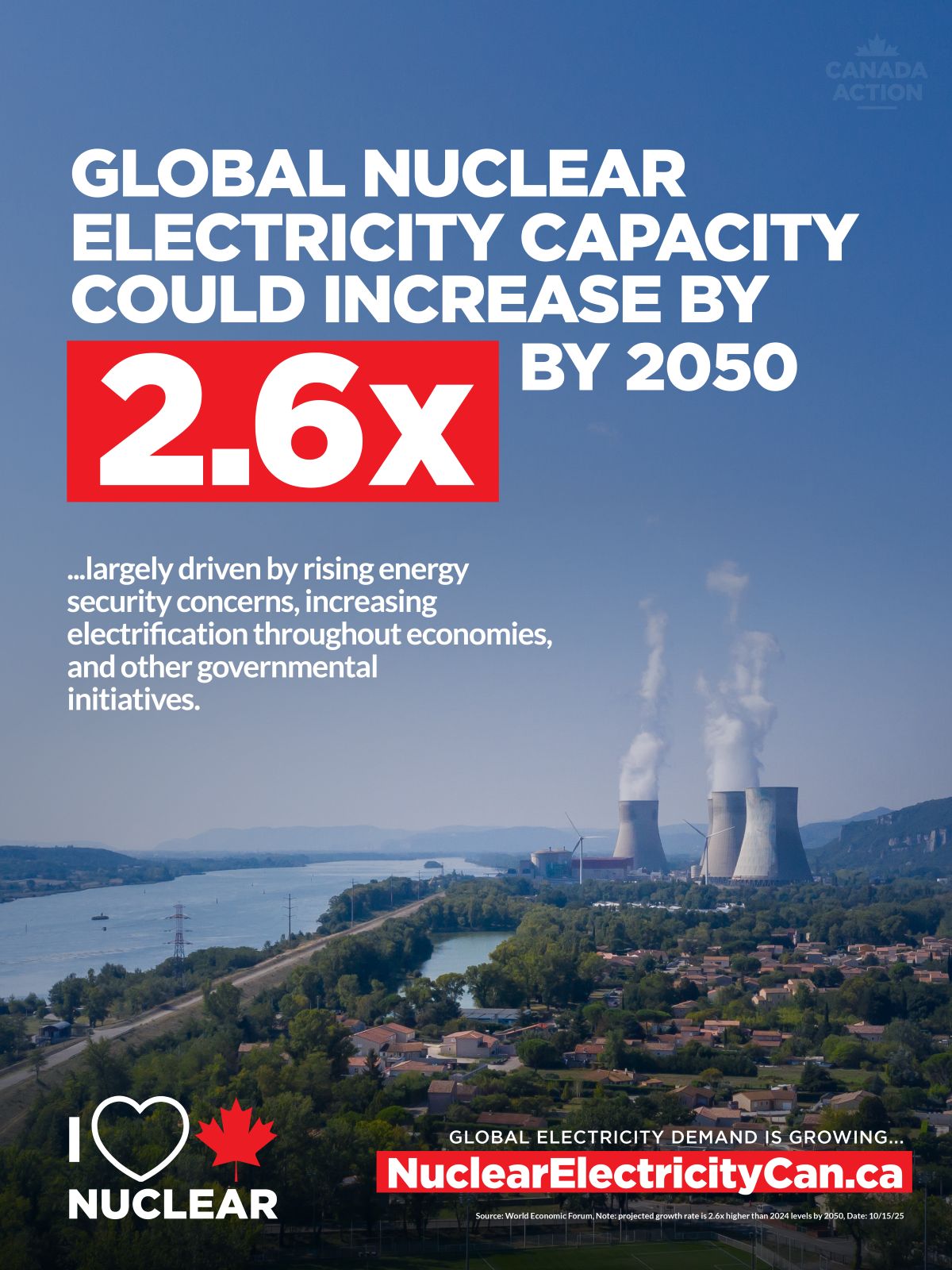
Global demand for nuclear electricity could grow up to 2.6x by 2050 - Canada's nuclear expertise can lead

#1 - Canada is currently at the forefront of global SMR development, building on decades of leading expertise in nuclear electricity generation and some of the world’s largest high-grade uranium reserves [1]

#2 - Ontario Power Generation (OPG) is constructing North America’s very first commercial, grid-scale SMR at its Darlington Nuclear Site [2]

#3 - The first of four Darlington SMRs is expected to generate 300 MWe, enough electricity to power 300,000 Canadian homes by the end of 2030 [2]

#4 - Upon completion of all four SMRs, the project is expected to power 1.2 million homes [2]

#5 - Four SMRs at Darlington are projected to boost Canadian GDP by $38.5 billion over 65 years, sustaining 3,700 additional jobs annually and a further 18,000 jobs per year during construction [2]

#6 - The four Darlington SMRs will inject $500 million on average into Ontario’s economy, with 80% of the project spending going to provincial companies [3]

#7 - With Ontario electricity demand projected to soar by at least 75% by 2050, the approval of four SMRs at the Darlington nuclear site will help supplement the province’s rapidly growing power needs [3]

#8 - The Ontario government is supporting OPG’s $20.9 billion budget for the Darlington New Nuclear Project [3]

#9 - Ontario would need to build up to 8,900 MW of wind and solar paired with battery storage to replace the reliable electricity output of the four SMRs [3]

#10 - The first SMR unit in Ontario is projected to cost a total of $6.1 billion; costs per unit are expected to decline as each subsequent unit is built as a result of efficiencies gained [3]

#11 - Globally, there are approximately 68 different SMR designs or technologies; Canadian companies and organizations are currently involved in developing at least seven different SMR technologies [4]

#12 - SMRs are presently being explored as potentially cost-saving expenditures for resource sectors such as mining and oil and gas, which could also help provincial and federal governments accomplish other associated goals with their deployment [5]

#13 - SMRs can range from roughly eight feet (~2.4 metres wide), all the way up to a CFL football field in size [6]

#14 - SMRs are an excellent option for helping provinces reduce reliance on baseload coal power; in Saskatchewan, where coal stations generate about 300 MW of electricity, swapping these plants for an SMR similar in size to Darlington’s first unit could be ideal [6]

#15 - SMRs could also help power Alberta for generations; a new nuclear power generating station in the Peace River area of the province’s north may include two to four large-scale reactors, which could produce up to 4,800 MW of electricity – equivalent to a quarter of its current power generation [7]

What are the Benefits of SMRs?

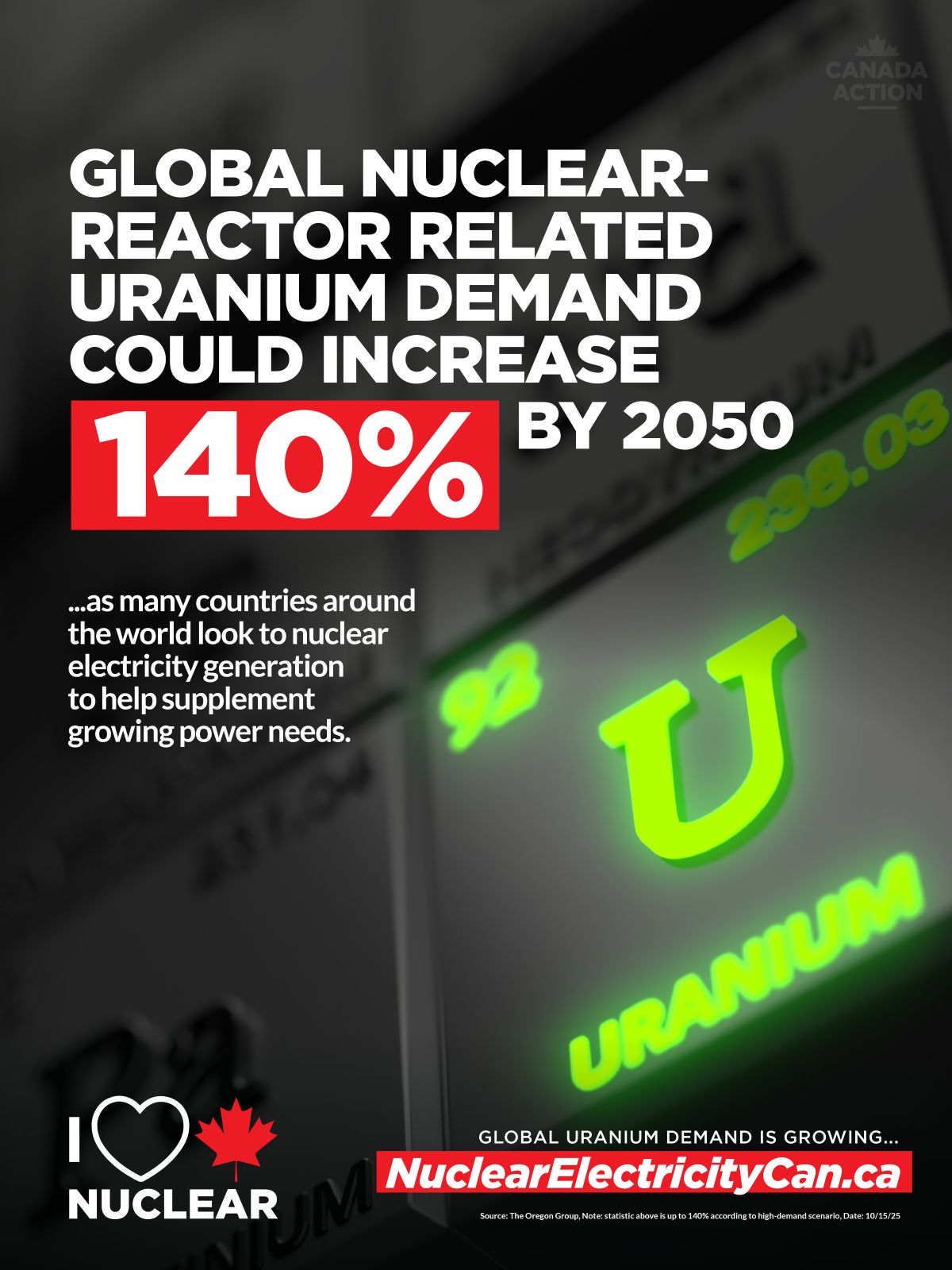
Global nuclear-reactor related uranium demand could grow by up to 140 per cent by 2050 - Canada's uranium reserves can lead

Small Modular Nuclear Reactors come with many benefits, which make these electricity-generating units highly appealing for all, including (but not limited to):

Lower Cost vs. Traditional Reactors – SMRs offer lower upfront capital costs than traditional nuclear plants due to standardized, factory-fabricated designs that can be transported directly to sites. This approach leads to more predictable production costs and reduces the risk of budget overruns. The smaller size also lowers the financial risk for investors, making nuclear power more accessible to a wider range of countries and utilities.

Urban and Rural Capabilities – SMRs can be sited in both urban and rural locations, thanks to their compact size and advanced safety features. This proximity to consumers reduces the need for long-distance transmission and strengthens energy security, especially for remote or off-grid communities.

Smaller Footprint – SMRs require significantly less land than conventional nuclear plants. Their compact design makes them ideal for brownfield sites, urban areas, and remote locations, and minimizes site disruption during construction and operation.

Shorter Construction Times – The modular, factory-based approach of SMRs enables construction and installation to occur much faster than in traditional plants. Prefabricated components streamline facility assembly, can reduce weather-related delays, and allow for quicker commissioning.

Modular Built – SMRs offer modular scalability, allowing utilities to add reactor units incrementally as demand increases. This ‘build-as-you-need’ strategy spreads out capital costs, manages risk, and supports easier upgrades and maintenance.

Join Us Today!

Canada Action - Supporter Banner Oct 2025

Join us today to learn more about the positive impact the uranium and nuclear sectors have on the lives of Canadian families across our great nation!

SOURCES:

1 - https://www.cer-rec.gc.ca/en/data-analysis/energy-markets/market-snapshots/2025/market-snapshot-canadas-role-in-small-modular-reactor-smr-technology.html

2 - https://www.opg.com/story/opg-ready-to-begin-building-north-americas-first-small-modular-reactor/

3 - https://news.ontario.ca/en/release/1005889/ontario-leads-the-g7-by-building-first-small-modular-reactor

4 - https://www.cer-rec.gc.ca/en/data-analysis/energy-markets/market-snapshots/2025/market-snapshot-canadas-role-in-small-modular-reactor-smr-technology.html

5 - https://natural-resources.canada.ca/energy-sources/nuclear-energy-uranium/small-modular-reactors-smrs-mining

6 - https://news.ontariotechu.ca/archives/2025/09/what-are-small-modular-reactors-and-how-are-they-shaping-canadas-low-carbon-future.php

7 - https://www.energyalberta.com/project#project-overview