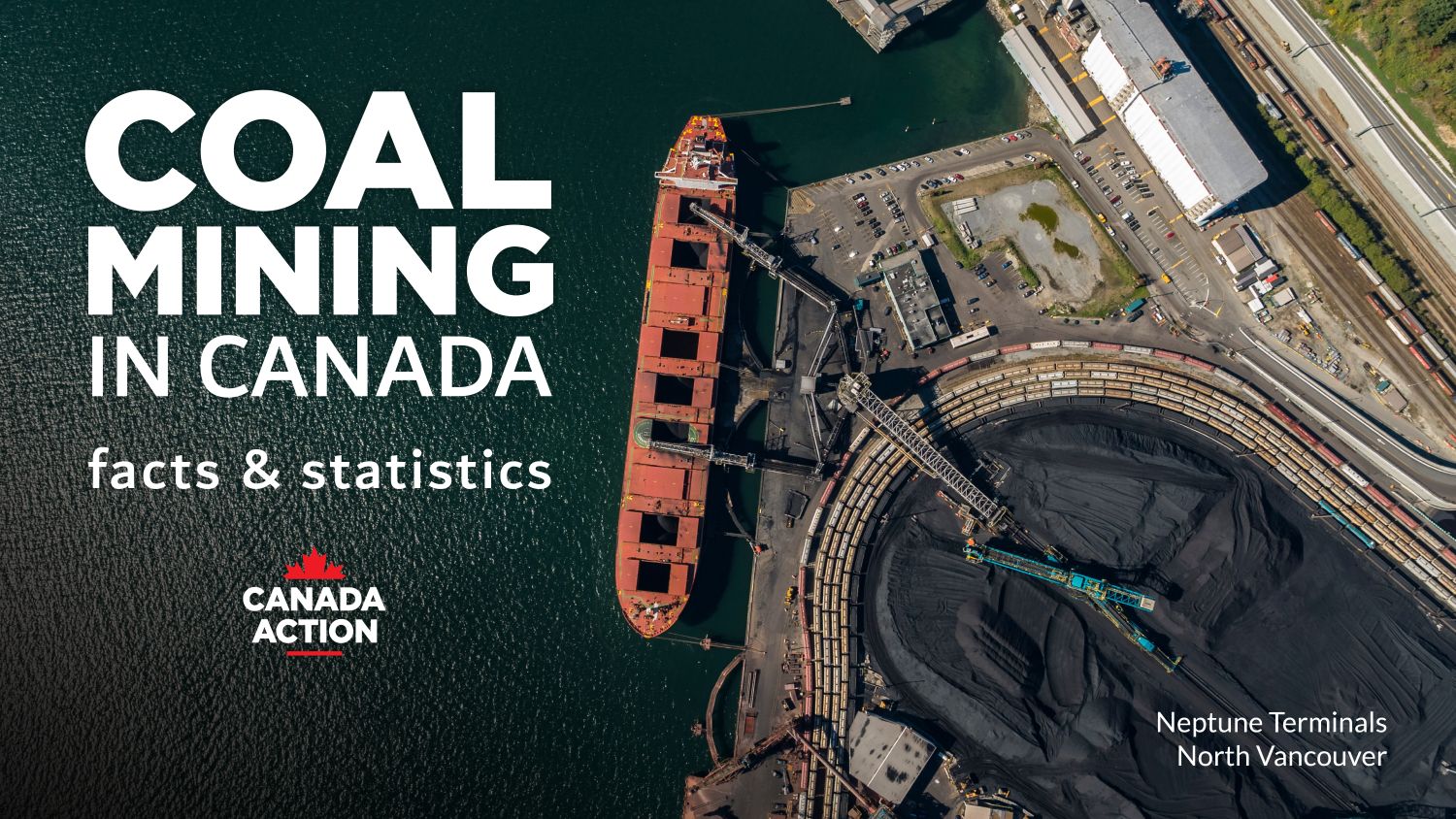
Coal Mining in Canada: 17 Facts & Statistics

Coal Mining in Canada: 17 Facts & Statistics

Coal Mining in Canada - Facts and Statistics cover

Coal mining is one of Canada's most important and enduring resource industries, playing a vital role in the national economy for well over a century. From the rugged mountains of British Columbia's Elk Valley to the vast plains of Alberta and Saskatchewan, Canadian coal mines supply both domestic industries and global markets with a product that remains in strong demand worldwide. It is an industry defined by hard work, skilled workers, and a proud tradition of resource development that supports families and communities from coast to coast.

Canada is home to some of the highest-quality metallurgical coal deposits found anywhere on earth. Metallurgical coal in particular is a critical ingredient in the production of steel, the material that builds bridges, railways, ships, skyscrapers, and the infrastructure that modern economies depend on. Today, Canada is the fifth-largest metallurgical coal exporter, helping countries abroad manufacture the steel necessary to build their nations.

Below, we examine coal mining in Canada and its positive economic impact on Canadian families using facts and statistics drawn exclusively from the most reputable sources. Also see:

17 Canadian Coal Mining Facts

#1 - Canadian mines produced 42.6 million tonnes of coal in 2024, approximately two-thirds, or 67% of which was metallurgical coal used to manufacture steel, and 33% was thermal coal used to generate electricity [1]

#2 - Coal supported approximately 12,000 jobs for Canadians as of 2024 [2]

#3 - British Columbia accounted for 69% of Canadian coal production in 2024, followed by Alberta (19%) and Saskatchewan (11%) [1]

#4 - Canada was the 14th largest coal producer in the world in 2024, accounting for 0.5% of global production [1]

#5 - Canada was the 8th largest producer of metallurgical coal (2.5% of global production) and the 14th largest producer of thermal coal (0.2% of global production) in 2024 [1]

#6 - Canada was the 6th largest coal exporter globally in 2024, accounting for 2.4% of global exports [1]

#7 - Canada was also the 5th largest metallurgical coal exporter and the 10th largest thermal coal exporter in 2024 [1]

#8 - Canada’s metallurgical coal exports in 2024, by destination:

  • 33% China
  • 22% Japan
  • 21% South Korea
  • 7% India
  • 5% Taiwan
  • 2% United States

#9 - Canada’s thermal coal exports in 2024 by destination:

  • 57% South Korea
  • 38% Japan
  • 3% Hong Kong
  • 1% United States
  • 0.2% Spain

#10 - Coal accounted for 15% of the total value of all Canadian mineral production in 2024, making it the second-most valuable mineral produced in Canada after gold (26%) and ahead of potash (13%) [2]

#11 - Canada’s coal production has dropped by 31% over the past decade, with thermal coal accounting for nearly 75% of the decline [1]

#12 - The total value of Canadian coal production reached nearly $9.7 billion in 2024, compared to $16.3 billion for non-metals and $38.4 billion for metals [2]

#13 - Canadian coal production value has grown substantially over the past decade, from $3.1 billion in 2015 to a peak of $15.5 billion in 2022, before moderating lower in recent years [2]

#14 - Canada exported $8.8 billion worth of coal in 2024, up from $3.6 billion back in 2015 [2]

#15 - Canada’s top five largest coal mines include [3]:

  • Vista Project – Alberta
  • Fording River Mine – British Columbia
  • Greenhills Mine – British Columbia
  • Elkview Mine – British Columbia
  • Estevan Mine – Saskatchewan

#16 – Coal is consistently one of the largest commodity exports through the Port of Vancouver, exporting 39.9 million metric tonnes (MMT) in 2025 [4]

#17 – The Port of Vancouver is a major coal-exporting hub of North America, serving energy-hungry Asian markets across the Pacific [4]

Global Coal Demand is Growing

The long-term outlook for coal is positive, as global demand continues to grow. According to the International Energy Agency, global coal demand is expected to reach an all-time high in 2025, hitting 8.85 billion tonnes [5]. Canada, a top exporter of coal, is well-positioned to meet some of that growing demand, supporting Canadian jobs and putting food on the table for families here at home.

For Canadian workers, communities, and businesses tied to this industry, coal mining expansion represents a significant opportunity. Canada's coal sector has the deposits, infrastructure, skilled workforce, and global reputation to remain a cornerstone of the country's resource economy for decades to come.

Today, several new coal mines and major expansions are proposed or underway, primarily focused on metallurgical coal production in Alberta and British Columbia. Some of those projects include the Quintette Mine Restart (BC), Vista Mine Expansion (AB), Grassy Mountain Coal Project (AB), Elk Valley Expansion (BC), and more.

Join us Today!

The World Needs More Canada - Banner Snip

Make your voice heard by joining us and hundreds of thousands of other Canadians online at X, Instagram, Facebook, and YouTube today! Learn more about the positive influence natural resources have on our lives and how we should be a global supplier of choice for oil, natural gas, minerals, metals, forest and agricultural products, and everything in between!

SOURCES:

1 - https://natural-resources.canada.ca/minerals-mining/mining-data-statistics-analysis/minerals-metals-facts/coal-facts

2 - https://natural-resources.canada.ca/minerals-mining/mining-data-statistics-analysis/minerals-economy

3 – https://www.mining-technology.com/marketdata/five-largest-coal-mines-canada/

4 - https://www.portvancouver.com/article/port-vancouver-moves-record-cargo-2025-delivering-more-what-canadians-make-mine-harvest-and

5 - https://www.iea.org/news/global-coal-demand-has-reached-a-plateau-and-may-well-decline-slightly-by-2030