Let’s Keep Canada's Pipeline MOU Momentum Going into 2026 and Beyond

Let’s Keep Canada's Pipeline MOU Momentum Going into 2026 and Beyond

Let’s Keep the Alberta-Ottawa MOU Momentum Going into 2026 and Beyond cover

The Memorandum of Understanding (MOU) between Ottawa and Alberta is a welcome shift. After a decade of stalled projects and lost opportunities, we’re hopeful that this agreement marks a clear step forward for Canada. It confirms that oil and natural gas are once again recognized as a strategic asset for our economy and quality of life.

But there’s much more work to be done.
Around the world, oil and gas consumption is growing – not fading away, despite what we’ve heard from anti-Canadian energy activists.

In a significant shift from just two years ago, the International Energy Agency’s latest “Current Policies” outlook projects that demand for both fuels will increase through 2050. Billions of people are striving for higher living standards, and that requires reliable, affordable energy.

If Canada does not help meet this growing demand, other producers will.

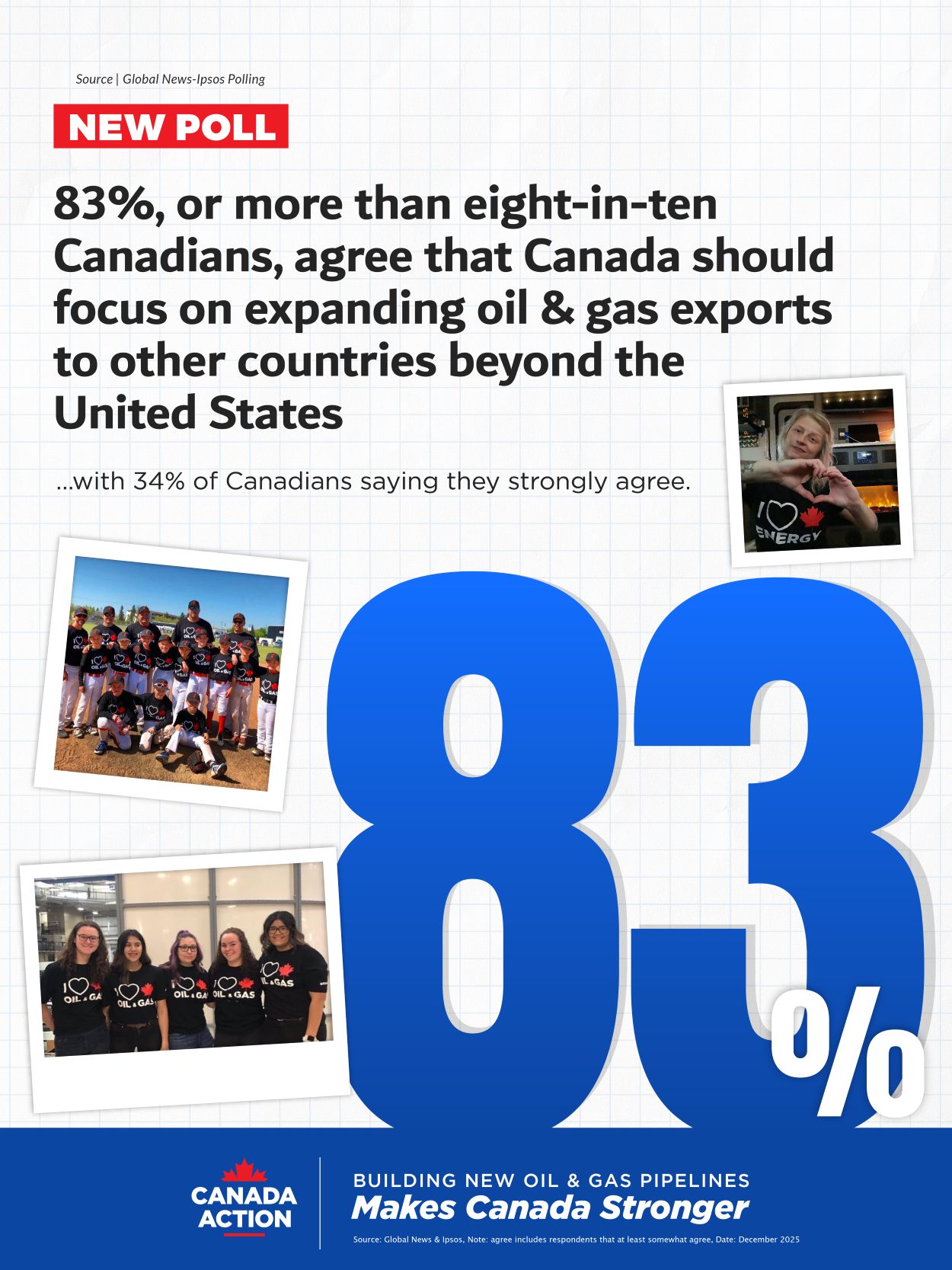
83 per cent of Canadians agree that Canada should expand oil and gas exports in face of US tariffs

The world will likely continue to consume increasing amounts of oil and gas for decades. Shouldn’t Canadians share in the jobs, investment, and revenues created by this growth? To do so, we need new pipelines to our coasts.

At the same time, Canada’s economy is facing significant challenges. Labour productivity and per‑capita GDP growth are lagging. Private capital investment is weak. Shifts in U.S. trade policy are costing countless jobs in key sectors such as forestry, steel, and automotive. Families are feeling the squeeze from higher costs on everything from groceries to housing.

In this environment, the immense economic opportunities that flow from energy development – including pipelines – are not just nice to have, but essential to sustaining our standard of living and economy at large.

With real economic headwinds, we cannot ignore what is already working for Canadians. Energy helps pay our bills. In 2024, oil and gas accounted for about 21% of our exports, helping to pay for the goods and services we import. Those revenues support the hospitals, schools, and social programs Canadians rely on.

And new pipelines deliver absolute returns. Every new project that reaches tidewater reduces our dependence on a single customer and helps secure better prices for our energy resources.

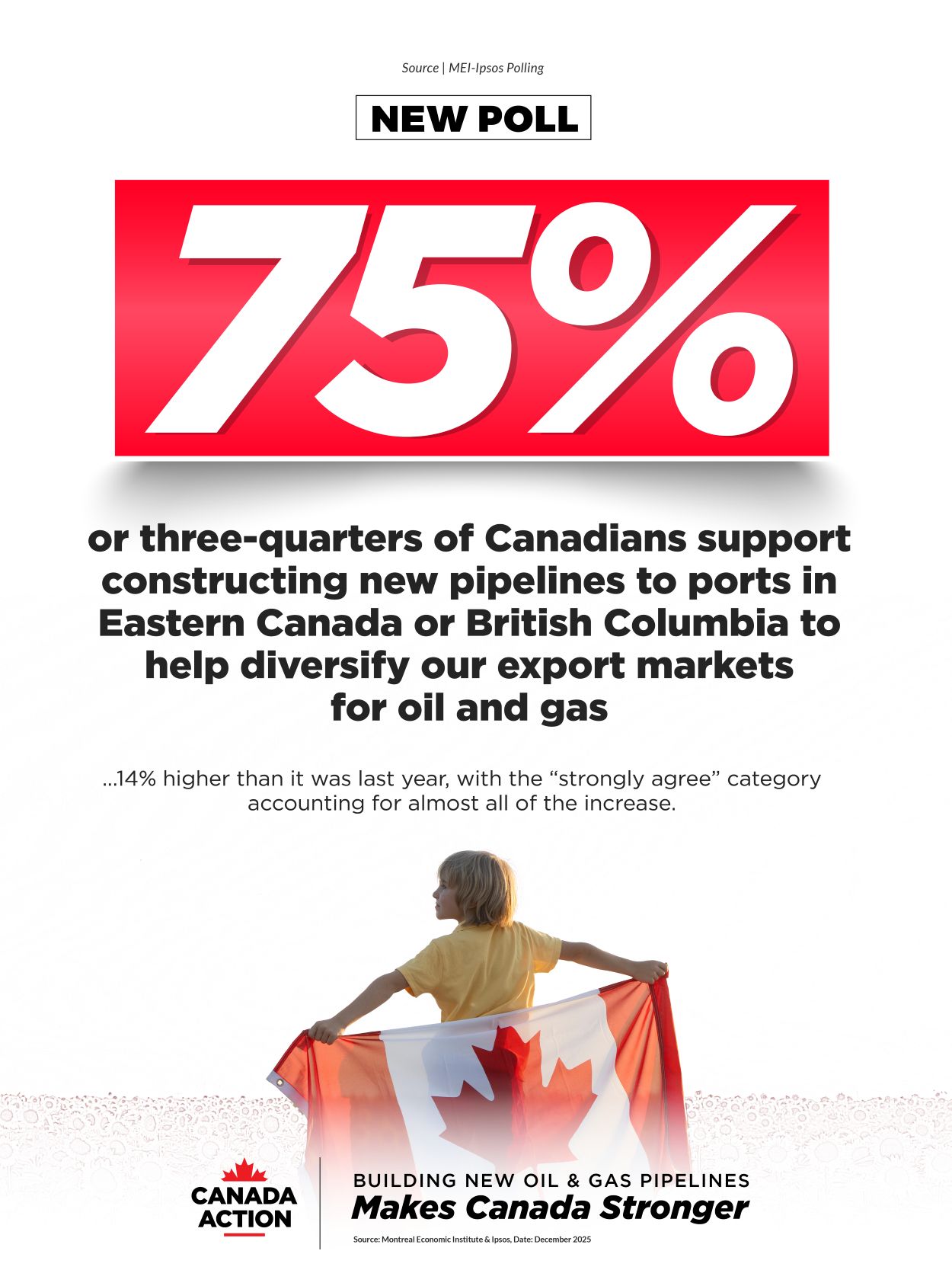
75 per cent of Canadians support building new eastern and western pipelines to the coasts - MEI

We cannot afford to return to the period when Canadian oil sold at one of the world's steepest discounts, largely due to limited market diversification. That era, which continues today, costs Canadians billions of dollars in lost revenue and undermines confidence in our country as a good place to invest. It should be noted that our natural gas also sells at a discount to current benchmarks, taking its own toll on our economy.

The Ottawa–Alberta MOU recognizes this history and the stakes. It reflects an understanding that we need pipelines to compete globally, attract capital, and generate the revenues required to support growing public services. It also signals something we have not seen in years: the prospect of a more collaborative, practical approach to building the energy infrastructure required to create much-needed prosperity and support a stronger economy.

However, talking about new pipelines is not enough. We need concrete action and genuine collaboration.

That means aligning policies and regulations so projects can move from concept to construction without unnecessary delays. It means providing clarity, stability, and a genuinely welcoming environment for private project proponents. It also means recognizing that the economic benefits of pipelines – as the Trans Mountain Expansion has already demonstrated – extend far beyond any single region.

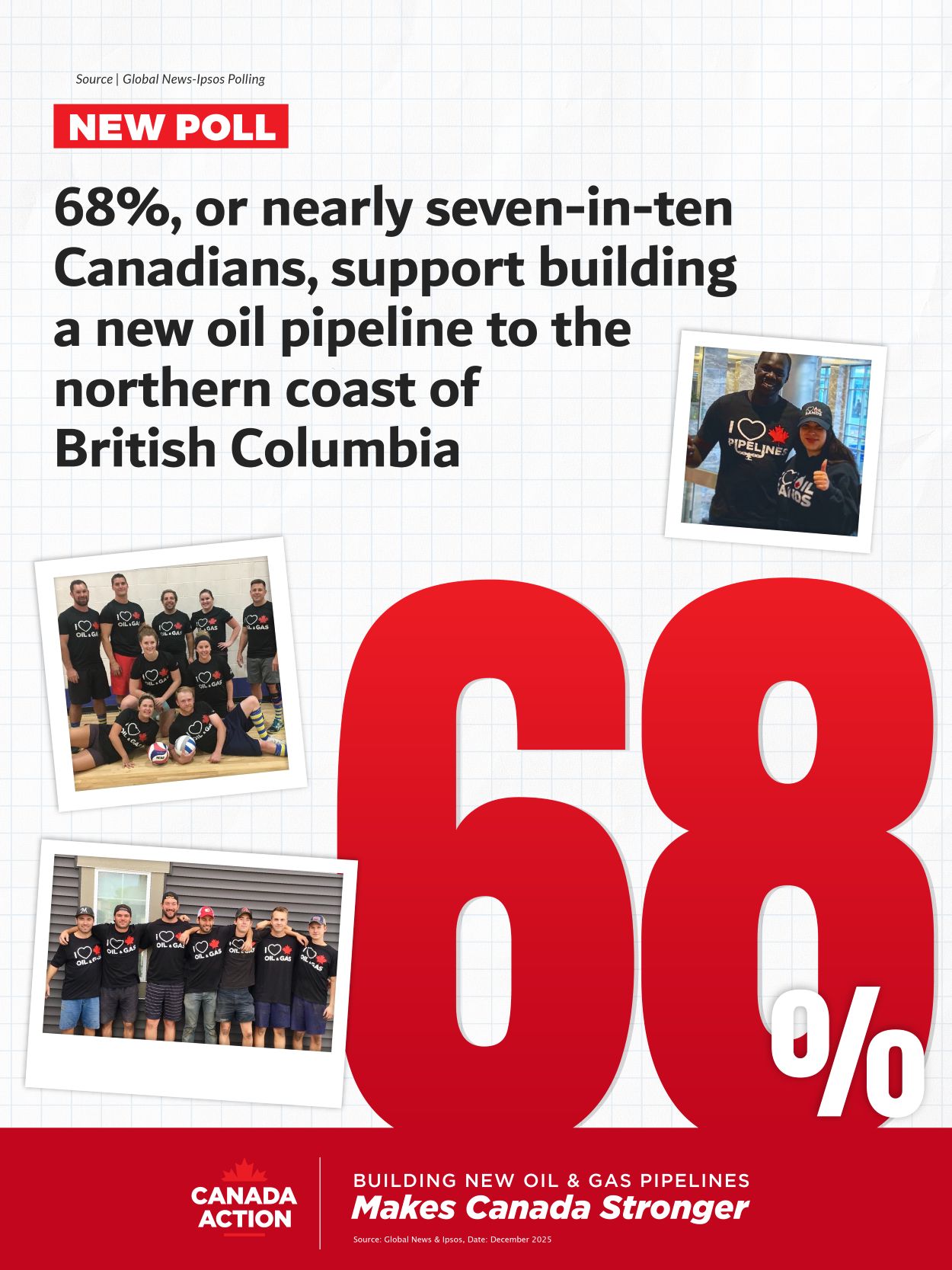
63 per cent of Canadians support building a new oil pipeline to the northern coast of British Columbia

New pipelines mobilize billions of dollars in capital investment, create countless well-paid careers in the skilled trades and other sectors, and increase the energy and export revenues on which our governments rely. Rural Indigenous and non-Indigenous communities share in the opportunities that come with building critical energy infrastructure across our nation, whether through equity ownership, benefit agreements, or community initiatives.

Canada has the resources, the expertise, and the leadership to be a preferred global supplier of conventional energy. What we need now is the will to build. New pipelines make Canada stronger, as do new power lines, mines, LNG facilities, farms, forestry operations, and so forth.

Energy helps pay the bills for Canadians – and with the right choices, supporting the sector can power a new era of shared prosperity in 2026 and beyond, no matter where you live in our country.