New Pipelines a Must for Canada’s Economic Security

New Pipelines a Must for Canada’s Economic Security

New Pipelines Are a Must for Canada’s Economic Security cover 2

Canada’s first list of major nation-building projects has been announced. It includes LNG Canada Phase 2 (Kitimat, BC), Darlington New Nuclear Project (Bowmanville, ON), Contrecoeur Terminal Container Project (Contrecoeur, QC), McIlvenna Bay Foran Copper Mine Project (East-Central, SK), and the Red Chris Mine expansion (Northwest, BC).

This is a great start. But if Canadians are serious about strengthening our economy, diversifying our trading partners, and maximizing the value of our resources, new pipelines must also be included in future announcements.

In fact, we need to support all critical infrastructure projects and resource development from pipelines, to power lines, ports, railways and roads.

Prime Minister Carney has repeatedly stated that Canada will become an energy superpower and diversify its trading partners.
“We cannot control what other nations do,” Carney said in a recent press release.

“We can control what we give ourselves – what we build for ourselves. Canada is building the strongest economy in the G7, one that is less reliant on foreign powers and more resilient in the face of global shocks.”

But there’s no way we can do either of these things without building new pipelines and expediting all of our LNG opportunities.

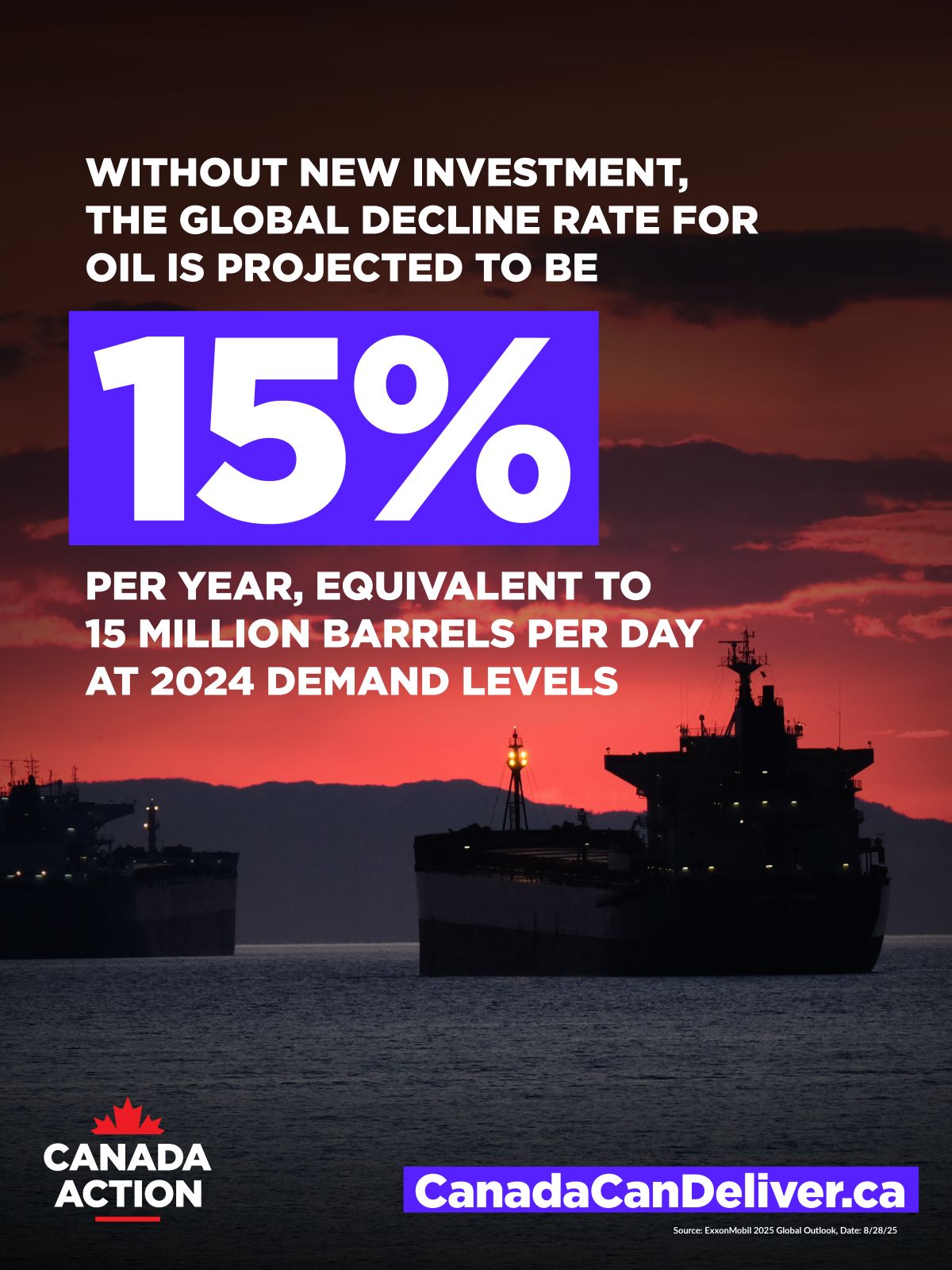
without new investment, global oil supply will drop 15 per cent per year

Canada’s largest export by far is oil and gas, and the reality is that new pipelines would have a profound impact on the Canadian economy.

The Trans Mountain Expansion is an excellent example of the economic benefits of getting more of our oil exports to tidewater. The project reduced the price differential on oil, which boosted Canadian revenues by nearly $13 billion thus far and added billions more to provincial and federal coffers, supporting the social programs we all rely on. It has also enabled us to reach new markets, with China, Japan, South Korea, Brunei and India all purchasing shipments from TMX over the past year.

New pipeline projects create thousands of high-paying jobs for Canadians during construction and provide stable, long-term employment during operations and maintenance. The Coastal GasLink pipeline, for instance, employed over 7,500 Canadians, demonstrating the direct and immediate impact the project has had on families and communities. TMX hired more than 37,000 people in total, with a commitment to prioritizing Indigenous, local, and regional workers.

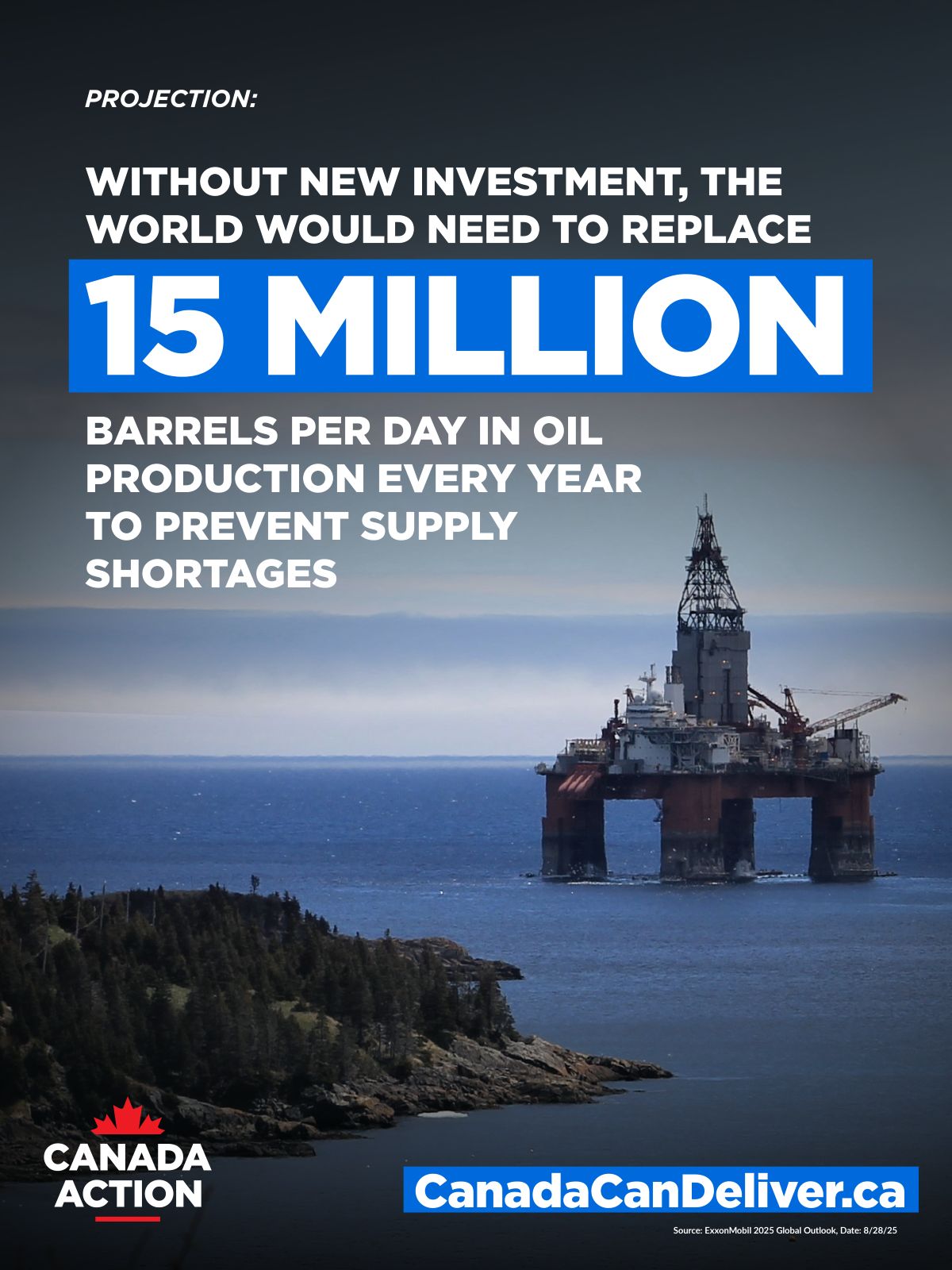
Global demand for oil and gas continues to grow, and every year the world must produce an additional 15 million barrels a day to replace existing production that is depleting, according to one recent industry projection.

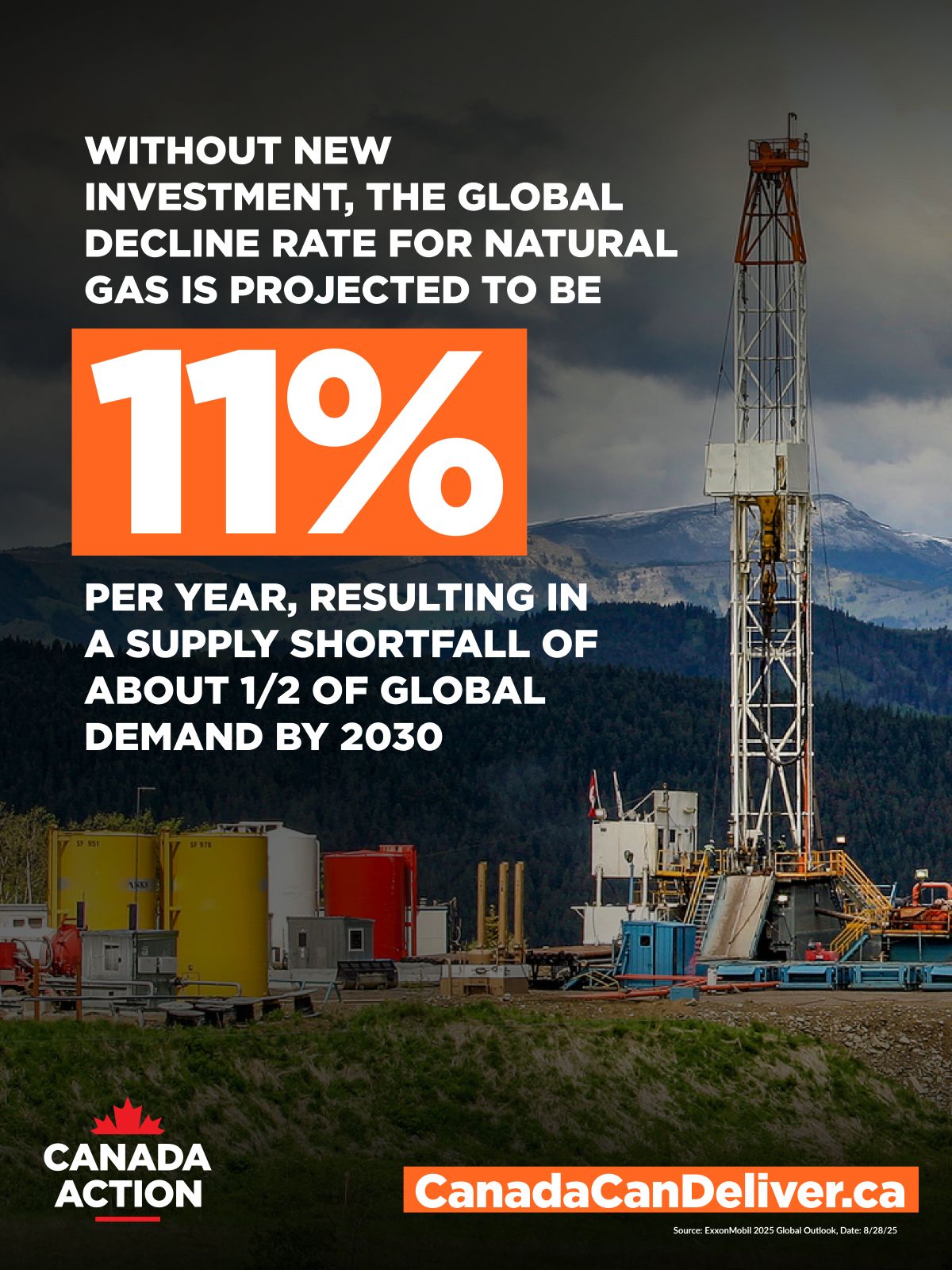
without new investment, global natural gas demand will drop 11 per cent per year

Future energy demand in Asia is expected to be the largest source of global growth through 2050, driven by rapid economic expansion, industrialization, and growing populations. Meeting Asia’s demand for oil and gas is an immense economic opportunity that Canadians cannot afford to miss.

If we don’t meet that demand, another nation will.

Like BC Premier David Eby said not too long ago, “We’re not in the business of turning away investment in British Columbia. Especially investment that assists us in diversifying our customers for our resources and allows us to get a higher price for those resources,” when asked about the Prince Rupert Gas Transmission pipeline via the CBC.

“If you’re not buying oil and gas from Canada and British Columbia, the alternative is Venezuela,” Eby also said earlier this year.

We know that Northern Gateway had a lot of Indigenous support, with 80 per cent of First Nations supporting the project. Today, such support has evolved into direct economic partnerships. We see this with the Coastal GasLink pipeline, where 17 of 20 First Nations along the route have not only signed agreements, but have taken an equity stake in the project. This is economic reconciliation in action, creating generational wealth and opportunity for communities that so desperately need it.

without new investment, the world would be short 15 million barrels of oil per day

We also know that since the Energy East pipeline was cancelled, global oil demand has risen by several million barrels per day. Not building these projects didn’t reduce global oil consumption, but instead shifted supply potential away from Canada and towards other nations, costing us tens of billions of dollars in lost economic opportunities every year.

Some will say that no proponent is willing to build a pipeline in Canada now, and that’s the reason why there might not be one on the initial nation-building projects list. Sure. But what is clear is that there might not ever be another proponent willing to build major pipelines if Canada’s regulatory roadblocks remain – namely, Bill C-69, the oil and gas emissions cap, and C-48, the West Coast tanker ban.

Let’s not kid ourselves. We need a real plan today for our future economic security. That means building pipelines, power lines, ports, railways, and roads, as well as all other critical infrastructure that will diversify trade and ensure a prosperous future for our families and communities.