What Natural Resources Does New Brunswick Have in Abundance?

What Natural Resources Does New Brunswick Have in Abundance?

what natural resources does New Brunswick have in abundance

New Brunswick isn’t Canada’s largest province, but it sure is rich in a variety of natural resources. Well known for its picturesque Atlantic coastline, nutrient-dense soil and abundance of forested land, various resource-based sectors play an oversized role in providing New Brunswickers with economic opportunities to provide for their families.

While forestry and fishing are considered the province’s most essential resource industries, New Brunswick’s vast wealth of untapped natural resources has the opportunity to do even more for Canadians.

Below, we go over several facts showing you just what natural resources are found in plentiful amounts across New Brunswick, along with more details on how the Atlantic province relies on its resource wealth to provide for Canadians.
Forestry in New Brunswick

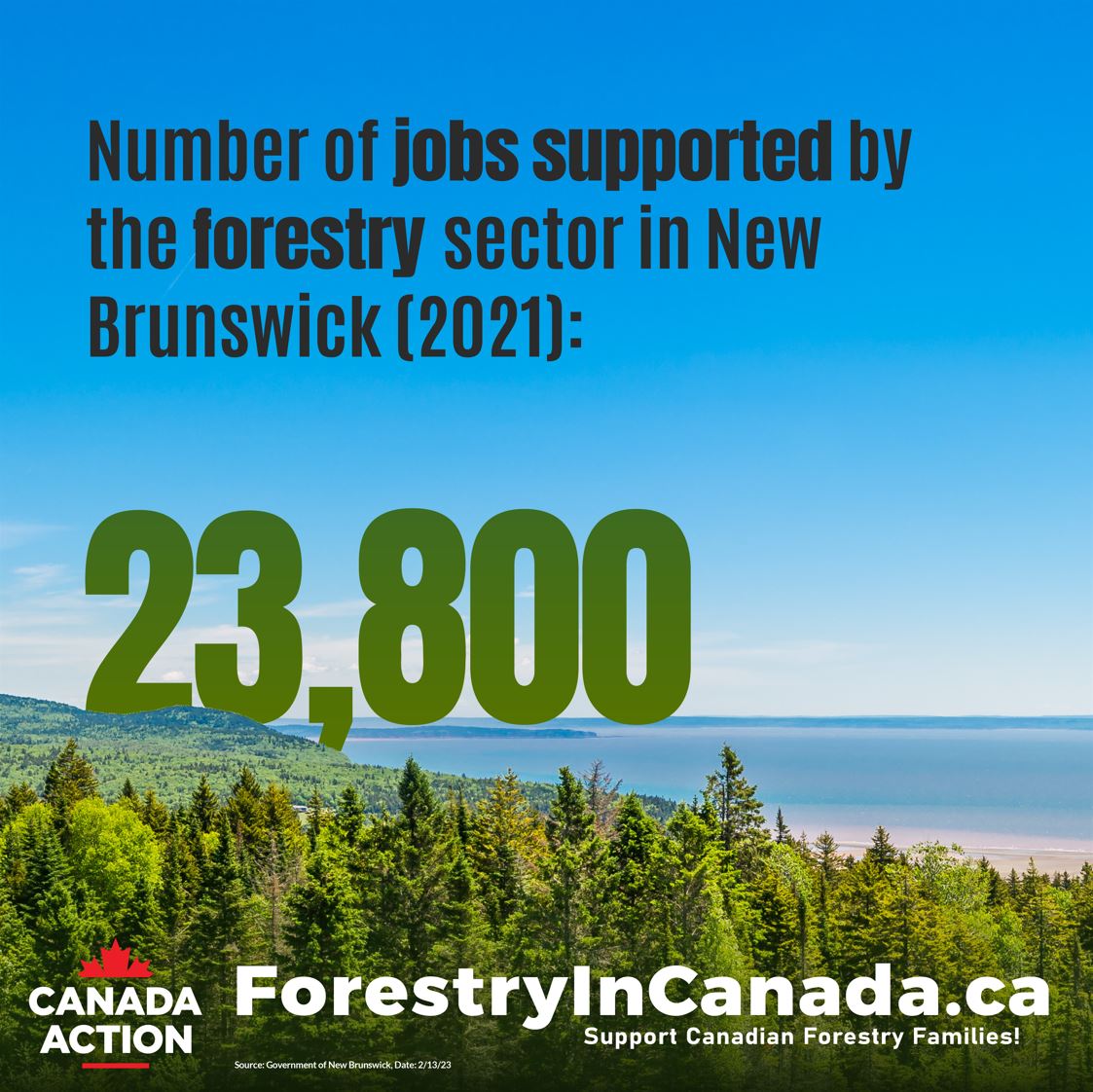
New Brunswick natural resource facts - New Brunswick is home to more than 23,800 who work in forestry sector

Quick Facts

#1 – The forestry sector in New Brunswick contributes $1.5 billion to annual gross domestic product (GDP), making it a significant part of the provincial economy [1]

#2 – New Brunswick currently exports around 80% of its forestry products to the United States [1]

#3 – Nearly 24,000 jobs are supported by the forestry sector in New Brunswick [1]

#4 – 900 companies directly operate in N.B.’s forestry industry, providing job opportunities for thousands of families [1]

#5 – Forestry is New Brunswick’s largest industry, accounting for 5% of the total provincial economy [2]

Forestry is the most important resource sector in New Brunswick, supporting paycheques for tens of thousands of Canadians. It is also the largest industry, accounting for 5% of the province’s total economy. Exporting $2.8 billion in products every year, which mainly go to the U.S., New Brunswickers rely on the sector to provide jobs, revenues, and economic opportunities at large.

Around 83% of the province’s land area is covered by forests, translating to more than 6 million hectares of forested land. Meanwhile, 900 companies operate directly in the sector. As a result, forests play a significant role in the livelihoods of New Brunswickers, as well as in their daily lifestyle and routines.

Agriculture, Aquaculture & Fisheries in New Brunswick 

New Brunswick natural resource facts - NB is home to more than 11,200 people who are employed by fishing-related jobs in 2020

Quick Facts

#1 – The agri-food and farming sector of New Brunswick ships food and beverage products in excess of $1 billion every year [6]

#2 – Fisheries alone supported nearly 10,600 jobs in New Brunswick as of 2023 [5], while the entire agri-food sector supports more than 11,500 jobs provincewide [6]

#3 – New Brunswick’s agri-food and seafood export sales totaled $2.46 billion in 2023, down slightly from $2.57 billion in 2022, and $2.72 billion in 2021 [3]

#4 – New Brunswick’s farm cash receipts totalled $885 billion in 2023, up from $859 billion the year prior [3]

#5 – Of New Brunswick’s total land mass of 7.34 million hectares, approximately 5% is considered farmland and just 2% is used for crop production [4]

The agriculture, aquaculture and fisheries sectors are essential contributors to the province. They are the heart of rural, coastal, and Indigenous communities, playing a crucial role in the lives of New Brunswickers, creating good jobs, boosting exports, and providing safe, high-quality food for Canadians.

New Brunswick has a thriving fishing and aquaculture industry that plays a significant role in its economy. With access to abundant marine resources, New Brunswickers produce a wide range of seafood products and export those goods to countries around the world, particularly the United States.

In recent years, the industry has steadily grown and continues to provide employment opportunities for thousands of people. Meanwhile, the province has a vast wealth of untapped soil and coastal resources that could help boost its economic fortunes over the next several years, if developed.

Mining in New Brunswick

New Brunswick natural resource facts - New Brunswick is home to more than 1,800 farms across the p - Copy

Quick Facts

#1 – New Brunswick produced $314 million in minerals and metals (excluding coal) in 2022, making it the third-largest producer in the Atlantic region [7]

#2 – New Brunswick’s primary mining production includes peat, sand, gravel, and salt, as well as zinc, lead, gold, and silver [7]

#3 – New Brunswick currently has six operating mines, with up to 18 prospective operations currently underway [8][9]

#4 – The mining, quarrying, and oil and gas sector directly employed 2,800 people across N.B. in 2023 [10]

#5 – Responsible for less than 1% of the provincial GDP, mining has an immense opportunity to expand its economic impact for New Brunswickers, with well over a dozen prospective mines underway [7]

New Brunswick has a rich history of mineral extraction with several important minerals mined in the region. With growing global demand for all of the above, the mining industry continues to be an important source of economic activity in the province.

The sector supports thousands of jobs and generates hundreds of millions of dollars in activity every year. With a vast wealth of untapped mineral and metal resources, the industry is poised for growth as Canada looks to expand resource development and trade infrastructure and take control of its economic destiny.

Challenges for New Brunswick’s Resource Economy

New Brunswick natural resource facts - New Brunswick exported over 2.2 billion dollars of seafood  - Copy

New Brunswick’s resource sectors face significant challenges that hinder their growth and prosperity. A heavy reliance on foreign markets, particularly the United States, creates economic uncertainty for key sectors. This dependence makes the provincial economy vulnerable to international trade disputes and protectionist policies such as tariffs, which can impact the profitability of vital exports like forestry and seafood products.

Another pressing issue is the worsening labour crisis, which is fueled by an aging workforce and difficulties in attracting new talent. Key industries such as forestry, agriculture, and fishing are experiencing labour shortages as a growing number of older workers retire without enough younger people to replace them. The resulting demographic gap is limiting the capacity of the province’s resource sectors to expand and meet market demands.

To secure a prosperous future, Canadians must support the continued development of New Brunswick's natural resources and the expansion of its trade infrastructure. By addressing these challenges, the province can enhance its economic independence and create a brighter future for its communities. This will strengthen not only New Brunswick, but Canada as a whole.

Join Us Today!

Canada needs a stronger economy - banner

Join us on YouTube, Facebook and Instagram to learn more about what natural resources are found in New Brunswick and Canada as a whole. See more about why the world needs more Canadian energy, minerals, metals, wood, and food today!

SOURCES:

1 – https://www2.gnb.ca/content/gnb/en/departments/erd/forestry-conservation/content/forest-products/forest-industry.html

2 - https://www.forestnb.com/economy/

3 - https://www.legnb.ca/content/house_business/61/1/tabled_documents/2024-12-09%20Agriculture,%20Aquaculture,%20Fisheries%202023-2024.pdf

4 - https://www2.gnb.ca/content/gnb/en/departments/10/agriculture/content/land_and_environment.html

5 - https://www.dfo-mpo.gc.ca/stats/cfs-spc/tab/cfs-spc-tab2-eng.htm

6 - https://www2.gnb.ca/content/gnb/en/departments/10/agriculture.html

7 - https://mining.ca/wp-content/uploads/dlm_uploads/2024/06/Facts-and-Figures-2023-FINAL-DIGITAL.pdf

8 - https://thediggings.com/can/new-brunswick-can582

9 - https://mining.ca/wp-content/uploads/dlm_uploads/2025/05/MAC-Report_2025-final-1.pdf

10 - https://www.jobbank.gc.ca/trend-analysis/job-market-reports/atlantic-region/sectoral-profile-mining