Fossil Fuels to Account for 69% of Global Energy Mix in 2050: REPORT

Fossil Fuels to Account for 69% of Global Energy Mix in 2050: REPORT

fossil fuels to account for 69 per cent of global energy mix in 2050-01

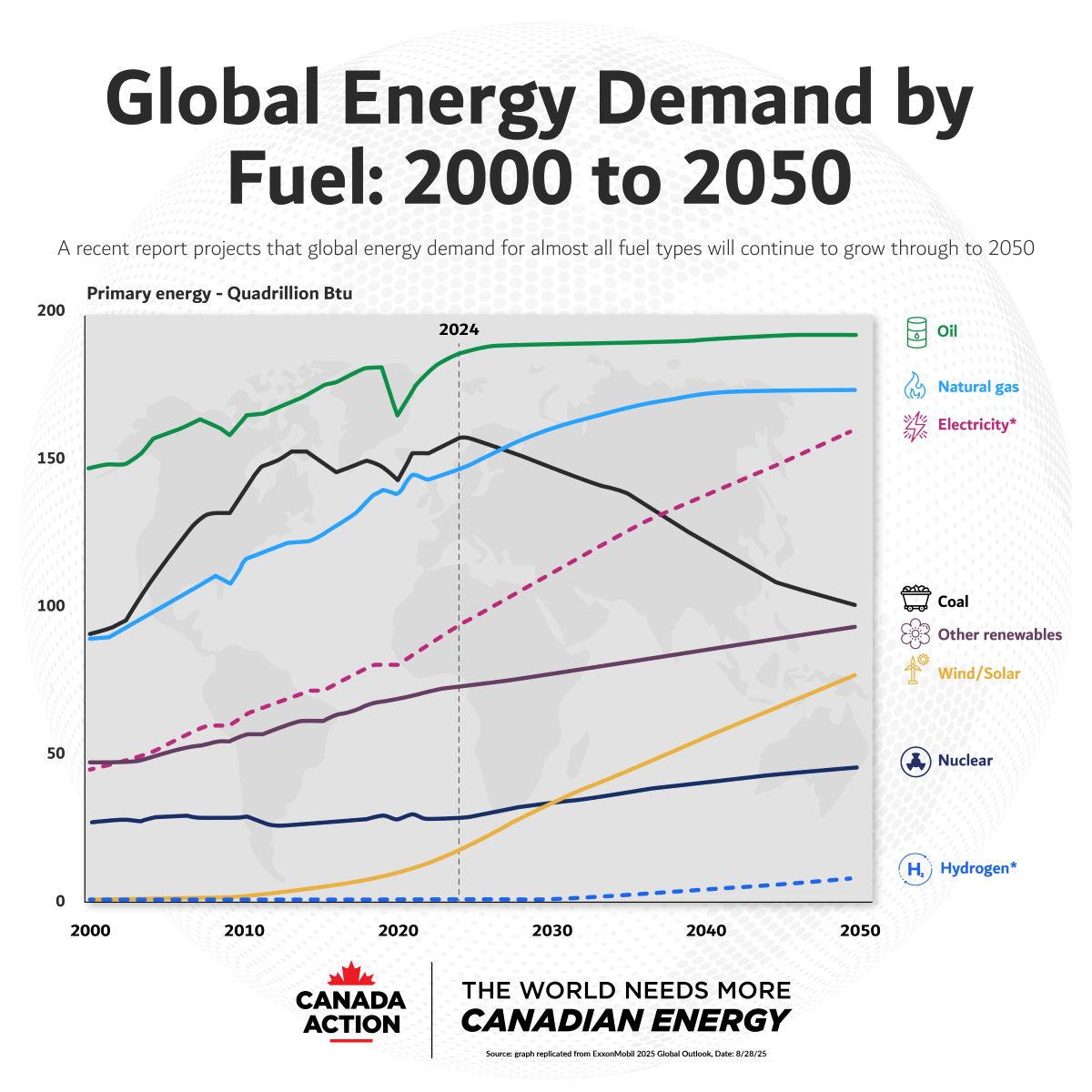
What will fuel the world of tomorrow? According to ExxonMobil’s latest outlook, we will need more of almost every type of energy to meet growing demand by 2050.

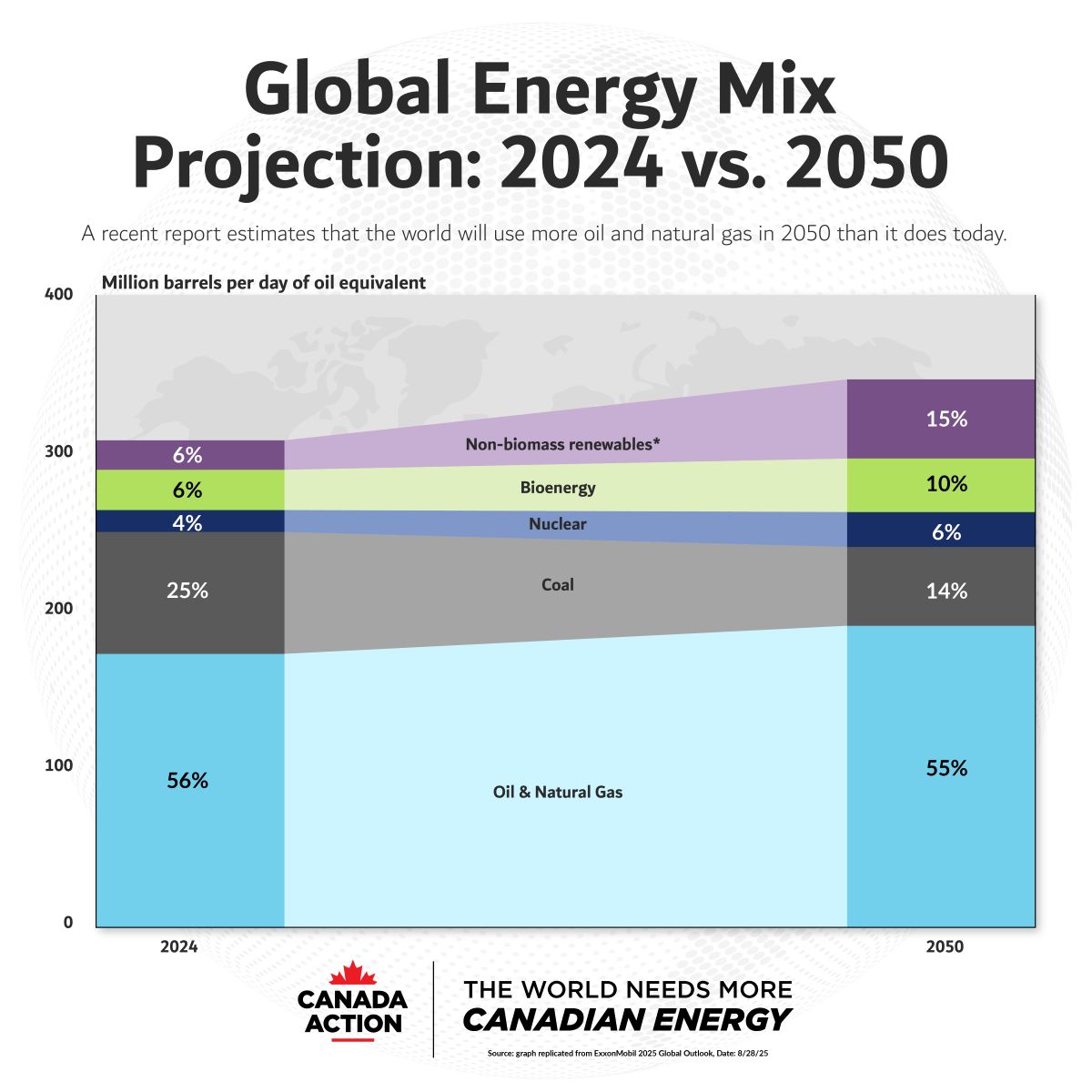
The forecast indicates that, despite rapid growth in renewable power generation, oil and natural gas will continue to be the foundation of global energy supply. The only fuel source forecasted to drop in use through 2050 is coal. Meanwhile, fossil fuels are expected to account for 69% of the world's energy supply, up from 67% in last year's outlook and from 68% the year prior.

Canada, with its vast energy reserves and production capabilities, can play an instrumental role in meeting the world’s growing need for reliable, affordable energy.

Below, we take a look at essential highlights from ExxonMobil's Global Outlook: Our View to 2050, and why such projections should matter for all Canadians. Also see:
global energy mix projection - 2024 vs 2050 - exxonmobil replication


Report Highlights

  1. Oil and Gas Remain Dominant: Oil and natural gas are projected to be the world’s largest energy source in 2050, collectively making up 55% of the global energy supply, down a single point from 56% in 2024, due to their unmatched utility in the industrial and commercial transportation sectors.
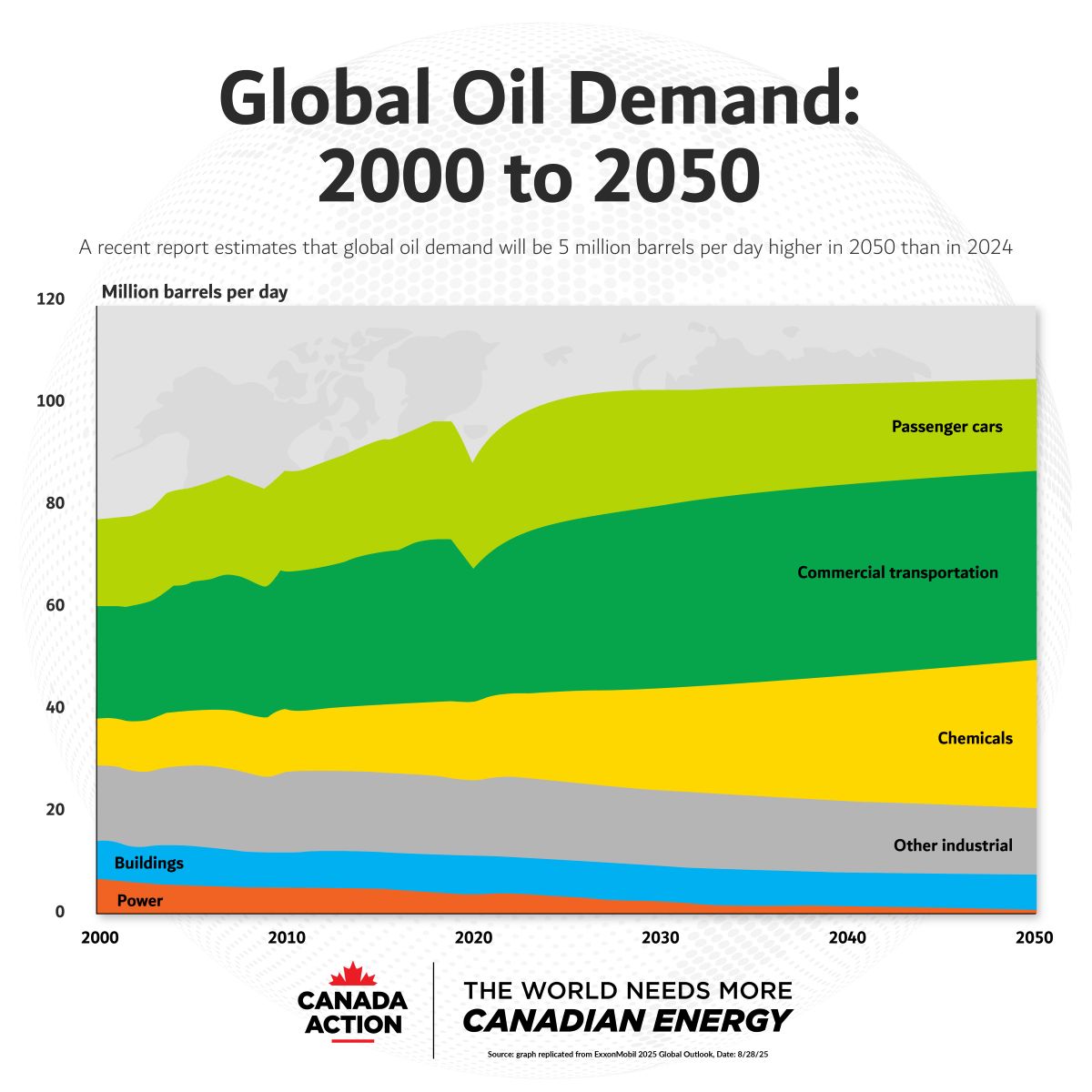
  2. Oil Demand Stays Strong: Global oil demand is projected to grow to approximately 105 million barrels per day (mbpd) by 2050, up from about 100 mbpd today. Despite the adoption of more electric vehicles (EVs), this sustained demand is primarily driven by the industrial sector and commercial transportation, which are expected to account for 75% of oil demand.
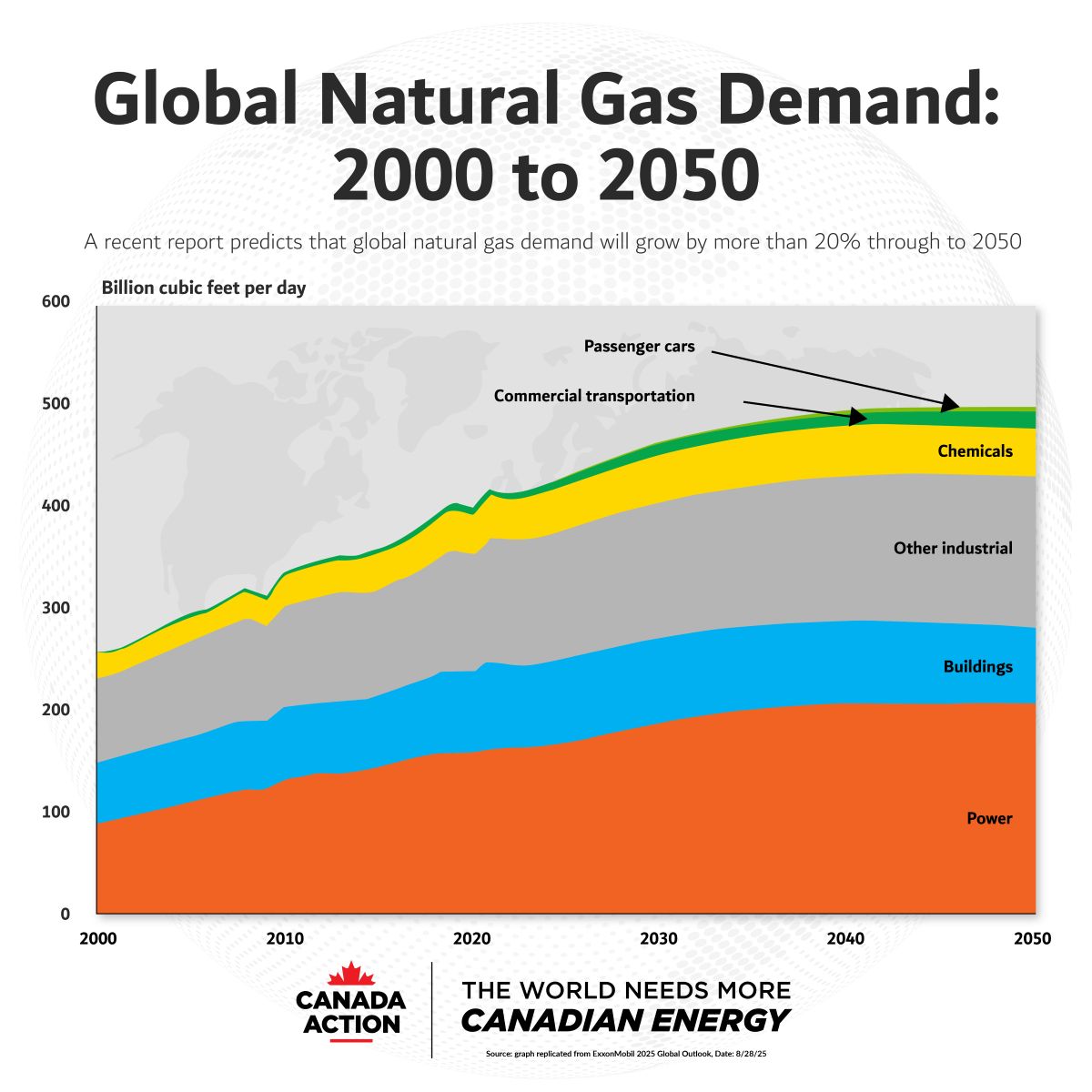
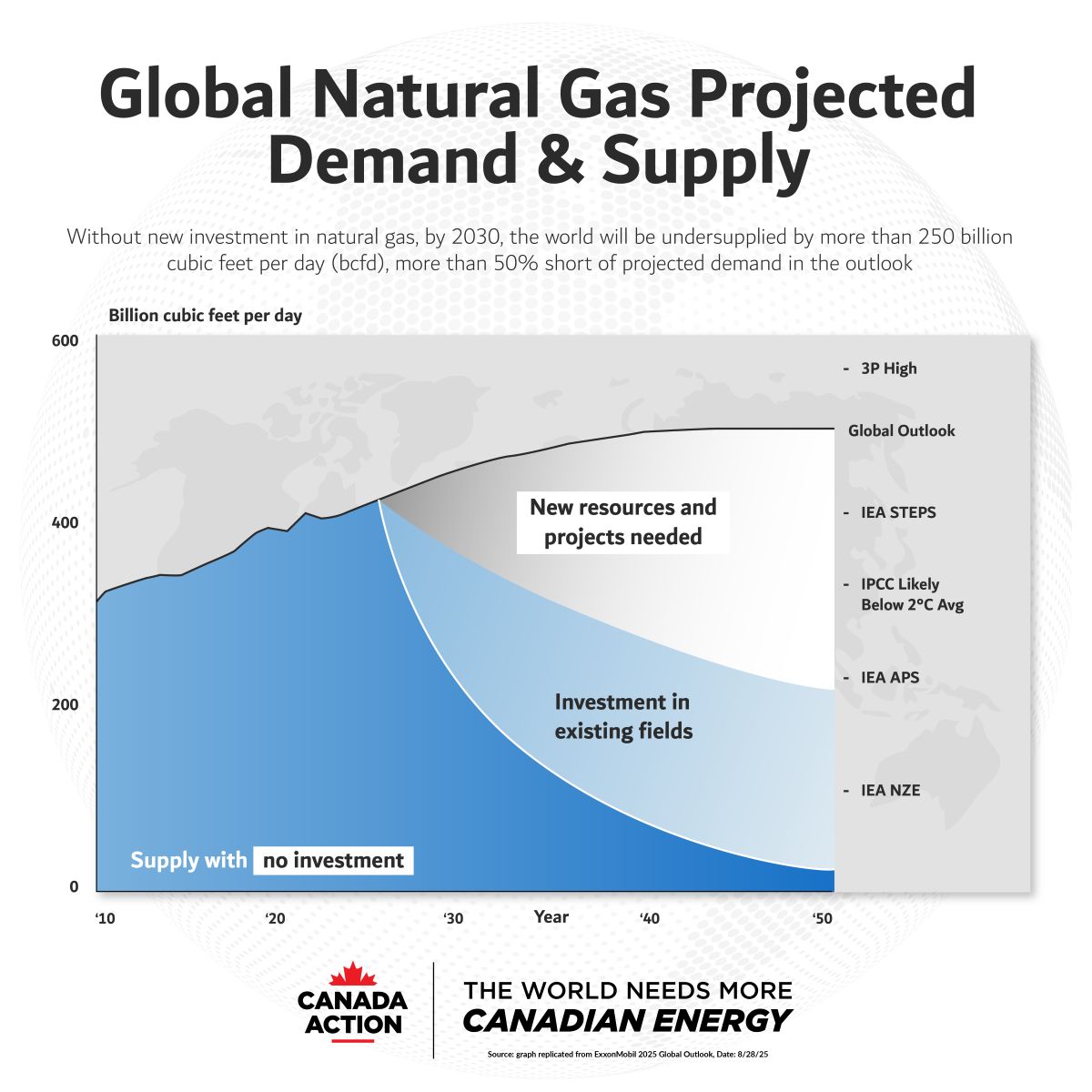
  3. Natural Gas Demand to Rise: Natural gas demand is expected to increase 20% by 2050, reaching approximately 500 billion cubic feet per day (bcfd). This growth will primarily meet the increasing needs for electricity generation and industrial processes.
  4. LNG Market to Double: The world’s liquefied natural gas (LNG) market is projected to double by 2050. LNG is viewed as a dependable and flexible energy source for nations seeking to promote economic growth, and is also considered a critical ‘transition’ fuel.
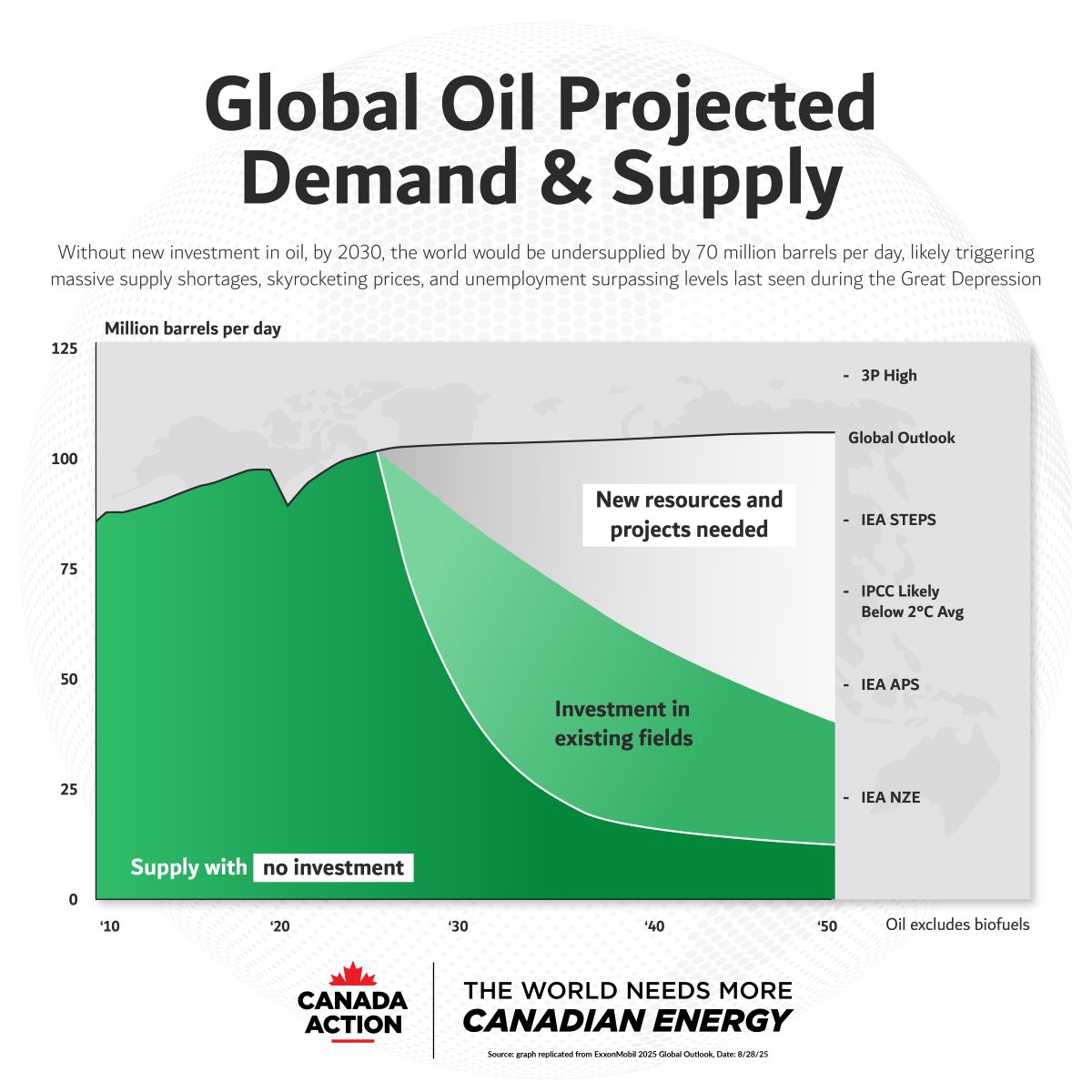
  5. Oil & Gas Investment is Crucial: The report emphasizes that sustained investment in oil and natural gas is more important than ever. Without new investment to offset the natural decline of existing wells, the world would face significant supply shortages, with a potential shortfall of 70 million barrels of oil per day by 2030. Similar to oil, natural gas would also see a 250 bcfd supply shortfall by 2030 without any investment into new supply.
  6. Renewables Grow the Fastest: Energy sources like solar and wind are expected to see the fastest rate of growth in the world’s energy mix by 2050. Solar and wind generation is projected to increase more than fourfold, accounting for over 40% of the world's electricity by 2050. Overall, global electricity demand is expected to grow 70% over the next 25 years, and all energy sources will be needed to support that growth.
  7. Coal Use Will Decline: The world is projected to use 35% less coal in 2050 than it does today. Coal is expected to be displaced by other sources such as renewables and natural gas, especially in the developing world.
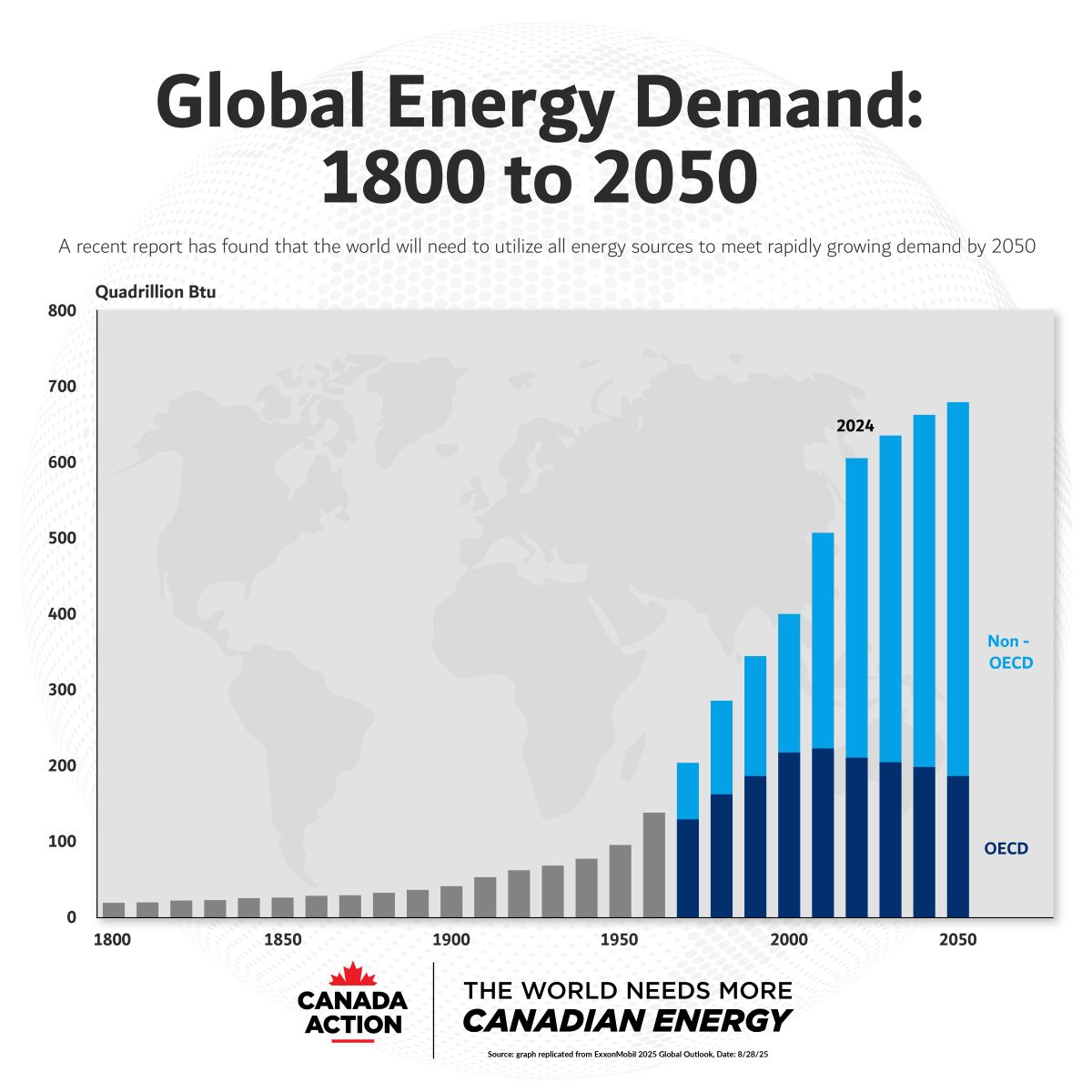
  8. Developing Countries Drive Demand: The combination of a growing population and a doubling global economy will drive a 25% increase in energy use in developing countries by 2050. These nations will account for more than half of the world's GDP by then.
  9. Industry and Transport are Key: The industrial and commercial transportation sectors are critical to the global economy and will drive energy demand growth. These sectors have unique energy needs that cannot be fully met by electricity or renewable energy sources alone.
  10. Asia Pacific Leads LNG Demand: Demand in the Asia Pacific region will drive approximately 70% of the growth in LNG from 2024 to 2050. New LNG supplies are expected to come predominantly from North America, the Middle East, and Africa.

global energy demand by fuel type - 2000 to 2050 - exxonmobil replication


Significant Oil & Gas Investment Required to Meet Demand

According ExxonMobil, providing an adequate energy supply over the next several years will require sustained investment in new oil and natural gas production. Without new investment, the natural decline of existing wells would be steep.

For oil, the decline rate is about 15% per year. A complete halt in investment would result in a staggering 70 million barrels per day shortfall by 2030, with devastating consequences for the global economy. Similarly, natural gas supply would plummet by about 11% annually without new projects, resulting in a shortfall of ~250 bcfd per day by the end of the decade.

natural gas projected demand and supply (2025) - exxonmobil replicationoil projected demand and supply (2025) - exxonmobil replication

Both scenarios would result in massive supply shortages, skyrocketing energy prices, and unemployment that would surpass the devastating levels last seen during the Great Depression of the 1930s. The conclusion is clear: to prevent severe energy shortages and ensure global economic stability, significant and ongoing investment in new oil and gas resources is more critical than ever.

With Canada’s vast reserves, we have an immense economic opportunity to provide the world with the energy it needs—supporting Canadian families, businesses, and governments in the process.

Developing Countries Account for Most Demand Growth

global oil demand 2024 - 2050 - exxonmobil replication

Another important takeaway is that the developing world will be the engine of future energy demand growth. The combination of a rising population—set to increase by more than 1.5 billion people by 2050—and a doubling of the global economy will drive energy use in emerging market economies 25% higher than today. By 2050, such countries are expected to represent over half of the world's GDP.

Such growth is directly linked to improving living standards, says the report. Access to affordable, reliable energy allows billions of people to move out of poverty, gain access to modern housing and healthcare, and participate more fully in the global economy. The energy-intensive industrial and commercial transportation sectors in these developing nations are projected to see massive growth, as they build the infrastructure and trade networks necessary to supplement a contemporary lifestyle.

This surge in demand, particularly in the Asia-Pacific region, ensures that the need for all forms of energy, especially LNG, will continue to accelerate through mid-century.

Canada’s Opportunity to Meet Growing Energy Demand

global natural gas demand 2024 - 2050 - exxonmobil replication

As global demand for energy continues to rise, Canada stands to benefit by expanding the development and export of its natural resources. With abundant oil, natural gas, uranium, biofuel, and other energy reserves, Canadian producers have an immense opportunity to do more to supply key global markets seeking reliable suppliers.

Increasing our exports for all of the above has the potential to make Canada a true global superpower, securing our economic independence apart from the U.S. in the process. The ripple effects would span across all regions—supporting skilled jobs, creating business opportunities, and kickstarting rural development. Canadian governments would also have plenty more revenues generated by taxes and royalties to support paying for the social programs we all rely on, including healthcare, education, and law enforcement, to name a few examples.

Canada has a lot to gain by stepping up and grasping the opportunity to provide more of our energy to the world. But will we rise to the occasion? We hope so, as our future economy and sovereignty may very well depend on it.

global energy demand 1800 to 2050 - exxonmobil replication

Join Us Today!

Oil and natural gas uranium and minerals, Canada can deliver

SOURCES:

1 - https://corporate.exxonmobil.com/sustainability-and-reports/global-outlook