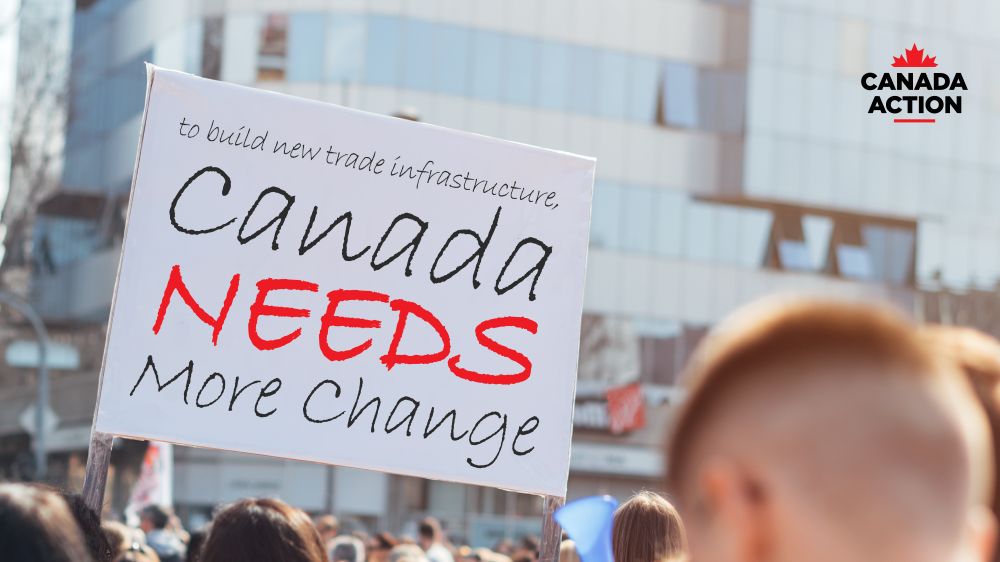
Regulatory Change a Must if Canada Wants to Build New Trade Infrastructure Fast

Regulatory Change a Must if Canada Wants to Build New Trade Infrastructure Fast

Regulatory Change a Must if Canada Wants to Build Infrastructure Projects Fast cover

Canada launched its new Major Projects Office last week, a significant step in the right direction to secure our economic future.

“In a rapidly shifting global landscape, we need to act decisively to build a stronger, more competitive, and prosperous economy,” said the press release from the Prime Minister’s Office.

We couldn’t agree more.

“Canada has always been a nation of builders, from the St. Lawrence Seaway to Expo 67. At this hinge moment in our history, Canada must draw on this legacy and act decisively to transform our economy from reliance to resilience,” stated Prime Minister Mark Carney.

“We are moving at a speed not seen in generations to build ports, railways, energy grids – the major projects that will unlock Canada’s full economic potential and build Canada strong.”

In a push to diversify Canada’s market exports, PM Carney also recently said in Berlin that Canada “is in the process of unleashing half a trillion dollars of investment in energy infrastructure, port infrastructure, particularly intelligence infrastructure, as well, with AI,” via reporting by CTV News [2].

“Which would open up enormous LNG, plus other opportunities, and other East Coast ports for those critical minerals,” Carney continued.

These are all encouraging words from our federal leadership. However, what we’ve been hearing is that more needs to be done to kickstart the nation-building projects that Canada so desperately needs: pipelines, power lines, ports, railways, and roads.

If Canada is truly going to build new trade infrastructure at a “speed not seen in generations,” as per PM Carney, then why not go all in? Why not listen to our industry, business, and government leaders about their concerns with existing legislation like Bill C-69 (the Impact Assessment Agency), Bill C-48 (tanker ban), the oil and gas emissions cap, and others that have hindered major projects and driven capital investment away from our country over the past decade?

Enbridge, Canada’s largest pipeline operator and also one of the largest in the world, stated recently that any new Canadian oil pipeline would require legislative changes, including shortened timelines for approval [3].

“We will be there to build what is needed for our shippers, for Alberta and for Canada — that’s our job, our mission as a company — but only when the conditions make sense and the right framework is in place,” it said in response to a question from the Calgary Herald about a potential new oil pipeline from Alberta to B.C.

And while Canada hesitates to eliminate regulations that would help get new pipeline projects proposed, the reality is that Canadian companies, like Enbridge, are investing elsewhere. It just announced two new natural gas transmission projects, one in the U.S. Northeast and another in the Permian-Gulf Coast region, to capitalize on growing natural gas demand [4].

The company joins a growing group of individuals and organizations expressing a dire need for regulatory reform to build the natural resource and infrastructure projects required to take control of our economic destiny.

“Our energy, our story, is one of unfulfilled potential,” said Goldy Hyder, President & CEO of the Business Council of Canada, as part of his testimony to the Canadian Senate on major nation-building projects.

“LNG provides a striking example of where policy missteps and onerous regulatory barriers have kept Canada shackled and unable to reach its full potential, leaving us on the sidelines as other countries take the place that should have been Canada's as an energy supplier for the democratic world,” Hyder continued.

Canadian Premiers are also united behind regulatory reform to help expedite critical infrastructure projects in the national interest.

“No one will build a pipeline to tide waters if there’s a ban on tankers,” said Premier Ford in an interview with CTV News a few months prior, referring to Bill C-48.

“No one will invest in opening a mine if it takes 15 years to get to 'yes.’ It’s time to end excuses, and it’s time to start building, and we need to start building now.”

Canada’s national banking leaders have also urged regulatory reform that would help unlock our vast natural resource wealth for development and create immense prosperity for Canadians from coast to coast.

Laurent Ferreira, President & CEO of the National Bank in Canada, stated back in April that “We need to take this opportunity and put in place industrial and economic policies that are going to put Canada back on track… We need to unlock regulation. We need to be more competitive on tax and we need to develop energy infrastructure across the country.”

The CEO was referring to U.S. tariffs, and our overall economic performance over the past several years.

Ferreira was joined by his counterpart Darren White, President of the BMO Group, who said in March that “We are uncompetitive of tax, on regulation, and on tone. And all levels of government – federal, provincial and municipal – must improve our competitiveness that underwrites our quality of life.”

It has become abundantly clear that above and beyond Bill C-5 (the One Canadian Economy Act), there is more that Canada can do to ensure we build new trade infrastructure at a “speed not seen in generations.” This starts with amending the regulatory gridlocking Bill C-69, abolishing the tanker ban Bill C-48 that prevents shipping oil from B.C.’s northern coast, and getting rid of the emissions cap legislation that will only act to hinder advancing Canadian oil and natural gas production and energy exports abroad.

As we stand at this pivotal moment in our history, the question remains: will Canada rise to the challenge of building a resilient economy, or will we stay tethered to outdated regulations that stifle our potential, keep our export markets undiversified, and our economic fortunes tied to the whims of the U.S.? The consensus among our industry, banking, and government leaders is uniform and undeniable—regulatory reform is not just necessary, it’s an absolute must.

Canada must do what’s required to ensure a stronger and brighter future for Canadians across the country. So why not give ourselves the best chance to do so by getting rid of, or amending legislation that has historically shown to be a thorn in Canada's side when it comes to attracting project proponents and capital investment.

SOURCES:

1 - https://www.pm.gc.ca/en/news/news-releases/2025/08/29/prime-minister-carney-launches-new-major-projects-office-fast-track-nation-building-projects

2 - https://www.ctvnews.ca/business/article/touting-enormous-lng-opportunities-carney-says-canada-to-unveil-new-port-infrastructure-investments-within-two-weeks/

3 - https://www.cbc.ca/news/canada/calgary/enbridge-says-it-would-pitch-new-alberta-b-c-pipeline-only-under-right-conditions-1.7570677

4 - https://www.enbridge.com/media-center/news/details?id=123862&lang=en