Potash is One of Canada’s Most Strategic Economic Assets: REPORT

Potash is One of Canada’s Most Strategic Economic Assets: REPORT

Canada West Foundation - Potash Mining Opportunity Report - April 2026

3 Key Takeaways

  • Canada is the world’s largest potash reserve holder, and has a big opportunity to produce and export more while benefitting Canadians and our trade partners
  • Between 2017 and 2022, Saskatchewan’s potash sector paid a total of $9 billion in federal, provincial, and municipal taxes, supporting critical social programs for Canadians
  • Canadian potash production could grow by more than 10.5 million tonnes by 2031, boosting domestic production by 50% and global supply by 15%
-------------------

A new policy report from the Canada West Foundation (CWF) makes the case for why potash – the critical mineral that produces half the world’s fertilizer and helps feed the world – is one of Canada's most powerful strategic and economic assets.

-------------------

Most Canadians may think of oil, natural gas, wood, or minerals when it comes to Canada's natural resources. But there’s another major resource sitting beneath the prairies of Saskatchewan that often doesn’t get the recognition it deserves. It's called potash – and Canada has more of it than any other country on Earth.

A new report released in April 2026 by the Canada West Foundation, titled The Food Mineral: What is potash, why does it matter and how can Canada maximize its benefits? lays out a compelling case for why the mineral more than deserves a place in Canada's national conversation on economic growth, trade strategy, and mining development.

According to CWF, Canada’s immense potash reserves – 31% of the world’s total – position the country as an ideal supplier, particularly amid supply chain disruptions elsewhere due to conflict and geopolitical tensions. And the opportunity to grow that advantage – for Canadian families, for Canadian communities, and for global food security – is enormous.

Please note: the following graphic statistics were sourced from Natural Resources Canada, not CWF; discrepancies between the two sources may exist

Report Highlights

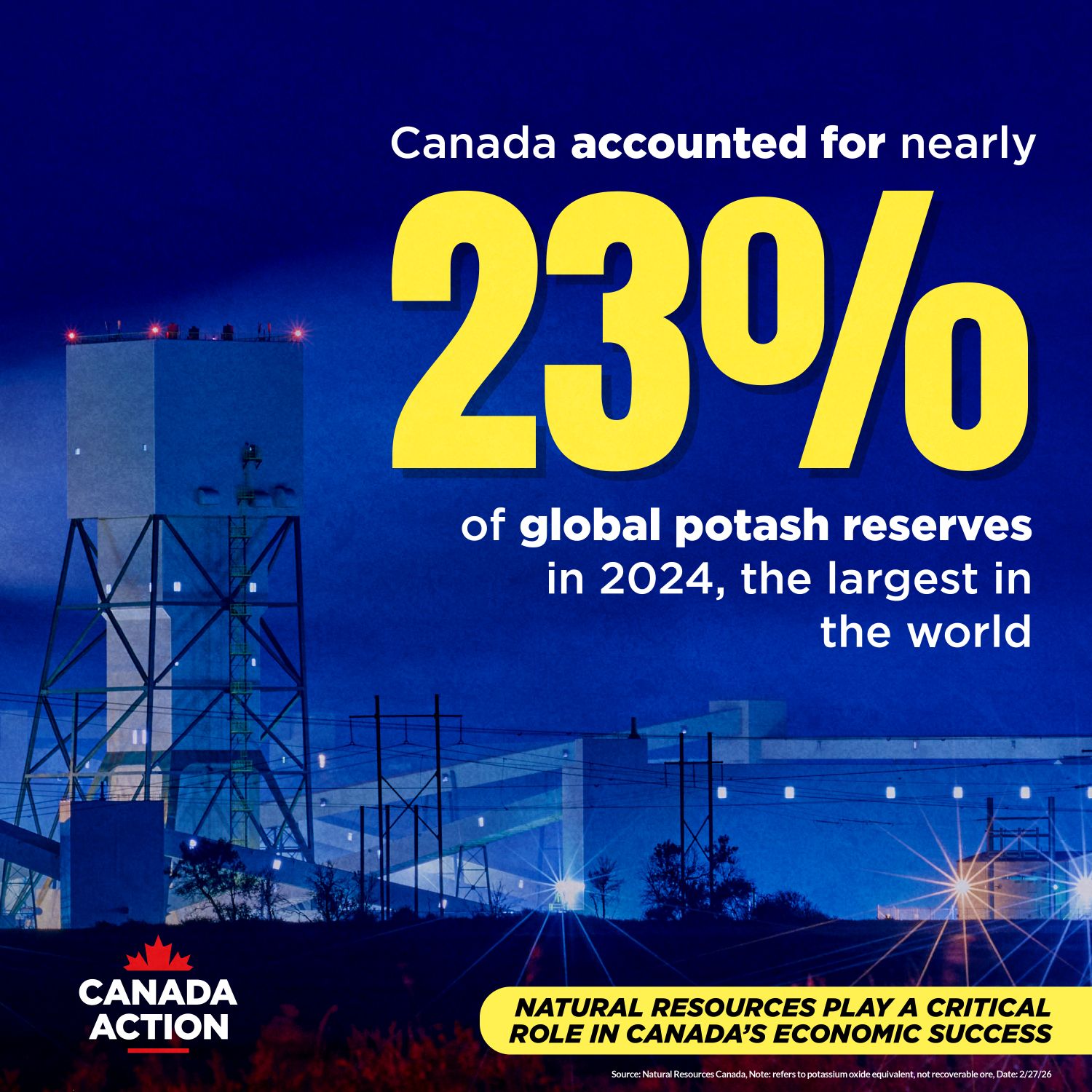
Canada accounted for nearly a quarter - or 23 per cent - of global potash reserves in 2024, the largest in the world

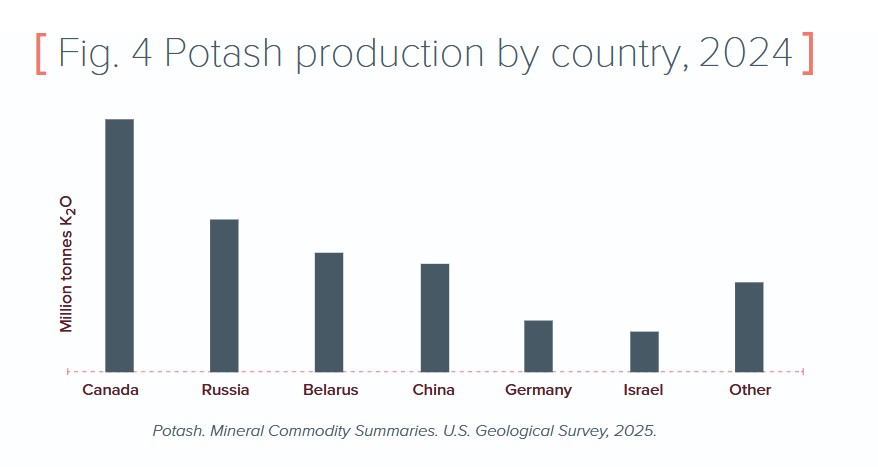
1 - Top Global Producer: Canada accounted for 31% of global potash production in 2024 — the single largest share of any country – ahead of Russia (19%), Belarus (15%), and China (13%) [1].

2 - Largest Global Reserves: Saskatchewan holds an estimated 1.1 billion tonnes of recoverable potash, the world's largest known deposits [1].

3 - Substantial Government Revenues: Canada's potash industry paid approximately $500 million per year in taxes between 2017 and 2020, climbing to $2 billion in 2021, and surging to over $5 billion in 2022 [1].

4 - Good-Paying Jobs: Saskatchewan’s mining sector directly employs 6,000 people and supports 12,000 more in supply industries, with an average mining salary of nearly $110,000 – more than double Saskatchewan's provincial median [1].

5 - Potash Expansions Underway: The Jansen Mine and Bethune Mine expansions will together increase Canadian production by roughly 50% and boost global supply by 15% [1].

6 - Continental Food Security: The U.S. imports 39% of its potash from Canada with no meaningful alternative, giving Canada real leverage in ongoing trade negotiations [1].

7 - Global Food Security: Over 300 million people face crisis-level hunger in 2026, while 20% of global soils are already potassium-deficient and one-third of arable land has been lost in 40 years [1].

8 - Surging Global Demand: Global potash demand is projected to grow by 70% by 2050, and Canada, with the world's largest reserves, is positioned to capture a dominant share [1].

9 - Growing Supplier Competition: Russia aims to grow fertilizer capacity by 50% by 2030, and new U.S. and Brazilian projects could displace up to 2.25 million tonnes of Canadian exports annually – or 15% of current production [1].

10 - Saskatchewan Mining Taxes: Despite producing just 11% of Canada's minerals by value, Saskatchewan paid 36% of all national mining taxes in 2020 – more than Ontario, Quebec, and B.C. combined [1].

A Billion-Dollar Industry That Creates Real Jobs

Potash Production by Country 2024 - Canada West Foundation

Courtesy of CWF

CWF’s report highlights critical economic data on Saskatchewan’s potash industry, underscoring its importance to the province and country as a whole.

According to CWF, potash is second only to oil and gas as a single-industry contributor to Saskatchewan's gross domestic product (GDP). Between 2017 and 2020, the sector paid approximately $500 million per year in federal, provincial, and municipal taxes. In 2021, that figure jumped to $2 billion. In 2022, when prices hit record highs, the industry paid more than $5 billion in taxes [1].

The non-metallic mineral mining industry in Saskatchewan (where potash accounts for the largest share) directly employs around 6,000 people, and supports an estimated 12,000 additional jobs in supply and service industries. The average salary for workers in Saskatchewan's mining sector was nearly $110,000 in 2022 – more than double the provincial median income of $45,400 [1].

These are good-paying, skilled jobs. They're the kind of careers that let Canadian workers buy homes, send their kids to school, and put money back into local communities across the province.

Growing Global Potash Demand

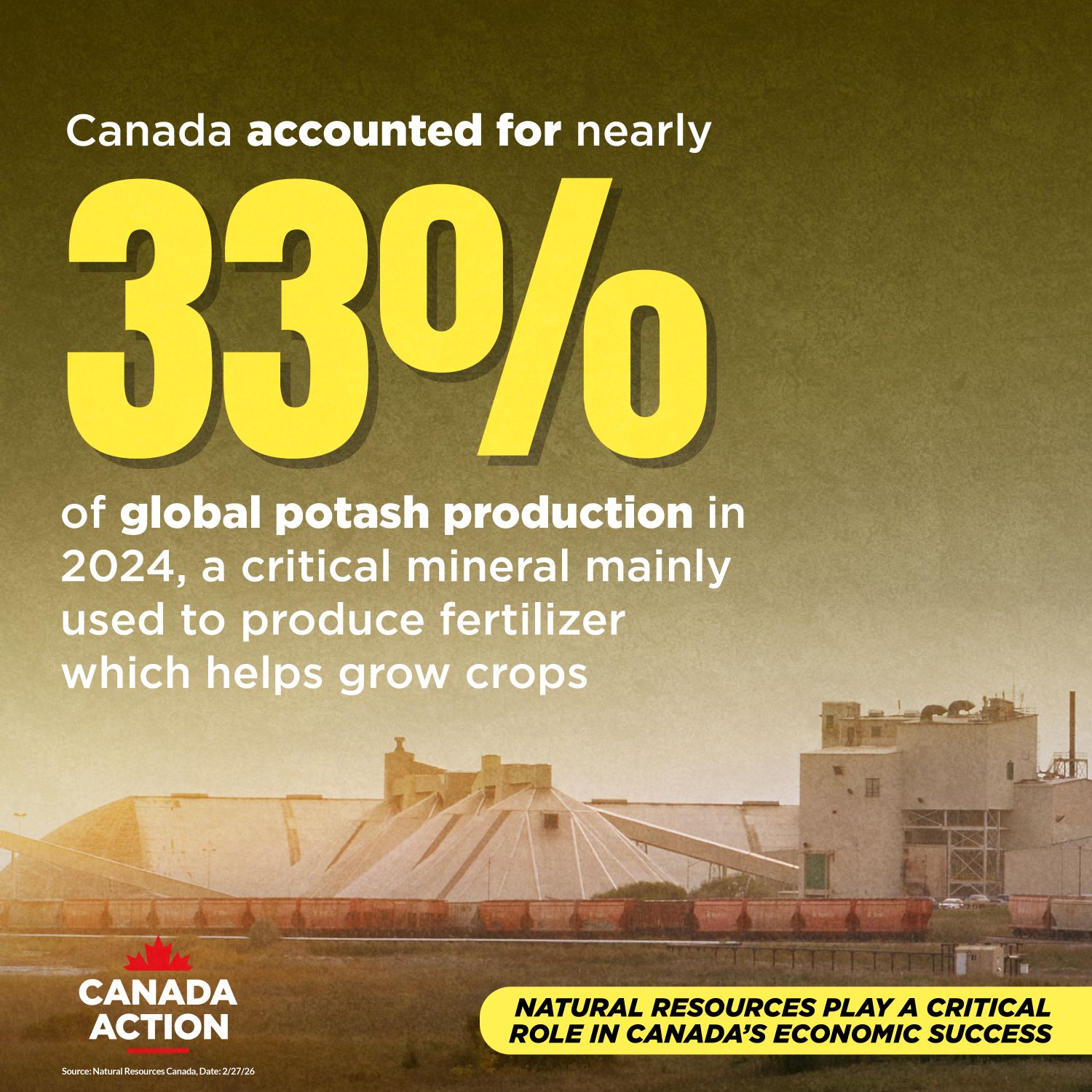
Canada accounted for one-third of global potash production in 2024, the top producer in the world

CWF’s report confirms what analysts have been projecting for years: the world's appetite for potash is only going to grow. Global potash demand is expected to increase by approximately 70% by 2050 [3], driven largely by population growth, rising middle-class incomes in the developing world, and the ongoing need to produce more food on less land.

Canada is extraordinarily well-positioned to capture a large share of that growing demand. We have the reserves. We have the mines. We have the infrastructure. And we have the expertise and regulatory standards that partner nations actively seek out.

To fully seize this opportunity, CWF highlights three key areas where Canada and Saskatchewan should focus:

1 – Improving Domestic Supply Chains

Canada's port infrastructure is underperforming. The Port of Vancouver – Canada’s largest port – for example, ranked 348th out of 405 ports in the World Bank's Port Performance Index in 2023. In recent months, it is well known that a major potash producer in Saskatchewan decided to build a new potash export terminal at a U.S. port rather than in Vancouver or Prince Rupert. Investing in Canadian port and rail infrastructure isn't optional if we want to compete globally – it's essential. As the CWF report puts it: "If you can't ship it, you can't sell it."

2 - Attracting and Retaining Skilled Workers

Saskatchewan's mining industry is already projecting a deficit of more than 4,500 workers by 2034 [1]. Attracting skilled tradespeople, miners, and engineers is critical to growing the industry. Better apprenticeship programs, stronger partnerships with Indigenous communities, and improved retention strategies for newcomers are all part of the solution.

3 – Diversifying Export Markets

Canada should continue building trade relationships with the EU, India, Indonesia, and other global partners. Reducing dependence on any single market – including the U.S. – makes Canada's potash industry more resilient and Canada's economy stronger overall, says the CWF. As Saskatchewan Premier Scott Moe has said before about Canadian natural resources: "Export capacity is not a nice to have, it's a need to have."

Canada’s Strategic Potash Opportunity

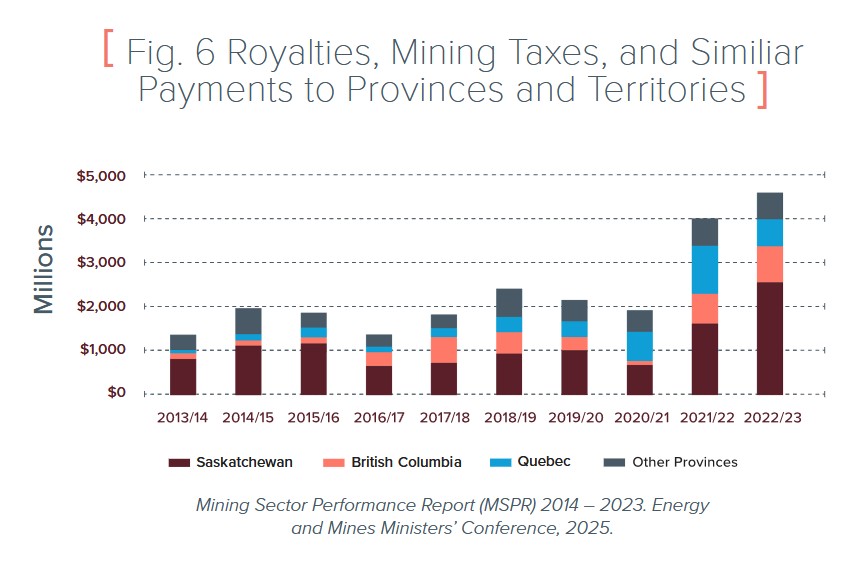
Mining Royalties, Taxes, Payments to Canadian Govermnets 2014-2023

Courtesy of CWF

CWF doesn't just talk about economic value. The think-tank organization makes a broader and critically important argument: potash is a strategic resource, and Canada's position as the world's number one producer gives us real geopolitical leverage.

The global rules-based order is under pressure. Trade relationships are shifting. Countries are increasingly seeking reliable access to the critical resources they need to feed their populations and keep their economies running. Potash sits right at the heart of accomplishing those goals.

Canada's two main competitors in potash are Russia and Belarus – two countries currently under significant international sanctions and scrutiny. Russia has been using its natural resources as leverage in its war in Ukraine. Canada, by contrast, is a stable democracy with a track record as a trustworthy and reliable supplier.

The United States, Canada's largest trading partner, relies on Canadian potash for 39% of its imports, and currently has no meaningful alternative source [1]. This could potentially give Canada a strategic advantage in trade discussions.

In short, the world needs potash. Canada has it. And we have an opportunity to use that position to build stronger relationships, diversify our export markets, and support global food security at a time when over 300 million people worldwide are expected to face crisis-level hunger in 2026 [1].

Canada Holds the World's Largest Potash Reserves

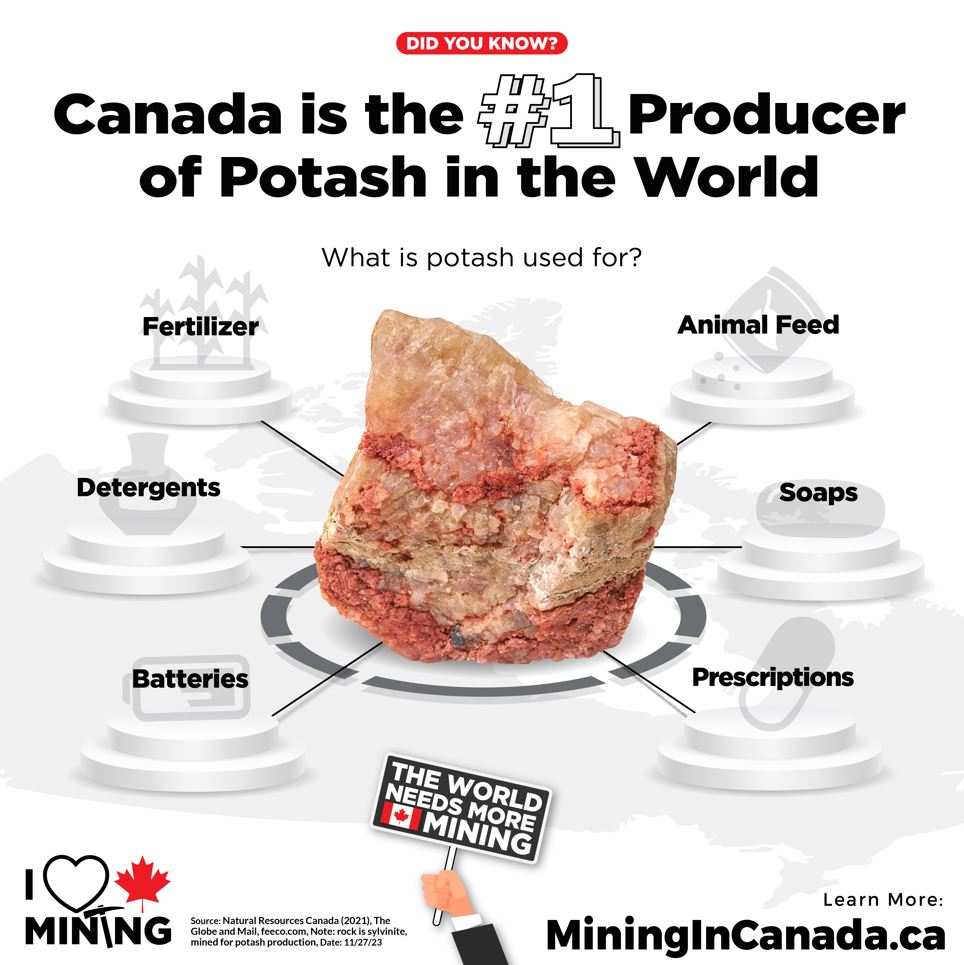
Canada is the top producer and exporter of potash in the world

Saskatchewan holds the world's largest known potash reserves – an estimated 1.1 billion tonnes of recoverable potassium oxide equivalent (K₂O). That's more than Russia's 920 million tonnes, more than Belarus's 750 million tonnes, and more than anywhere else on the planet [1].

The industry is anchored in Saskatchewan, where 10 potash mines are in production under various operators. Together, they supply potash to markets around the world, with the United States being the largest importer of Canadian potash (39% of production in 2023), followed by Brazil (22%), China (7%), and India (5%).

And the industry is growing. Two major expansion projects are currently underway in Saskatchewan, including the Jansen Mine, which, when complete in 2031, is expected to produce 8.5 million tonnes of potash annually [1]. The Bethune Mine expansion is expected to add another 2 million tonnes annually [1].

Together, these projects will expand Canadian production by roughly 50% and increase global potash supply by about 15% [1]. Expanding Canada’s potash production and exports will create critical jobs, generate important public revenues to fund social programs, and provide food security for families here at home and around the world.

The World Needs More Canadian Potash

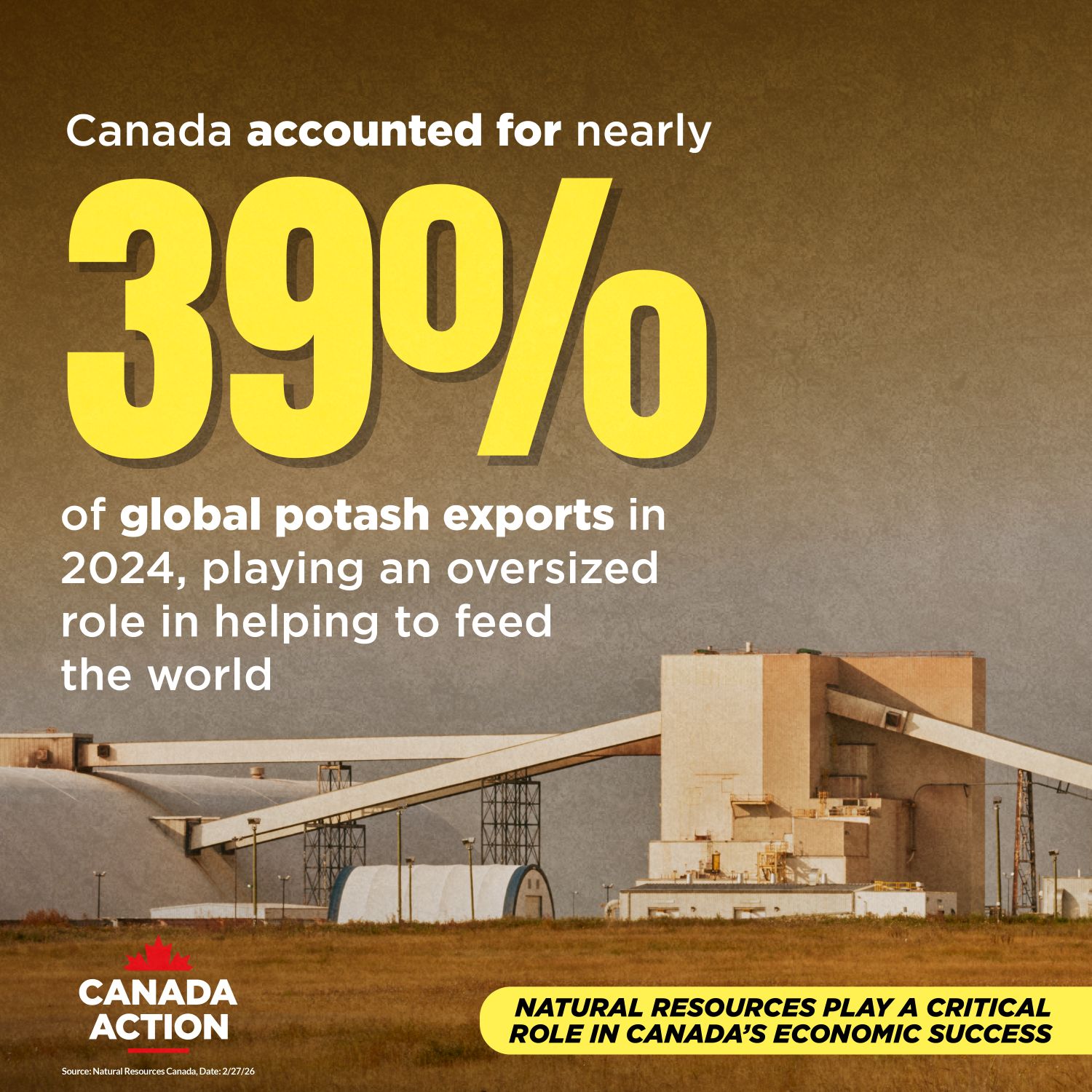
Canada accounted for 39 per cent of global potash exports in 2024

Canada is at a turning point. With global trade dynamics shifting, U.S. tariff pressures mounting, and the world increasingly looking to stable, democratic nations for critical resources, the decisions we make in the next few years will define our economic future for decades.

The Canada West Foundation's report on potash is a powerful reminder that the opportunity is right in front of us. We are the world's number one potash producer. We have the largest known reserves. We have the mines, the workers, the know-how, and the customers. Global potash demand is set to grow by 70% by 2050.

It's time to build the infrastructure. Time to streamline the approvals. Time to grow the industry. In short, it's time to take action for a brighter, more prosperous future for Canadians.

SOURCES:

1 - https://cwf.ca/wp-content/uploads/2026/04/Potash-Food-Mineral-Report_FINAL.pdf

2 - https://natural-resources.canada.ca/minerals-mining/mining-data-statistics-analysis/minerals-metals-facts/potash-facts

3 - https://www.bhp.com/news/bhp-insights/2025/04/population-growth-vs-crop-production-examining-potash-demand-over-time