The Truth About BC LNG and First Nations: Ownership, Partnership, and Prosperity

The Truth About BC LNG and First Nations: Ownership, Partnership, and Prosperity

MYTH - LNG \

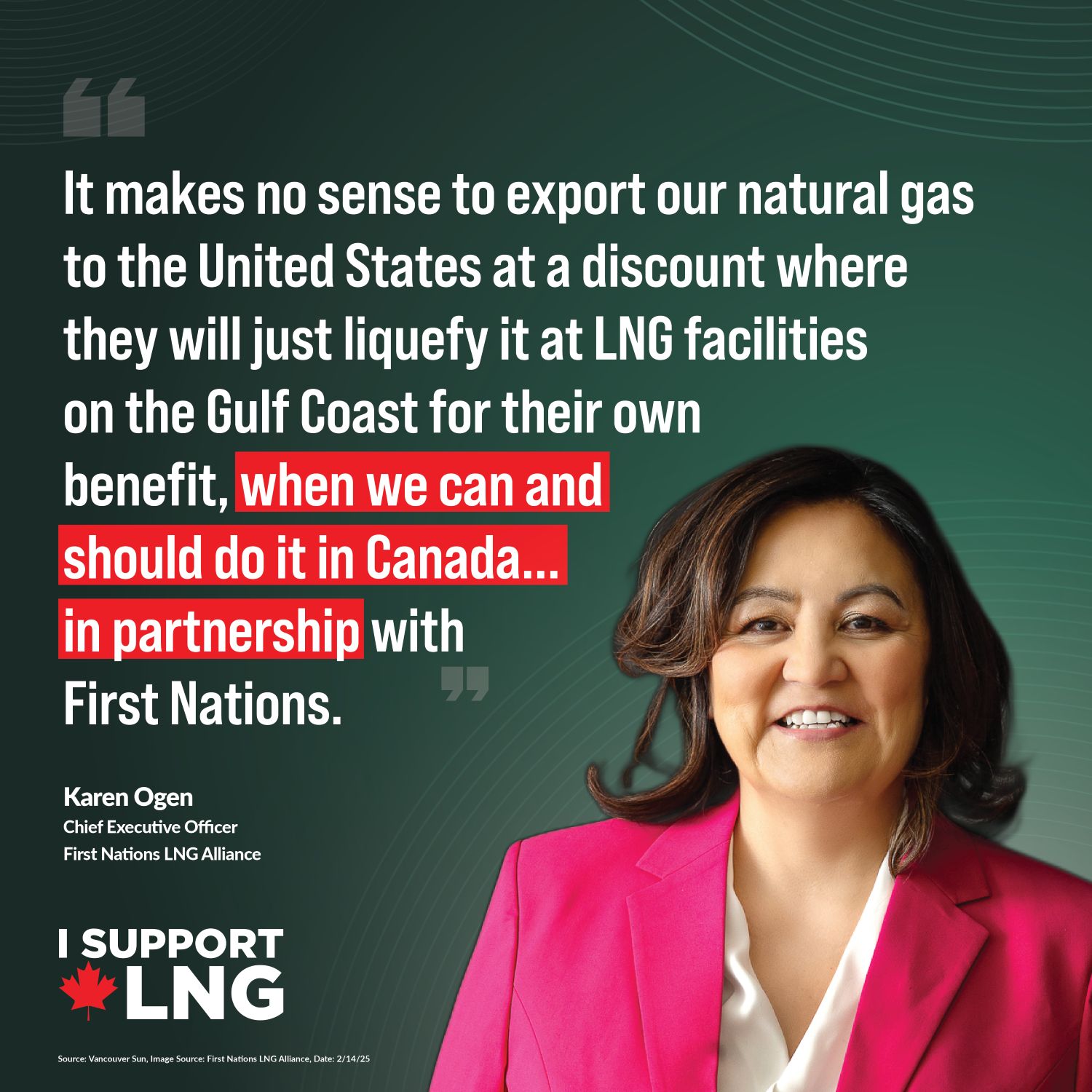
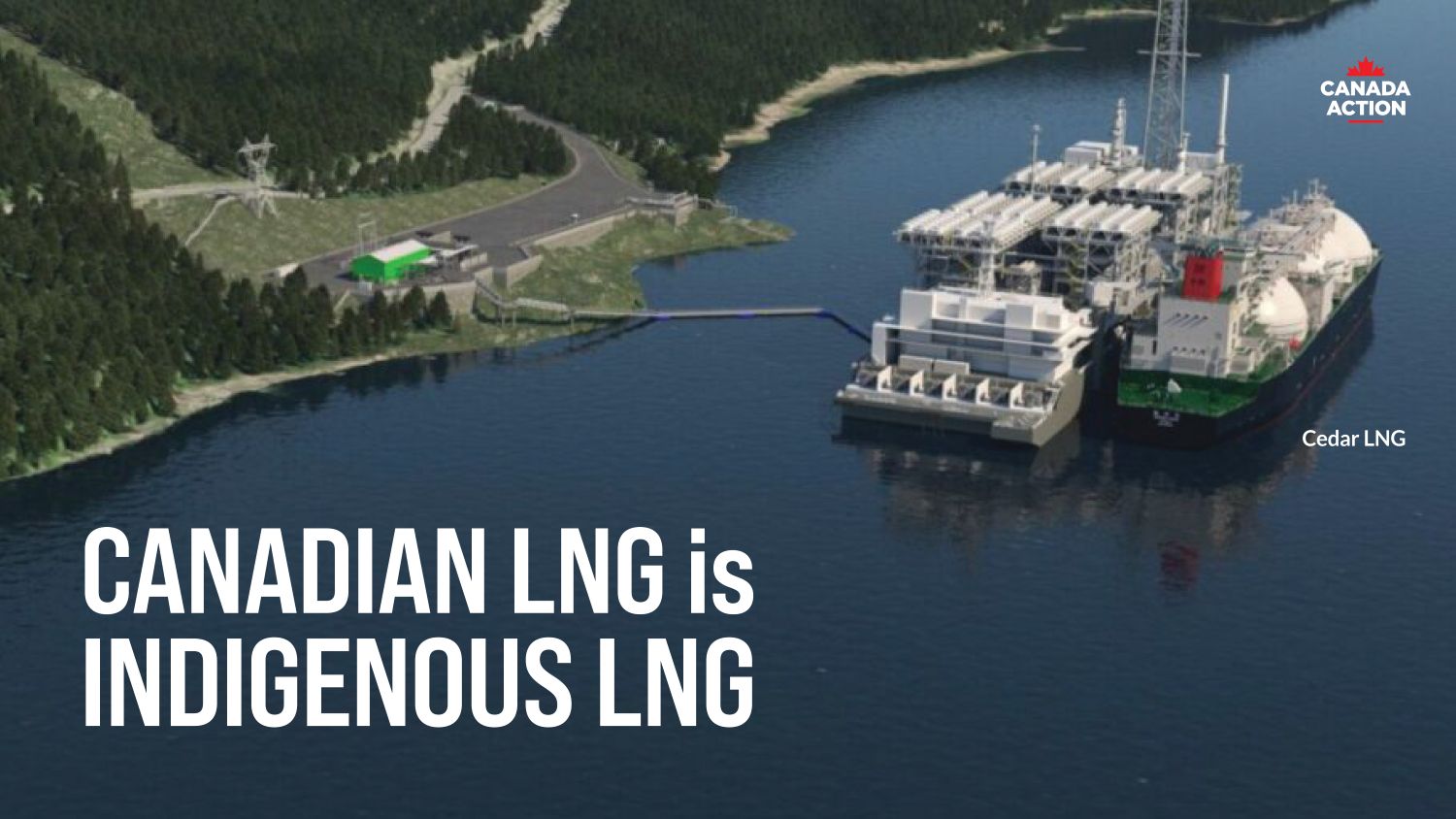
In the words of Karen Ogen, CEO of the First Nations Natural Gas Alliance, "Canadian LNG is Indigenous LNG."

Indigenous-owned LNG is no longer an idea but a reality in British Columbia. Yet, according to activist organizations like CAPE and Dogwood, LNG development "tramples" over Indigenous rights. The facts tell a very different story.

Through a new campaign, LNG opponents suggest that advancing new export facilities to help Canadian natural gas reach new international markets is “not in our national interest.” We’ve reviewed their campaign in full, and to say the least, we take issue with several fallacies and misstatements included in their messaging.

Below, we take a look at how each and every LNG project in British Columbia has had a significant and uplifting impact on First Nations.
#1 – Majority of First Nations Support LNG Development

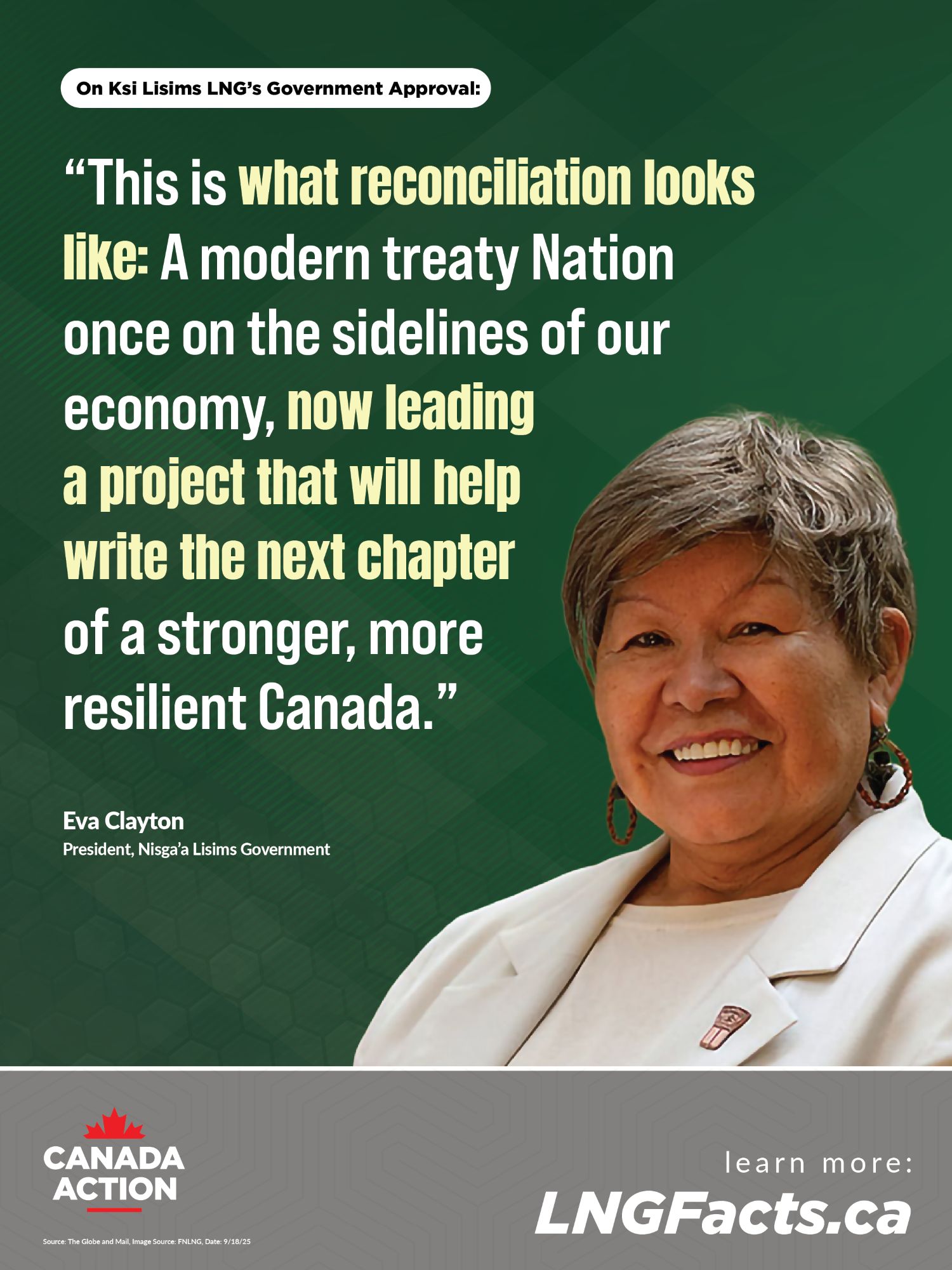
Eva Clayton on Ksi Lisims Approval - This is What Reconciliation Looks Like - Indigenous - First Nations

A majority of Indigenous communities in British Columbia affected by LNG infrastructure development have shown strong support for projects through equity ownership and benefit agreements, sharing long-term revenues while marking a significant milestone in economic reconciliation.

Coastal GasLink Pipeline (CGL)

Before construction of the CGL pipeline began, the project proponent signed mutual benefit agreements with all 20 First Nations located along its route [1]. Additionally, 17 of the 20 aforementioned communities signed an equity stake agreement for 10% ownership of the pipeline, benefiting over the long-term through the generation of own-source revenues.

CGL supplies both Cedar LNG and LNG Canada with feedstock, while a proposal for its expansion to accommodate additional gas liquefaction and export capacity is already underway.

Prince Rupert Gas Transmission Pipeline (PRGT)

A recent update from the PRGT proponent indicated that 15 of the 20 First Nations along the project’s route have signed agreements for equity stake opportunities in the pipeline [2]. It should be noted that PRGT, like CGL did before it, may also secure support from more affected Indigenous communities over time.

PRGT will supply natural gas to the Ksi Lisims LNG export facility, which is currently awaiting a Final Investment Decision (FID) expected sometime in 2026.

LNG Canada

With more than $4.9 billion spent on procurement from Indigenous-owned and local businesses since operations began, LNG Canada Phase 1 was built on the traditional territory of the Haisla Nation and has strong support from regional communities. First Nations have been vocal about the positive and tangible effects of the project throughout its development, including then Chief Councillor Crystal Smith of the Haisla Nation [4]:

“When LNG Canada first came to our territory over a decade ago, they, unlike so many others, chose to build a relationship first before even considering building a project. They focused on understanding what mattered first and foremost to Haisla Nation, and to Indigenous communities in the region. So much has changed for our community since that first meeting. Our people, our country and the world are better off today, and will be for decades to come.”

Ksi Lisims LNG

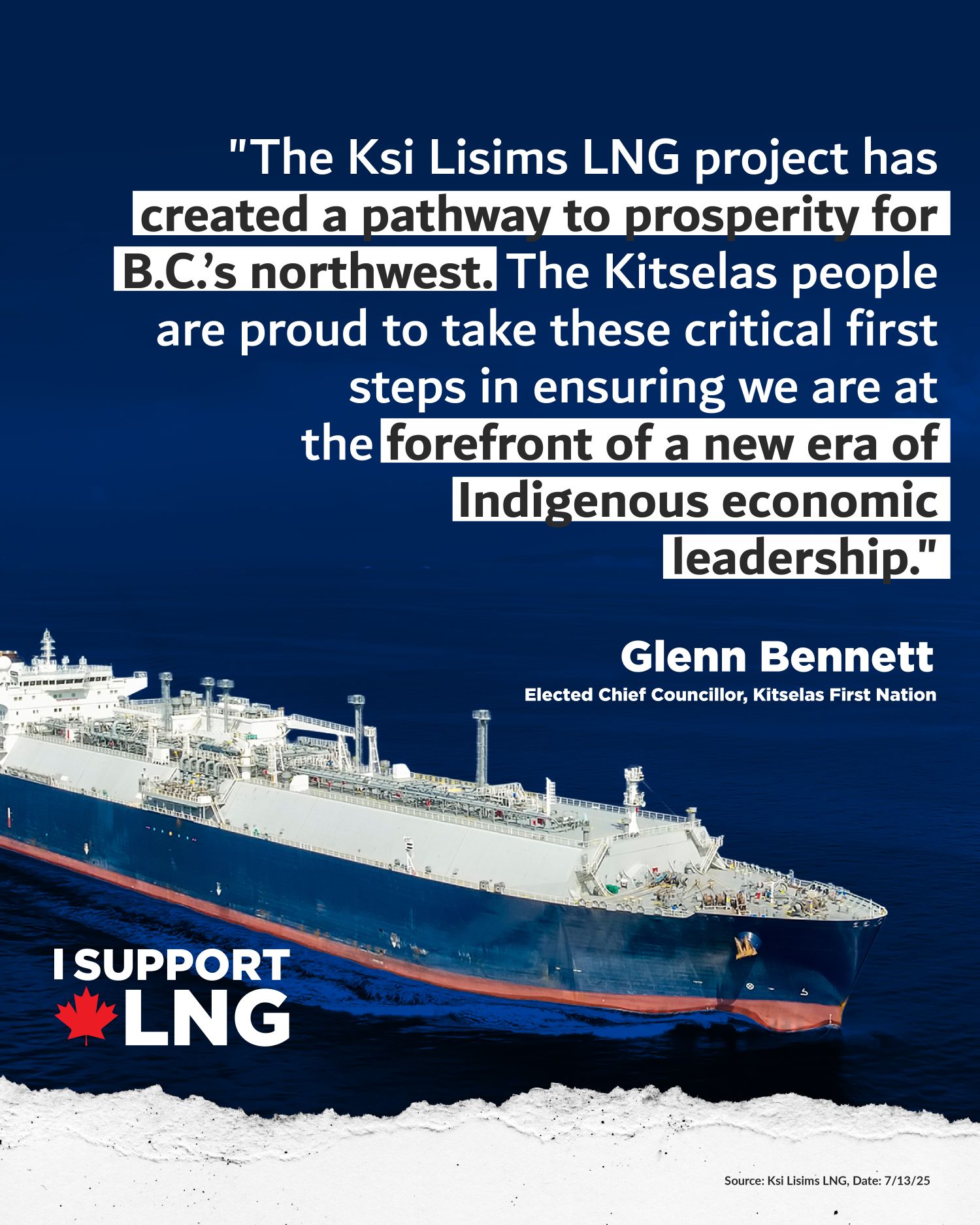
Ksi Lisims LNG is a joint partnership between the Nisga'a Nation and two private companies to be built on Nisga'a territory, making it one of the most prominent examples of Indigenous co-ownership in Canadian history. The project has secured benefit agreements with Indigenous communities across northwest B.C., including the Kitselas First Nation, whose Elected Chief Councillor Glenn Bennett spoke to the transformational nature of the project [5]:

"Building prosperity starts at home, with our people, and on our lands. We've worked hard to ensure this agreement reflects the priorities of our community and sets us up to benefit meaningfully for many decades to come. This is a moment of opportunity in Canada. The Ksi Lisims LNG project has created a pathway to prosperity for B.C.'s northwest."

Woodfibre LNG

Woodfibre LNG, now under construction, is backed by a landmark $1.1 billion impact and benefit agreement with the Squamish Nation – one of the most substantial of its kind in B.C.’s history [7]. It includes 40-year deals of $225 million in cash, 1,600 short-term and 330 long-term jobs, and the transfer of 422 hectares of land to the Squamish Nation, among other benefits, not to mention more than $800 million in procurement opportunities for local and Indigenous-owned businesses [7]. Upon reaching a deal with the project proponent in 2018, the Squamish Nation released the following statement:

“Revenue collected from this project will go to the Squamish Nation and contribute to programs and services it operates for its members. In addition, there will be jobs and training opportunities and spin-off business opportunities for members."

Cedar LNG

Cedar LNG is a floating export facility under construction in Kitimat on the traditional territory of the Haisla Nation, which holds a 50.1% ownership stake in the project – making it the largest Indigenous majority-owned infrastructure project in Canadian history [6]. Karen Ogen was one of many leaders who worked hard to see Cedar LNG and other projects come to fruition [8]:

“Over the past couple of years, a new wave of optimism is taking place. LNG Canada’s Phase One is operating. Cedar LNG and Woodfibre LNG are under construction. Ksi Lisims LNG is being advanced, ands hopes for a final investment decision this year... It’s encouraging progress, and billions of dollars in procurement benefits and revenues are flowing to First Nations. Looking ahead, 2026 looks to be a pivotal year for First Nations’ interest in natural-gas development. LNG and natural-gas development are not just an opportunity, they are a national imperative.”

Natural Gas Pipeline Agreements

In 2017, the B.C. government announced it had entered into 64 benefit agreements with 29 Indigenous communities along four proposed natural gas pipeline routes, accounting for more than 90% of the affected First Nations [3]. The pipelines named included Coastal GasLink (complete), Prince Rupert Gas Transmission (underway), Westcoast Connector Gas Transmission (cancelled), and Pacific Trail (defunct).

This agreement, although dated, demonstrates majority support for natural gas infrastructure projects across Indigenous territories in B.C.

#2 – LNG Projects and the Indigenous Economy

Ksi Lisims LNG created a pathway to prosperity for BC's northwest - Glenn Bennett - First Nations - Indigenous LNG

Across B.C., First Nations communities have seen billions of dollars in direct economic benefits from LNG development, ranging from equity stakes to procurement contracts to long-term jobs.

Indigenous involvement in B.C. LNG development, by the numbers:

  • 17 First Nations own a 10% equity stake in the CGL pipeline, generating own-source revenues that will help build up their communities and improve socio-economic conditions over the long-term [1]
  • Over 7,500 workers were employed by CGL, many of whom were from Indigenous and local communities while the pipeline spent over $1.4 billion on procurement of goods and services from Indigenous-owned businesses [8][9]
  • LNG Canada saw $4.9 billion in spending during construction on Indigenous-owned and local businesses [4]
  • Ksi Lisims LNG and its supply pipeline are projected to create up to 13,000 jobs during construction, with many positions to be filled by Indigenous workers [11]
  • At peak construction, Woodfibre LNG is expected to support 1,500 jobs, with hiring priority given to Indigenous workers [12]

#3 – Indigenous Quotes on BC LNG Development

Canada should export LNG in partnership with First Nations, Says Karen Ogen - Indigenous

We’ve already included some quotes from Indigenous leaders on LNG development above, but that's not all.

Over the years, First Nations leaders have publicly expressed their support for B.C. LNG projects and the immense economic benefits that come with them.

Find several of those past quotes below:

Let’s Have Fact-Based Discussions

LNG makes Canada stronger

The evidence is clear: BC's LNG sector isn't trampling Indigenous rights – it's actively advancing them. From majority ownership stakes to billion-dollar benefit agreements, First Nations are not bystanders in this industry. They're driving it.

Join us today to engage in balanced, fact-based, and non-partisan discussions on Canada’s natural resource sectors and the jobs and economic opportunities that come with.

SOURCES:

1 - https://www.canadaaction.ca/coastal-gaslink-completion-canadian-indigenous-support

2 - https://www.coastalgaslink.com/whats-new/news-stories/2018/2018-09-13coastal-gaslink-signs-agreements-with-100-per-cent-of-b.c.-elected-indigenous-bands-along-the-pipeline-route

3 - https://news.gov.bc.ca/releases/2017ARR0010-000798

4 - https://www.lngcanada.ca/news/first-cargo-puts-canada-on-the-map-of-lng-exporting-nations/

5 - https://www.ksilisimslng.com/news/kitselas-first-nation-signs-landmark-agreement-with-ksi-lisims-lng

6 - https://www.reuters.com/business/energy/how-canadas-haisla-became-worlds-first-indigenous-lng-owners-2025-09-19/

7 - https://vancouversun.com/news/local-news/squamish-first-nation-makes-difficult-decision-to-back-woodfibre-lng-worth-1-1-billion-in-benefits

8 - https://fnnga.com/2026/01/17/karen-ogen-natural-gas-development-is-a-national-imperative/

9 – https://www.coastalgaslink.com/post-construction/#employment

10 - https://www.coastalgaslink.com/whats-new/news-stories/2022/2022-11-29-At-80-overall-completion-Coastal-GasLink-on-track-to-support-delivery-of-critical-energy/

11 - https://www.canadaaction.ca/economic-benefits-ksi-lisims-lng-project

12 - https://www.ourcommons.ca/Content/Committee/451/FINA/Brief/BR13582313/br-external/WoodfibreLNG-e.pdf

13 - https://linktr.ee/NotInOurNationalInterest